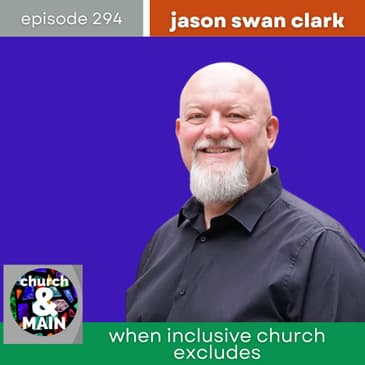
Dennis sits down with Jason Swan Clark, theologian, spiritual director, and director of the London Centre for Spiritual Direction, to unpack his article "How Inclusive Church Excludes." Drawing on his doctoral work on Christian identity formation and consumer culture, he brings a sharp theological lens to a word that gets thrown around constantly but rarely examined.
The conversation traces how "inclusion" has quietly become what Jason calls a "package deal" — a pseudo-confession where accepting one position requires accepting a whole cluster of others, on both the progressive and conservative sides. As Jason puts it in his article, inclusion has shifted from being one Christian virtue among many to becoming "the lens through which everything else is read, scripture, doctrine, ethics, and the church itself."
Shownotes:
How 'Inclusive' Church Excludes - https://www.spex.so/p/how-inclusive-church-excludes The Church Needs Inclusion and Evangelism - https://churchandmain.substack.com/p/the-church-needs-inclusion-and-evangelism
Join the Church and Main Email List
Facebook (https://www.facebook.com/churchandmain) | Instagram (https://www.instagram.com/churchandmainpod/) | Threads (https://www.threads.net/@churchandmainpod) | Website (https://churchandmain.org/) | YouTube (https://www.youtube.com/@churchmainpodcast) | Substack (https://churchandmain.substack.com/)
00:00:27 --> 00:00:31 Hello, and welcome to Church and Main, a podcast for people interested in the
00:00:31 --> 00:00:35 intersection of faith, politics, and culture. I'm Dennis Sanders, your host.
00:00:36 --> 00:00:40 One word that we have heard a lot over the last, I don't know,
00:00:40 --> 00:00:44 20-some years has been the word inclusive.
00:00:45 --> 00:00:51 And we talk about inclusion when we talk about LGBTQ persons,
00:00:51 --> 00:00:56 and also when it comes to things such as race or gender or ethnicity.
00:00:57 --> 00:01:02 Now, I want to say up front, inclusion is a good thing, especially in the church.
00:01:03 --> 00:01:08 We should want a church that is welcoming to people and doesn't turn people away.
00:01:09 --> 00:01:16 I personally want a church where I, as an openly gay man, can have a place at Christ's table.
00:01:18 --> 00:01:22 But what do we mean when we say inclusion?
00:01:23 --> 00:01:26 And what does inclusion mean from a theological perspective?
00:01:27 --> 00:01:29 What's the reason for being inclusive?
00:01:30 --> 00:01:33 And what are we being inclusive for?
00:01:35 --> 00:01:42 My guest today talks about how inclusive spaces like church can end up actually
00:01:42 --> 00:01:45 doing the exact opposite, excluding people.
00:01:46 --> 00:01:53 Jason Swan Clark wrote an article back in June entitled, How Inclusive Church Excludes.
00:01:54 --> 00:01:58 And it's about how the drive to become inclusive can fall short.
00:02:00 --> 00:02:05 How that word doesn't always, might live up to cultural expectations,
00:02:06 --> 00:02:10 but falls short on theological expectations.
00:02:11 --> 00:02:15 He says the following, and I want to share a quote from his essay. And this is what he says.
00:02:18 --> 00:02:22 For much of Christian history, inclusion sat alongside other Christian goods,
00:02:22 --> 00:02:27 such as holiness, truth, charity, worship, repentance, communion,
00:02:27 --> 00:02:30 mission, discipleship, and none of them stood alone.
00:02:30 --> 00:02:33 Each was held in relationship with the others.
00:02:34 --> 00:02:38 Increasingly, inclusion has become more than a virtue.
00:02:39 --> 00:02:42 It has become the lens through which everything else is read,
00:02:43 --> 00:02:46 scripture, doctrine, ethics, and the church itself.
00:02:47 --> 00:02:53 The danger is not that inclusion matters too much, but that it comes to matter
00:02:53 --> 00:02:55 more than everything else.
00:02:56 --> 00:03:01 So, I'm going to talk to Jason today about what inclusion means.
00:03:02 --> 00:03:05 Before our conversation, a little bit about Jason.
00:03:06 --> 00:03:10 He is the director of the London Center for Spiritual Direction,
00:03:11 --> 00:03:16 which is an independent UK charity that is dedicated to offering resources,
00:03:16 --> 00:03:22 training, and support for those engaged in Christian spiritual direction.
00:03:22 --> 00:03:26 And prior to his role at the LCSD.
00:03:29 --> 00:03:35 Dr. Clark, or Jason Clark, spent a time as a full-time pastor at Sutton Vineyard
00:03:35 --> 00:03:38 Church, which was also in London in the UK,
00:03:39 --> 00:03:44 and this was a church that he and his wife planted in 1997 while he was at the
00:03:44 --> 00:03:47 time an investment broker in London.
00:03:48 --> 00:03:53 He and his wife have also served as regional and national leader for Vineyard
00:03:53 --> 00:03:59 Churches UK, overseeing church planting and church development in London.
00:04:00 --> 00:04:06 So with all that out of the way, here is my conversation with Jason Swan-Clark,
00:04:07 --> 00:04:09 to talk about inclusion.
00:04:28 --> 00:04:32 Well, Jason, thank you for coming on to the podcast. And I always like to start
00:04:32 --> 00:04:38 with asking people to talk a little bit about who they are and their faith background.
00:04:39 --> 00:04:44 Yeah, thank you. So, sure version, I'm now a spiritual director and a theologian
00:04:44 --> 00:04:50 who's become concerned that the church has forgotten what it means to become fully human in Christ.
00:04:51 --> 00:04:55 A slightly longer version. I came to faith as a teenager, 17,
00:04:56 --> 00:04:59 never been to church in my life, walked into an evangelical church,
00:05:00 --> 00:05:05 Church, I had a conversion experience, and then spent the next,
00:05:05 --> 00:05:12 oh gosh, 35 years with my wife, involved with a group of churches called Vinyar Churches.
00:05:13 --> 00:05:21 And we were planting, leading churches, and along that way, an encounter of
00:05:21 --> 00:05:24 doing churches in context and culture. I got a doctorate ministry degree,
00:05:25 --> 00:05:27 and that led to doing a PhD in theology.
00:05:28 --> 00:05:35 Um my theological work in my phd was about christian identity formation and consumer culture,
00:05:36 --> 00:05:41 um and in particular where that gone wrong with evangelicalism and some of the
00:05:41 --> 00:05:46 responses so we're really interested in identity and formation um i ultimately
00:05:46 --> 00:05:48 trained as ignatian spiritual director,
00:05:49 --> 00:05:54 and at this point in life um a few years ago my wife and i moved down to a place called Waverley Abbey.
00:05:54 --> 00:05:58 It's the site of the oldest Cistercian Abbey in England.
00:05:59 --> 00:06:03 And we're involved with a place that's very ecumenical and involved with an
00:06:03 --> 00:06:05 organization called 24-7 Prayer.
00:06:06 --> 00:06:10 Some people may have heard of. So we have everything from Catholics and Anglicans
00:06:10 --> 00:06:15 through to Pentecostals and evangelicals and other people for,
00:06:15 --> 00:06:21 training and spirituality and formation and integrated psychology and counselling
00:06:21 --> 00:06:22 and a whole lot of other things.
00:06:23 --> 00:06:25 So I lead the Doctor of Ministry programme for Portland Seminary,
00:06:25 --> 00:06:28 been doing that for 16 years and that continues to be a privilege.
00:06:28 --> 00:06:30 I'm a professor of leadership for them.
00:06:31 --> 00:06:34 I'm the director of the London Centre for Spiritual Direction now.
00:06:35 --> 00:06:40 So that means I spend quite a lot of my time helping our 500 members that we
00:06:40 --> 00:06:45 have to grow as spiritual directors and help more people discover spiritual direction.
00:06:47 --> 00:06:51 And then my own personal faith journey, I've journeyed a long way from when
00:06:51 --> 00:06:56 I first became a Christian into more sacramental theology through my studies and learning,
00:06:57 --> 00:07:01 and ultimately landing in a place, a Christian understanding of salvation is,
00:07:02 --> 00:07:07 fundamentally participation in the life of God and a broadly Anglo-Catholic horizon.
00:07:07 --> 00:07:11 So there you go. That's an overview of me.
00:07:12 --> 00:07:15 Wow. I mean, I think it's kind of always interesting,
00:07:17 --> 00:07:21 from what I've kind of gathered, especially from a lot of people in the UK,
00:07:22 --> 00:07:29 and especially evangelicals in the UK, kind of making a move into Anglo-Catholicism.
00:07:30 --> 00:07:34 I've always found that fascinating. And I don't know if that's because of the
00:07:34 --> 00:07:40 culture of the Anglican Church or the Church of England, but I've always found that interesting.
00:07:40 --> 00:07:46 I mean, it's happening here as well, I think, especially among American evangelicals as well.
00:07:47 --> 00:07:51 Yeah, it is. I mean, I was very involved in a thing called Emerging Church back
00:07:51 --> 00:07:56 in the late 1990s into the 2000s.
00:07:57 --> 00:08:00 And a lot of my PhD, sorry,
00:08:01 --> 00:08:04 my doctoral ministry degree and then my PhD emerged from that,
00:08:04 --> 00:08:08 from trying to understand in particular what was happening with evangelical
00:08:08 --> 00:08:16 Christians in context and culture and noticing that there seemed to be two trajectories, really.
00:08:16 --> 00:08:21 And one of them was a whole load just you know deconstructing and blowing up everything um,
00:08:22 --> 00:08:25 and walking away from everything and many either losing their faith or i mean
00:08:25 --> 00:08:28 we could explore that more some of my research was about that,
00:08:28 --> 00:08:32 um but then this anglo-catholic turn that many made and instead of making less
00:08:32 --> 00:08:34 of the church people started to make more of it,
00:08:35 --> 00:08:40 and actually understand and part again i wrote in my phd i was quite understandable
00:08:40 --> 00:08:44 why some people were like there are some things that are just resolved here
00:08:44 --> 00:08:48 about the nature of church and its relationship to society and identity.
00:08:49 --> 00:08:55 I had a few friends become Anglican priests and a few friends become Catholic.
00:08:55 --> 00:08:59 And I think a while back I was not just mapping out that landscape,
00:08:59 --> 00:09:04 but I was exploring a particular question which was about evangelicals broadly.
00:09:05 --> 00:09:12 Did they have their own resources internally for the problems owning them that
00:09:12 --> 00:09:15 they'd created in relationship to consumer culture.
00:09:16 --> 00:09:20 Without having to throw the baby out with the bathwater. And found myself actually
00:09:20 --> 00:09:24 saying quite sympathetically, yes, there were resources, but actually there
00:09:24 --> 00:09:30 was a deeper resonance with an Anglo-Catholic Orthodox tradition for lots of reasons.
00:09:30 --> 00:09:35 So all these years later, lots of people, it's still happening, another generation.
00:09:35 --> 00:09:42 In the UK, you'll hear phrases like lots of young people, younger people wanting full-fat faith,
00:09:43 --> 00:09:49 you know wanting all altars rather than platforms wanting things to not be you
00:09:49 --> 00:09:55 know spoon-fed to them the sacramentality you know discovering uh the richness of that,
00:09:55 --> 00:09:59 but but also beyond that something that you know desperate for something they
00:09:59 --> 00:10:01 just can't download or get from somewhere else,
00:10:02 --> 00:10:08 you know on demand uh from someone um that then that creates a different a different
00:10:08 --> 00:10:10 identity and a different self.
00:10:10 --> 00:10:14 And ultimately, I'm convinced part of that as a Christian tradition is we receive
00:10:14 --> 00:10:18 our identity from God, but we live at a time where many of us are trying to
00:10:18 --> 00:10:23 make our own identities and get God to baptize them and affirm them.
00:10:24 --> 00:10:28 So yeah, a lot of that happening in the UK now. There are more identities.
00:10:28 --> 00:10:32 Practicing Catholics and Anglicans, part of that is the precipitous decline
00:10:32 --> 00:10:36 of Anglicanism in the UK, but one of it is Catholicism growing.
00:10:38 --> 00:10:42 For the last five years quite significantly, and in pockets of places where
00:10:42 --> 00:10:46 large numbers of adults are converting to Catholicism.
00:10:47 --> 00:10:52 And then Pentecostalism is another growth area in the UK, but Baptists,
00:10:52 --> 00:10:57 Methodists, Anglicans all in, you know, continued deep decline.
00:10:57 --> 00:11:00 But this other movement of people exploring and looking for faith.
00:11:01 --> 00:11:06 So some of that in sacramental, more traditional churches. Whole topic on how
00:11:06 --> 00:11:09 I convinced Pentecostal churches, Catholic churches, Orthodox have actually
00:11:09 --> 00:11:12 got quite a lot in common. Oh, yes. Yes.
00:11:13 --> 00:11:17 Yes. So, which you may already be aware of in your life and world.
00:11:17 --> 00:11:19 So, there you go. Another long answer to your question, Dennis.
00:11:20 --> 00:11:25 Well, the reason, and you talked a little bit about identity and how that is
00:11:25 --> 00:11:28 so central in our day and age.
00:11:29 --> 00:11:33 And the reason I wanted to talk to you is an article that you wrote on your substack,
00:11:36 --> 00:11:41 and is talking about inclusion and how inclusive of churches exclude.
00:11:42 --> 00:11:50 And I thought it was a fascinating article to talk about because I've experienced it a lot,
00:11:51 --> 00:11:58 and just wanted to talk a bit more and maybe to start out to what led you to write this.
00:12:00 --> 00:12:03 Yeah, what led me to write it? I think.
00:12:06 --> 00:12:10 Over a long period of time, and then the position that I'm in as especially
00:12:10 --> 00:12:16 the professor of leadership at Portland Seminary, and then my PhD work,
00:12:16 --> 00:12:20 looking at these trajectories of where, in particular, evangelical faith was going.
00:12:22 --> 00:12:26 But then noticing the broader issues of identity politics and how faith was
00:12:26 --> 00:12:34 being caught up within identity politics and realizing it really two sides of the same coin.
00:12:35 --> 00:12:42 Um you know people saying that they were gathering around the word inclusive,
00:12:43 --> 00:12:48 and a certain package of things and then conservative christians around a certain
00:12:48 --> 00:12:53 package of things in terms of identity politics identitarian issues,
00:12:54 --> 00:12:59 um and that felt to me i felt for a while and i've described that in previous
00:12:59 --> 00:13:01 articles you know these are just two sides of the same coin.
00:13:02 --> 00:13:06 They're just arguing differently from a different theological anthropology and
00:13:06 --> 00:13:08 understanding of a human being.
00:13:09 --> 00:13:14 But it felt to me there was a bigger issue that's going on in identity politics
00:13:14 --> 00:13:17 and also for Christians.
00:13:18 --> 00:13:21 That when we use words like inclusion, what do we mean?
00:13:24 --> 00:13:30 So the premise of the article was to diagnose a deeper shift in Christian imagination,
00:13:31 --> 00:13:35 and say, I think conservatives and progressives have become captive to modern
00:13:35 --> 00:13:37 assumptions about identity.
00:13:38 --> 00:13:44 And actually if we can talk together about how we imagine what it is to be a human being before god,
00:13:46 --> 00:13:51 then we can ask well what is inclusion and included into what what are we included into,
00:13:52 --> 00:13:55 and if we can articulate that we can be honest about what we think we're being
00:13:55 --> 00:13:57 included into rather than this
00:13:57 --> 00:14:02 immediate you know default position um and ultimately i suppose in some.
00:14:04 --> 00:14:08 Argument ends up being incredibly exclusive.
00:14:09 --> 00:14:13 And in the article, I mapped out how inclusion actually often leads to the opposite.
00:14:14 --> 00:14:19 It shuts down any discussion, any engagement, and it predetermines who's included,
00:14:19 --> 00:14:22 who's not, and on what terms. And it's very far from inclusion,
00:14:23 --> 00:14:28 let alone what inclusion into faith might be and should be.
00:14:29 --> 00:14:34 One of the things that has been fascinating or I've thought about a lot is the
00:14:34 --> 00:14:44 fact that as someone who is Christian and also gay, I've also been involved on things in inclusion.
00:14:45 --> 00:14:50 But I've also had a question sometimes is, what are we being inclusive for?
00:14:51 --> 00:14:55 And too often it feels like inclusion is kind of the endpoint.
00:14:56 --> 00:15:03 And I've always thought it's the road to something, but it's not the destination.
00:15:03 --> 00:15:07 And I worry sometimes when we've talked about it, it becomes just a destination
00:15:07 --> 00:15:12 in and of itself. But as Christians, I don't think that that should be the destination.
00:15:13 --> 00:15:18 It's the road, but it's not the end point. Yeah.
00:15:20 --> 00:15:25 Very, very true. What's the telos of inclusion? It's not the destination.
00:15:27 --> 00:15:31 I think all Christians should say, yes, inclusion. Yes, everyone's included
00:15:31 --> 00:15:37 into the gospel, into participation with Christ. But where is that going?
00:15:37 --> 00:15:43 Um so yeah completely completely agree with you and i think we've lost we've
00:15:43 --> 00:15:49 lost sight of that and then the article was trying to diagnose why we've lost sight of that,
00:15:50 --> 00:15:55 which i'm sure we'll touch on but you know to throw it out there my perception
00:15:55 --> 00:15:59 of it is we're in a time and place particularly now,
00:16:00 --> 00:16:05 where and especially the psychological turn the affective self and lots of other
00:16:05 --> 00:16:10 things in culture, consumer culture, and various materialism and other things,
00:16:11 --> 00:16:14 is that we are creating ourselves.
00:16:15 --> 00:16:20 I will decide who I am, what I am, I will bring in the resources of Christianity,
00:16:20 --> 00:16:23 how I want to buttress and then jettison them whenever I need to,
00:16:23 --> 00:16:27 and pick a mix, this sort of bricolage around identity.
00:16:29 --> 00:16:31 And I create this. And actually, inclusion.
00:16:35 --> 00:16:41 Is the thing that I baptize all that with. That's the project.
00:16:41 --> 00:16:43 Making myself is the project.
00:16:44 --> 00:16:49 As opposed to Christianity as I see it, as the early church I believe did and
00:16:49 --> 00:16:53 the point of the article pointed to, that actually we're not self-made.
00:16:53 --> 00:16:56 We're supposed to be God-made.
00:16:56 --> 00:16:58 That's the telos of our inclusion.
00:16:59 --> 00:17:05 Jesus invites us to receive who we are and who God made us to be in him and
00:17:05 --> 00:17:09 to be free from the trajectory of self-creation.
00:17:12 --> 00:17:17 One of the things I noticed in the word, you talk about the word inclusion and
00:17:17 --> 00:17:26 how it's very different from a lot of words in the past that the church used, like koinonia or agape.
00:17:28 --> 00:17:35 But that you say in the article, inclusion has no such grammar of its own.
00:17:36 --> 00:17:41 It becomes something that we kind of pour into kind of in a modern way.
00:17:42 --> 00:17:46 Can you kind of explain a little bit about that? What were you trying to get at with that?
00:17:47 --> 00:17:53 Yeah, I was, I mean, that more broadly was linguistically and rhetorically a
00:17:53 --> 00:17:56 move that happens in especially identity politics.
00:17:59 --> 00:18:03 And all the offshoots of that and the manifestations of self-creation.
00:18:03 --> 00:18:06 That we put a word in front of something.
00:18:06 --> 00:18:08 So we say inclusive church.
00:18:09 --> 00:18:15 And actually the word becomes linguistically empty becomes meaningless because
00:18:15 --> 00:18:20 we've predetermined what inclusive means so so in the article i say when you
00:18:20 --> 00:18:23 when you talk to most people about inclusive church they know what you mean,
00:18:24 --> 00:18:30 it means a whole package deal of identity politics and if you don't believe
00:18:30 --> 00:18:31 that that's include then you're
00:18:31 --> 00:18:36 not inclusive it's already so it just very these become receptacles um,
00:18:37 --> 00:18:41 so it's not just with the word inclusion we use it with other words so you can
00:18:41 --> 00:18:45 put the word emerging church which people did and then it occludes i mean i
00:18:45 --> 00:18:47 think it was stanley howe was a lifetime ago,
00:18:48 --> 00:18:53 said you know you put a word in front of the word church and that word completely
00:18:53 --> 00:18:58 dominates what the church is supposed to be and becomes immediately full of
00:18:58 --> 00:19:02 things that are then used as markers to determine what that thing is.
00:19:03 --> 00:19:07 So there's a difference between a church that is inclusive and inclusive church,
00:19:08 --> 00:19:11 linguistically, that's that soft, and identity politics just hijacks that.
00:19:12 --> 00:19:15 So it's not just the word inclusive, but that's one of the words that gets hijacked.
00:19:17 --> 00:19:22 And when you talk about that in the article, it seems like the word and the
00:19:22 --> 00:19:25 phrase inclusive church, and you just kind of mentioned this already,
00:19:26 --> 00:19:32 it becomes a package deal that is, you know, let's take about LGBTQ inclusion,
00:19:33 --> 00:19:38 that it starts one way, but then it's other things that are included in that,
00:19:38 --> 00:19:40 decolonization or other things that.
00:19:40 --> 00:19:48 And when I read that, I started to think, is that basically kind of like having a confession?
00:19:49 --> 00:19:53 Or is it basically taking the place of a confession? That here are all these
00:19:53 --> 00:19:55 things that you have to believe in.
00:19:57 --> 00:20:00 And that takes place of, let's say, the creeds or something.
00:20:02 --> 00:20:06 Is that kind of what you think is happening sometimes in the church?
00:20:07 --> 00:20:13 That we are taking these things and then making them into a kind of a pseudo-confession?
00:20:14 --> 00:20:19 Yes, I think we are. I'm just pulling my article up to make sure I can remember it.
00:20:22 --> 00:20:27 Yeah, it's interesting the amount of interest that this has had.
00:20:28 --> 00:20:30 Yeah, I think.
00:20:34 --> 00:20:38 The package deal, I think actually the first time I heard it was an ethics,
00:20:39 --> 00:20:43 a theologian specialist in ethics called James Mumford.
00:20:46 --> 00:20:49 And he talked about this several years ago.
00:20:49 --> 00:20:57 And then I found Richard Beck, and I quote Richard Beck in the article and find him very helpful.
00:20:57 --> 00:21:01 So if I start with Richard Beck. So Richard Beck says there's the ontological
00:21:01 --> 00:21:04 level is the ultimate level of what's real. Yeah.
00:21:06 --> 00:21:15 Whatever we decide or think is real is upon which we build our existential phenomenological horizons.
00:21:15 --> 00:21:20 We interact with one another in the world, and they affirm or confirm or we're
00:21:20 --> 00:21:23 at odds with our ontological realities.
00:21:24 --> 00:21:27 And then above that are our moral imaginations.
00:21:28 --> 00:21:34 And I found it very helpful to map things. So when two Christians are talking together,
00:21:36 --> 00:21:41 and I'll pick the one of the package deal with LGBTQ climate,
00:21:42 --> 00:21:45 Gaza, and how that comes together I'll mention in a minute.
00:21:47 --> 00:21:52 There's often an argument on a moral horizon between christians these things are moral,
00:21:53 --> 00:21:58 complete conviction and indignation that if you don't accept this you are on
00:21:58 --> 00:22:03 the wrong side of history you are amoral at best and immoral and wicked,
00:22:04 --> 00:22:09 um in most constructions the arguments of moral horizons and that's emerging
00:22:09 --> 00:22:14 from these different lived experiences but ultimately different ontologies.
00:22:14 --> 00:22:17 And in the article I talked about our theological anthropologies,
00:22:17 --> 00:22:19 what does it mean to be human?
00:22:20 --> 00:22:25 And we never get there in identity politics and discussions. And if someone has a,
00:22:26 --> 00:22:31 conviction, and I was talking broadly, that I can make myself into whatever
00:22:31 --> 00:22:37 I want to be and need to be, to be true to myself, and that's a particular view,
00:22:37 --> 00:22:40 that does emerge in more progressive streams of.
00:22:42 --> 00:22:47 Christianity, then there's an experience of that, and then the moral eruption
00:22:47 --> 00:22:49 of that in fights with people.
00:22:50 --> 00:22:56 So that that's the sort of architecture of how we get to these competing arguments
00:22:56 --> 00:23:00 of different views of being a human being but never actually express them and excavate them together.
00:23:01 --> 00:23:05 The package deal is just how identity politics works at the minute and that's
00:23:05 --> 00:23:11 another strata or layer so once we start to have moral conversations,
00:23:12 --> 00:23:16 very quickly they're sorted we've got mechanisms of outrage,
00:23:16 --> 00:23:21 we've got overwhelmed with cognitive bias, and all those other kinds of things are taking place.
00:23:22 --> 00:23:26 But at the deep root of all of those is what's it to be a human being?
00:23:27 --> 00:23:33 Now, to be a human being is I get to decide who I am, and here is how I've created that.
00:23:34 --> 00:23:38 Any conversation about that is a threat to myself and my identity.
00:23:39 --> 00:23:42 And I tried to show in the article a little, it wasn't an academic article,
00:23:43 --> 00:23:47 that there is a clustering, a package deal that occurs. Someone like James Mumford is very good.
00:23:48 --> 00:23:52 So why does, you know, and if you adopt one, you have to adopt them all.
00:23:52 --> 00:23:55 It's not possible to have one of them and how they're policed.
00:23:56 --> 00:24:02 And in particular, then the word inclusive sits as the signifier of this package
00:24:02 --> 00:24:05 deal of identity, just as conservatives have theirs.
00:24:06 --> 00:24:09 You use certain words and you know what that means. And it's,
00:24:10 --> 00:24:11 you know, all or nothing.
00:24:12 --> 00:24:17 Most of the time and it's progressively becoming all or nothing and most of
00:24:17 --> 00:24:21 my christian friends you know and i've been going to america since oh gosh 1992.
00:24:23 --> 00:24:26 I think i've lived in america i think i've been in america for over two and
00:24:26 --> 00:24:30 a half years in the last 20 years i've been to 26 states and i've got friends
00:24:30 --> 00:24:33 who've been democrats and republicans watching them move further and further
00:24:33 --> 00:24:36 apart but watch this package deal emerge,
00:24:36 --> 00:24:40 and if someone now to be it used to be that to be a Democrat and a Christian,
00:24:40 --> 00:24:46 you could maybe not be pro-abortion, but be more inclusive about sexuality.
00:24:47 --> 00:24:50 You know, again, conservative Christians, Republicans might be more,
00:24:51 --> 00:24:56 you know, concerned about abortion, but actually more relaxed and open with
00:24:56 --> 00:24:58 regards to issues of sexuality.
00:24:58 --> 00:25:03 But now they're so polarized, you can't, they're these silos that you have to
00:25:03 --> 00:25:06 adopt all of them or nothing at all.
00:25:06 --> 00:25:09 So that was a very long answer to your question. That's what I was just trying
00:25:09 --> 00:25:10 to touch on any article on that.
00:25:11 --> 00:25:15 No, I think, I mean, you kind of hit the nail on the head of what's happening,
00:25:15 --> 00:25:17 especially here in the United States is,
00:25:18 --> 00:25:25 how much, you know, when I grew up in Michigan, the, my representative was,
00:25:25 --> 00:25:28 um, a Democrat who was pro-life.
00:25:30 --> 00:25:33 Back in the eighties and nineties, seventies and eighties.
00:25:33 --> 00:25:39 When I was growing up, that was quite common that is not common now um and and
00:25:39 --> 00:25:44 and vice versa there were pro-choice republicans that's not common anymore i
00:25:44 --> 00:25:46 mean people are it's just become this,
00:25:47 --> 00:25:49 you know and and you have to accept,
00:25:50 --> 00:25:51 everything it's not,
00:25:53 --> 00:25:58 a a pick and choose which i find interesting because in some ways then.
00:25:59 --> 00:26:05 At least to me, it feels like that accepting of a full the package deal,
00:26:05 --> 00:26:12 as we're saying, almost kind of denies people's humanity because you don't become a human.
00:26:12 --> 00:26:18 You're just kind of have to be this robot that accepts this given reality,
00:26:18 --> 00:26:23 not someone that is a thinking person.
00:26:24 --> 00:26:25 Yeah. Yeah.
00:26:27 --> 00:26:30 And I just realized you asked me about, you used the word confession and I gave
00:26:30 --> 00:26:34 you a long theological answer. So anyone listening to this might be wondering,
00:26:34 --> 00:26:40 you never answered the question about is this becoming a new confession? And the answer is yes.
00:26:40 --> 00:26:44 These become confessions. They're like litmus tests.
00:26:44 --> 00:26:52 They're virtue, veracity things that we have to say to prove that we understand and agree.
00:26:52 --> 00:26:55 And, you know, I mean, you probably know it now. When you have a conversation
00:26:55 --> 00:26:59 with someone that you don't know, you have that initial someone asks you a question,
00:26:59 --> 00:27:01 you're like where's this going to go?
00:27:01 --> 00:27:05 Because it's going to go from 0 to 100 miles an hour with just one or two words
00:27:05 --> 00:27:09 because they're so coded and so imbued and so you know, and these confessions
00:27:09 --> 00:27:12 are bumping into one another.
00:27:13 --> 00:27:16 Yeah, so the short answer was yes, these are.
00:27:17 --> 00:27:20 So I think what I was trying to say in all that rambling to you,
00:27:20 --> 00:27:26 Dennis, was that the The church has always had ethical teaching.
00:27:26 --> 00:27:30 I don't think anyone's trying to give up ethics in their teaching,
00:27:31 --> 00:27:34 whether they're progressive or conservative, certainly not the ones I know who
00:27:34 --> 00:27:36 are concerned for their faith.
00:27:37 --> 00:27:43 But what happens when those ethical positions become the entry point,
00:27:43 --> 00:27:47 the confession that's required to belong to Christ?
00:27:48 --> 00:27:52 That's when things become I'm really problematic. Hmm.
00:27:54 --> 00:27:55 Yeah, I think.
00:27:58 --> 00:28:03 This reminds me or makes me now think of people such as,
00:28:04 --> 00:28:12 Charles Taylor or Andrew Root and talking about the imminent frame versus transcendence,
00:28:13 --> 00:28:15 in that we now kind of live in this age where,
00:28:16 --> 00:28:21 we just kind of think that it's all up to us, that we have to shape our own
00:28:21 --> 00:28:24 identity, we have to make our own reality.
00:28:25 --> 00:28:31 Instead of realizing that there is an identity that comes from outside of us,
00:28:32 --> 00:28:36 that can shape us and ground us.
00:28:37 --> 00:28:41 And it doesn't mean that those other parts of your identity don't exist,
00:28:42 --> 00:28:45 but that that one kind of takes primary.
00:28:46 --> 00:28:49 And I feel like that's kind of what we're dealing with. And it felt like that's
00:28:49 --> 00:28:52 what you were talking about in the article.
00:28:53 --> 00:28:58 Yeah, yeah, I was. I read a lot of Charles Taylor and Andrew Root and.
00:29:01 --> 00:29:04 Oh, there's a Catholic theologian, Vincent Miller.
00:29:05 --> 00:29:07 You know, every once in a while you read something and it just,
00:29:07 --> 00:29:11 you know, just resonates and seers into your life and you remember it forever.
00:29:11 --> 00:29:18 And I mean, I read this 15 years ago and Vincent Miller in a book called Consuming Religion.
00:29:18 --> 00:29:21 He was a theologian at Georgetown University. He might still be there.
00:29:22 --> 00:29:27 He said, we used to live in a world in which belief held believers.
00:29:28 --> 00:29:31 But now we live in a world in which believers hold beliefs,
00:29:33 --> 00:29:38 and in a way that sentence just brings together the analysis of charles taylor
00:29:38 --> 00:29:41 andrew root and many others and and how the frame works,
00:29:42 --> 00:29:50 the belief up until you know modernity 20th century 19th century belief was
00:29:50 --> 00:29:52 something that held you.
00:29:54 --> 00:29:57 It let you receive your identity, understand your place in the world.
00:29:58 --> 00:30:03 You might fight against it, chafe against it, rail against it, work with it.
00:30:04 --> 00:30:08 But your community and life and world were held. Your belief held you.
00:30:09 --> 00:30:12 The idea that you could pick and mix your beliefs was very strange.
00:30:14 --> 00:30:20 And commodification comes along, along with how the imminent frame occurs.
00:30:20 --> 00:30:22 But I was looking at commodification.
00:30:22 --> 00:30:25 And this, you know, I can just pick a mix now.
00:30:25 --> 00:30:28 Oh, I'm a bit this now. I've changed. I'll pick a mix that.
00:30:29 --> 00:30:36 And that's where we become that auto-poetic, that self-creation of ourselves.
00:30:37 --> 00:30:41 And all of that other stuff that goes with that, it's up to me.
00:30:42 --> 00:30:48 In fact, it becomes like it's immoral to not choose your identity.
00:30:48 --> 00:30:54 Why would you let tradition, faith that was handed on to you,
00:30:54 --> 00:30:57 your community, hand you your identity?
00:30:57 --> 00:31:04 The most moral thing to do is to do this. So I think you're exactly right that
00:31:04 --> 00:31:08 Taylor's Imminent Frame and Roop's work helps us name that culture.
00:31:09 --> 00:31:14 And again, what I'm reaching for in these articles, Dennis, is that the early
00:31:14 --> 00:31:20 church's vision of participation with Jesus is not about a better identity.
00:31:20 --> 00:31:22 It's not an identity project.
00:31:23 --> 00:31:29 And I think we're so caught up in identity crisis that we can't even see that
00:31:30 --> 00:31:31 now when we read the Bible.
00:31:31 --> 00:31:34 The gospel is not another identity project.
00:31:34 --> 00:31:40 It is the end of identity as a project. Mm-hmm, mm-hmm.
00:31:42 --> 00:31:46 Well, it seems like, you know, what you're getting at is that the older way
00:31:46 --> 00:31:51 of understanding things was that identity was a given. It was given to us.
00:31:51 --> 00:31:53 We didn't have to make it or create it.
00:31:55 --> 00:31:59 And I think you talk about this even in another article that the problem with
00:31:59 --> 00:32:04 that, though, is that when we have to make our identity, it also becomes very,
00:32:04 --> 00:32:06 it's a very fragile thing.
00:32:07 --> 00:32:11 So we constantly need to be affirmed in that identity.
00:32:12 --> 00:32:18 Whereas I think the identity that it's kind of given from outside tends to be,
00:32:19 --> 00:32:24 of more stronger stuff that can, I think, withstand, you,
00:32:25 --> 00:32:31 know, disagreements or kind of just the slings and arrows of life. Yeah.
00:32:33 --> 00:32:42 Yeah, it does. I've posted something today a bit more on that. And again, contrasting.
00:32:45 --> 00:32:51 Just the sheer fragility of a self-created identity. And one of the diagnostic
00:32:51 --> 00:32:57 symptoms of that is if we require other people to believe what we believe about ourselves.
00:32:58 --> 00:33:05 And actually, even belief, disagreement in thoughts about who we are becomes
00:33:05 --> 00:33:09 dangerous to our identity. That's the place we've ended up in our world.
00:33:10 --> 00:33:17 But if our identity is received from God, which is what I believe the gospel is about at its heart,
00:33:18 --> 00:33:23 then it doesn't rest on performance, that's one thing, and it doesn't rest on
00:33:23 --> 00:33:25 the affirmation of anybody else.
00:33:26 --> 00:33:31 And our grounding for that and i've tried to express in an article i posted
00:33:31 --> 00:33:34 today is the stability of christ who,
00:33:35 --> 00:33:40 required no affirmation from any other person about who he is and what he did,
00:33:41 --> 00:33:45 i mean one of the ways if you if you read the the passion narrative,
00:33:46 --> 00:33:51 and and christ does not defend who he is he doesn't rail against other people
00:33:51 --> 00:33:55 that disagree with him but he enters fully into everything that happens from
00:33:55 --> 00:33:59 him with the forces of history time,
00:34:00 --> 00:34:08 the spirits um to try to destroy him and annul him and to to dissolve him and
00:34:08 --> 00:34:14 exterminate him and he enters fully into that place of of where the self can go,
00:34:15 --> 00:34:20 And is received by the Father and returned back to life because he is with the
00:34:20 --> 00:34:21 Father, he's held by the Father.
00:34:22 --> 00:34:26 I find it amazing that on the cross Jesus could have said just one word.
00:34:26 --> 00:34:30 He could have ceased, the people around him would have ceased to be.
00:34:30 --> 00:34:36 But he doesn't do that thing that we see with these fragile identities that
00:34:36 --> 00:34:39 we have that require assent and affirmation.
00:34:40 --> 00:34:43 And it doesn't mean, and by the way, I think people forget that Jesus was fully
00:34:43 --> 00:34:47 human. It doesn't mean he wasn't hurt, wounded.
00:34:47 --> 00:34:53 We know he was when we read scripture. He wasn't immune to these interactions,
00:34:53 --> 00:34:55 but a sense of self from the Father.
00:34:56 --> 00:34:59 And that's, I think, the gift that he, in particular for identity,
00:34:59 --> 00:35:04 wants to give us and has demonstrated and is able to bring that to us.
00:35:05 --> 00:35:08 So last thing I'll let, Dennis, I know I said a lot, is that's why Christians
00:35:08 --> 00:35:12 were able to say, you know, you can take my, I mean,
00:35:13 --> 00:35:17 one of the reasons that torture occurs in history is to have control of people's
00:35:17 --> 00:35:20 identities and bodies and scare them, frighten them, disappear them.
00:35:20 --> 00:35:24 And Christians walked into the most awful things and said, there is nothing
00:35:24 --> 00:35:31 you can do or say about me or even to this that is not held by God and will be held by God.
00:35:32 --> 00:35:36 And that's such a contrast to the fragile identities of our modern world.
00:35:36 --> 00:35:41 And for a lot of Christians, their fragile identity that requires affirmation,
00:35:42 --> 00:35:48 or bad things happening to other people to sustain who they are.
00:35:50 --> 00:35:57 Yeah, I like to, I actually just wrote an article recently that is talking about
00:35:57 --> 00:36:03 the, it's actually what they call the queer gay debate that just has been going around.
00:36:05 --> 00:36:09 And which kind of revolves around identity and all of that.
00:36:09 --> 00:36:14 And one of the things that I have come to believe is that, and I've said in
00:36:14 --> 00:36:20 that article is that, you know, it was 50 years ago this December that I was baptized.
00:36:20 --> 00:36:25 And I didn't understand all of what was going on. It was seven.
00:36:26 --> 00:36:29 It would have been nice had they had told me that I was going to be immersed.
00:36:30 --> 00:36:33 They didn't. And I kind of like to know if I'm going to get wet.
00:36:34 --> 00:36:42 But, you know, the thing that I know from that is that I was loved by God.
00:36:43 --> 00:36:49 And I think that that held me, especially during my own coming out process,
00:36:49 --> 00:36:53 is to know that no matter what, I was loved by God.
00:36:53 --> 00:36:59 And I think that that also means that if someone says something, yes, it can be hurtful.
00:36:59 --> 00:37:03 It's not great. I'm not saying I don't want to minimize stuff like that.
00:37:04 --> 00:37:11 But for me, it's important to know that no matter what, I have been loved by
00:37:11 --> 00:37:18 God and And that event 50 years ago reminds me I've been claimed by God.
00:37:18 --> 00:37:25 And I think we forget that that's, as a Christian, what is important is that,
00:37:26 --> 00:37:32 those things like baptism that remind us that we are claimed by God, no matter who we are,
00:37:33 --> 00:37:35 and that that makes the difference.
00:37:36 --> 00:37:41 It does. It does. How beautiful and wonderful. and i hear there dennis the you know that,
00:37:42 --> 00:37:47 the apprehension that you have of you know i like you said i belong to him it's
00:37:47 --> 00:37:53 like yes this is painful this is difficult it does our world can be rocked but underneath that that,
00:37:54 --> 00:38:01 who's who's am i and why am i and that's what god wants to bring us an understanding
00:38:01 --> 00:38:07 of so that the who we are the who's we are and and whom we are is not dependent upon,
00:38:08 --> 00:38:14 the reflection of what other people think we should be or say that we are. How beautiful.
00:38:16 --> 00:38:22 You know, one of the things I think was important in that article is that you
00:38:22 --> 00:38:30 talk about how Jesus in the Gospels is really inviting people to repentance.
00:38:30 --> 00:38:33 And I think when we think about repentance, it's always about,
00:38:33 --> 00:38:37 well, I've done something wrong. I've got to, you know, turn around and,
00:38:38 --> 00:38:42 you know, I'm a bad person or something. But that's not really the full meaning.
00:38:43 --> 00:38:48 It's really something deeper. And, you know, you talk about that fact that it's
00:38:48 --> 00:38:53 not about self-improvement, it's not therapy, it's not affirmation, but it's a remaking.
00:38:53 --> 00:39:00 So how do you kind of, what kind of vision does Jesus have that is very different
00:39:00 --> 00:39:03 from what I think our modern,
00:39:04 --> 00:39:09 identity, whether it's progressive or conservative, and it is found in conservative churches as well.
00:39:11 --> 00:39:14 How is that different? Yeah, yeah.
00:39:15 --> 00:39:19 How's it different? Well, first thing is this, I mean, this word repentance
00:39:19 --> 00:39:22 has been hijacked, hasn't it? Yeah, yeah.
00:39:23 --> 00:39:28 And again, denuded or loaded up with so many other meanings and triggers.
00:39:28 --> 00:39:32 And understandably, I recognize that in the article, it's used to,
00:39:33 --> 00:39:38 I mean, something that should be wonderfully freeing for us has become something
00:39:38 --> 00:39:40 to beat people up and make them feel bad about themselves.
00:39:41 --> 00:39:48 Um but repentance at its at its best as jesus articulates it as new testament
00:39:48 --> 00:39:54 does and the early church encountered is where am i out of alignment.
00:39:55 --> 00:40:03 With who god intended me to be and invites me to become in christ so the whole
00:40:03 --> 00:40:06 thrust of my articles about inclusion is into participation.
00:40:08 --> 00:40:14 So if inclusion into participation becomes, well, I've got some prerequisites,
00:40:15 --> 00:40:17 as long as I don't have to deal with this.
00:40:17 --> 00:40:20 Jesus is like, no, this is not how this works.
00:40:21 --> 00:40:24 I'm the creator of the universe. I sustain everything. I want to sustain you.
00:40:24 --> 00:40:28 I want to free you. I want to help you become everything you were meant to be.
00:40:29 --> 00:40:35 And then repentance is the noticing of where we're not being true to that invitation,
00:40:36 --> 00:40:39 where other people haven't with us and the damage it's caused us.
00:40:40 --> 00:40:44 But where we are, where we're not, again, I'm Ignatian's spiritual director.
00:40:44 --> 00:40:51 So often it's like, where have I worked against the spirit and God's grace in my life?
00:40:52 --> 00:40:53 And where have I cooperated with it?
00:40:55 --> 00:41:00 And it changes it from an issue of guilt and shame to participation and cooperation.
00:41:01 --> 00:41:03 Does that make sense, Dennis? Mm-hmm. Mm-hmm.
00:41:04 --> 00:41:07 Well, it sounds like a far more grace-filled...
00:41:08 --> 00:41:14 More way of looking at it than I think the way that sometimes we have looked
00:41:14 --> 00:41:22 at it in the past, where it feels, well, to use a Lutheran term, more works-based.
00:41:22 --> 00:41:25 Like, I have to do something to get right with God.
00:41:25 --> 00:41:32 And it's kind of more of where have I fallen off and what is God calling me
00:41:32 --> 00:41:34 to, which sounds a lot more...
00:41:36 --> 00:41:40 I like that a lot better, for lack of a better word.
00:41:40 --> 00:41:45 It just sounds better because it's not a guilt-laden thing.
00:41:46 --> 00:41:47 No, and it makes it about...
00:41:49 --> 00:41:53 Oh, it makes it about, it's not about rejection or potential rejection,
00:41:53 --> 00:41:55 it's about restoration. Yes.
00:41:56 --> 00:41:58 I mean, one of the things I love, some of the reading more and more,
00:41:58 --> 00:42:04 some of the early church fathers in my ongoing studies and reading and around
00:42:04 --> 00:42:06 that is just the approach to sin.
00:42:06 --> 00:42:10 I mean, that's a word. We talked about repentance, sin, and what is sin,
00:42:10 --> 00:42:11 and that triggers us in lots of ways.
00:42:12 --> 00:42:19 But in some ways, these early church fathers, their view of sin was almost, it was joyful.
00:42:19 --> 00:42:24 Like you just said, it was like the discovery of where I'm not,
00:42:24 --> 00:42:28 in alignment with who God wants me to be and the opportunity to repent is to
00:42:28 --> 00:42:35 get closer and more intimate with God and have a life more full of him, become more like Jesus.
00:42:37 --> 00:42:44 I like Therese of Luzot you may have heard of young woman,
00:42:46 --> 00:42:53 in religious life nun died very prematurely 25 years old tuberculosis and declared
00:42:53 --> 00:43:00 a saint by the Catholic Church and she has the most amazing journal most amazing faith The Little Way,
00:43:01 --> 00:43:06 I think that was what it's called But she has this beautiful thing where she
00:43:06 --> 00:43:09 talks about people come to God in two ways that she noticed.
00:43:10 --> 00:43:13 One was in guilt, heads down reluctantly.
00:43:14 --> 00:43:17 And the other one is like a child that runs to their father and says,
00:43:18 --> 00:43:22 daddy, daddy, I've been naughty and sits on his lap. And he says, tell me about it.
00:43:23 --> 00:43:28 I just, I was so captivated. But that is like, you know, sometimes when I come,
00:43:28 --> 00:43:32 Lord, I don't need to make myself feel bad about it.
00:43:32 --> 00:43:36 There are things I should feel bad about, but it's, I've let myself down,
00:43:36 --> 00:43:40 I've disappointed you, I've not been true to your love for me and who you want me.
00:43:40 --> 00:43:44 And then suddenly sin and repentance become beautiful, relational,
00:43:44 --> 00:43:46 transformational things.
00:43:49 --> 00:43:58 So what does a church look like that is different from kind of the kind of culture
00:43:58 --> 00:44:01 that you talk about in this article?
00:44:03 --> 00:44:08 How would it have something that is not shaped as much by identity,
00:44:08 --> 00:44:16 but I think maybe by the traditional church, by the practices of the church? Yeah.
00:44:20 --> 00:44:23 What a great question. I think I need to write another article.
00:44:24 --> 00:44:30 That's such a killer question. Yeah, where does this church exist? And,
00:44:33 --> 00:44:38 I love this. What kind of church would form this kind of person?
00:44:38 --> 00:44:43 A beautiful ecclesial question, Dennis. Thank you for asking that.
00:44:43 --> 00:44:50 I think it would be a church that is less anxious to express itself.
00:44:52 --> 00:44:57 And people's identities and is more committed to receiving Christ,
00:44:58 --> 00:45:03 that Christ and who Christ is would be more central,
00:45:05 --> 00:45:09 where worship comes before self-expression.
00:45:12 --> 00:45:18 You mentioned baptism, again, for sacramental reasons, where baptism would be,
00:45:19 --> 00:45:27 a matter more than branding, where confession is about healing instead of humiliation.
00:45:28 --> 00:45:34 And the Eucharist slash communion would be central to remind us.
00:45:35 --> 00:45:41 Again, my Eucharistic discovery and having the Eucharist every week now is this
00:45:41 --> 00:45:46 reminder that life is a gift that's given to me and I'm received by God.
00:45:47 --> 00:45:53 And I think that would be the heart of that and that can exist in low forms
00:45:53 --> 00:45:57 of church high forms of church but probably what I'm sketching out is there
00:45:57 --> 00:46:00 is something definitely more sacramental,
00:46:01 --> 00:46:04 and I think there is something about liturgical sacramental,
00:46:04 --> 00:46:09 done in those ways that I've mentioned that is an antidote and it comes back
00:46:09 --> 00:46:11 to where we started at the beginning why some people are saying,
00:46:12 --> 00:46:15 I don't need to go to a show or performance that makes me the center of life
00:46:16 --> 00:46:19 I don't need to go to a place where on the altar is, you know,
00:46:19 --> 00:46:22 a whole load of package identity things about life.
00:46:22 --> 00:46:30 I want to go somewhere where the life of Jesus is represented and I meet him and he welcomes me.
00:46:31 --> 00:46:33 I think it would be like something like that.
00:46:35 --> 00:46:40 I don't know if this is particularly American or if it's just the culture that
00:46:40 --> 00:46:46 we're in, is that I think it can be hard for people to receive something.
00:46:46 --> 00:46:51 And I think that so much of what I've read and learned, especially over the
00:46:51 --> 00:46:57 last maybe decade, decade and a half, is so much of our faith really is about receiving.
00:46:59 --> 00:47:04 But I think it's really hard because we feel like we have to do.
00:47:05 --> 00:47:14 And or or be something and i think it's more about receiving something from god,
00:47:16 --> 00:47:18 yes definitely,
00:47:20 --> 00:47:24 yeah gosh i would uh i would agree with you completely,
00:47:27 --> 00:47:32 um yeah i mean what a beautiful vision and horizon that you're offering um.
00:47:36 --> 00:47:42 I wonder if receiving really requires trust doesn't it,
00:47:43 --> 00:47:47 um yeah it does doesn't it that my life for my to know that my life is a gift,
00:47:48 --> 00:47:53 and not not about achievement i think you said achievement not about productivity,
00:47:55 --> 00:47:59 whereas our modern world that we're all enthralled to and under the thumb of,
00:48:00 --> 00:48:04 has trained us to believe that, and I'll use this word here,
00:48:05 --> 00:48:09 dignity comes from autonomy and self-construction.
00:48:10 --> 00:48:13 And really, that's probably at the heart of my article. Any form of church that
00:48:13 --> 00:48:19 says you have no dignity unless you can have autonomy to describe yourself and
00:48:19 --> 00:48:22 create yourself is not Christianity at all.
00:48:22 --> 00:48:29 Christianity says that dignity begins by receiving your identity from God in
00:48:29 --> 00:48:33 Christ, and then everything flows from that.
00:48:34 --> 00:48:39 And it means sometimes setting very strong boundaries around what that means.
00:48:39 --> 00:48:43 Other times it means, like Jesus with Pilate, you have no power over me.
00:48:46 --> 00:48:52 And then that's the project of then life, love, forgiveness suddenly become,
00:48:52 --> 00:48:56 I mean, our churches should be places of practicing sing forgiveness with one another.
00:48:56 --> 00:49:01 And we've got so many reasons to practice forgiveness, but seem so disabled
00:49:01 --> 00:49:08 from it. We exclude each other from our presence around Christ because of all
00:49:08 --> 00:49:09 the stuff we talked about.
00:49:13 --> 00:49:16 Where do you see examples of this happening?
00:49:18 --> 00:49:22 Maybe in the UK, but also maybe in the States, where there are communities that
00:49:22 --> 00:49:27 are kind of trying to live that out, and maybe to be a different way.
00:49:27 --> 00:49:34 Because I think the reason I ask that is that I think what I see in both more
00:49:34 --> 00:49:38 progressive churches, but also in a lot of conservative churches,
00:49:40 --> 00:49:41 is what we've been talking about.
00:49:42 --> 00:49:50 Where it's to accept a certain package, a certain way of dealing with things, but not,
00:49:52 --> 00:49:59 what we are hoping for, or what we see has been kind of this sense of receiving,
00:49:59 --> 00:50:02 and knowing our given identity.
00:50:05 --> 00:50:08 Yeah, gosh. Where have I seen it? Yeah.
00:50:13 --> 00:50:19 I know where i say i don't think it's happening a lot i mean it might might be but i don't well,
00:50:21 --> 00:50:26 not with regards to the groups that become polarized and separated from each
00:50:26 --> 00:50:30 other um i i don't think that's happening a great deal um,
00:50:32 --> 00:50:36 i think it is happening in those sacramental places and it's another reason
00:50:36 --> 00:50:39 why you know another generation are discovering them,
00:50:40 --> 00:50:44 because when they go so for instance if you i mean let's pick one place so i
00:50:44 --> 00:50:48 mean i've seen enough on instagram there's some you know some wonderful shots
00:50:48 --> 00:50:54 of you know queues of people at notre dame and in france for mass and,
00:50:55 --> 00:50:58 i mean dozens and dozens and record numbers of people being confirmed into the
00:50:58 --> 00:51:03 catholic church queues at st patrick is it st patrick's in new york queues there
00:51:03 --> 00:51:05 and you know other places so let's just take that,
00:51:06 --> 00:51:07 particular sacramental place.
00:51:08 --> 00:51:14 And I suspect, and having been to Catholic Mass regularly, you go in and you
00:51:14 --> 00:51:17 come out, or if you went to an Orthodox church, you'd be like,
00:51:17 --> 00:51:20 I don't know the identity politics of the person next to me.
00:51:22 --> 00:51:27 You know, it's not mentioned, but we practice, we're called to repentance.
00:51:27 --> 00:51:31 We listen to scripture. We listen to who Jesus is and who we are in him.
00:51:32 --> 00:51:36 You know, the homily, if it's sensitive, will bring those passages to say,
00:51:36 --> 00:51:38 here is who God is and we are with him.
00:51:38 --> 00:51:42 And then the giving of the peace, which I always find immensely moving.
00:51:42 --> 00:51:46 It's probably that moment where I'm saying to another person, peace be with you.
00:51:47 --> 00:51:51 And i have no idea what you believe about this stuff that we might argue about
00:51:51 --> 00:51:55 on social media and you you walk out the space,
00:51:56 --> 00:52:00 feeling that you've joined together you know i think it i think it's happening
00:52:00 --> 00:52:05 in those it doesn't surprise me why it's happening in those spaces um and no
00:52:05 --> 00:52:08 one's had to check their beliefs at the door on the way in and they're not checking them,
00:52:09 --> 00:52:13 mostly on their identity politics on on the way out so i think that's happening
00:52:14 --> 00:52:18 i've got a few friends who are Again, I come from a charismatic evangelical background, so,
00:52:19 --> 00:52:23 in particular some Anglicans and groups in North America,
00:52:25 --> 00:52:32 evangelical, sacramental Anglican charismatics, who are into Jesus in this way
00:52:32 --> 00:52:38 and seem to be able to be seeing some growth and people coming together around that.
00:52:38 --> 00:52:45 But I fear that at the minute, too much of our ways of doing worship and church are too tribal.
00:52:48 --> 00:52:54 And we wouldn't know how to let go of this package deal on the way in the door with each other.
00:52:55 --> 00:52:57 What do you see? Go on, tell me.
00:52:58 --> 00:53:06 I see it in some places, and it's interesting that you talk about that I see it a lot in more…,
00:53:07 --> 00:53:14 sacramental churches, especially in the Episcopal Church here in the States.
00:53:14 --> 00:53:23 I see it a lot happening there where we don't see, there isn't this,
00:53:23 --> 00:53:24 no, you have to believe this, that, or the other.
00:53:24 --> 00:53:31 I mean, that does exist, but I see it a lot more in those churches and to some
00:53:31 --> 00:53:34 extent in Lutheran churches as well.
00:53:36 --> 00:53:42 So it's kind of happening there. It's interesting.
00:53:42 --> 00:53:50 I was part of a cohort a few years ago of preachers from all across the country,
00:53:51 --> 00:53:53 from various religious traditions,
00:53:54 --> 00:53:57 who believed a mix of everything.
00:53:57 --> 00:54:01 So you had people who were very conservative to more liberal.
00:54:02 --> 00:54:06 But we were all together and got to know one another and I think have become
00:54:06 --> 00:54:12 a community that I saw that as an example where it wasn't,
00:54:13 --> 00:54:17 that we couldn't intermingle or care for one another or pray for each other,
00:54:18 --> 00:54:21 because, you know, you didn't believe what I believe or all that.
00:54:21 --> 00:54:27 You know, identity did not matter as much as the gospel mattered.
00:54:28 --> 00:54:31 So I'm seeing it in those little places, but I think you're right.
00:54:31 --> 00:54:37 You know, in the larger church, like, you know, in my own denomination and I think in some others.
00:54:39 --> 00:54:45 You're starting to see, again, both on the liberal and conservative side,
00:54:45 --> 00:54:49 this kind of received, we have to have these identities, and you've got to believe
00:54:49 --> 00:54:51 all of this and all of that.
00:54:52 --> 00:54:58 So on one level, on the big scope, that's happening, and that is unfortunate,
00:54:59 --> 00:55:02 and you kind of have to learn how to navigate that.
00:55:02 --> 00:55:08 But I think on a smaller level, there are examples happening. It's happening. Yeah.
00:55:09 --> 00:55:14 Beautiful, beautiful. And maybe that's what koinonia,
00:55:15 --> 00:55:19 you mentioned that word way back at the beginning of this, means,
00:55:19 --> 00:55:25 not the absence of disagreement, but a deeper reality that can hold disagreement.
00:55:25 --> 00:55:30 And that's, I think, one of the tragedies of our age in this moment,
00:55:30 --> 00:55:35 is that we have made agreement the condition for communion together.
00:55:36 --> 00:55:40 Whereas I think, and I was trying to point to my articles, the New Testament
00:55:40 --> 00:55:48 presents communion as the place in which we learn how to disagree faithfully. Exactly.
00:55:50 --> 00:55:53 You know, that's the whole point of that passage in Paul and the Corinthians
00:55:53 --> 00:55:56 about the body and the different parts of the body.
00:55:57 --> 00:56:01 And I think that's important.
00:56:03 --> 00:56:07 Because if we have to have a place where everything is, as he says,
00:56:07 --> 00:56:12 all ears or all eyes, that doesn't work.
00:56:12 --> 00:56:14 And I think it starts to break down.
00:56:14 --> 00:56:17 It does. It does, bro. It does. It seems.
00:56:20 --> 00:56:25 Fantastic brilliant oh good questions now you've got i've got to go and write
00:56:25 --> 00:56:27 some more articles now dennis yes you do.
00:56:29 --> 00:56:35 So i want to kind of ask if people want to know more about you,
00:56:36 --> 00:56:44 where should they go yeah i mean a simple place if they type jason swan s-w-a-n
00:56:44 --> 00:56:47 and then clark with that and e c-l-a-r-k.org,
00:56:48 --> 00:56:53 that will take them and will bring up how to contact me there's two key substacks
00:56:53 --> 00:56:56 i have a leadership one and a faith information one,
00:56:56 --> 00:57:00 all the links are on there and and a whole bunch of other stuff that i've done
00:57:00 --> 00:57:03 that that will get so jasonswanclark.org,
00:57:04 --> 00:57:07 and that will help me find out and the articles that we've been talking about today,
00:57:08 --> 00:57:11 all right well jason thank you so much.
00:57:11 --> 00:57:17 This has been a really good conversation, I think, to talk about where the church
00:57:17 --> 00:57:25 is, but also, I think, also to find out who God and remind ourselves who God is and who we are in God.
00:57:25 --> 00:57:27 So, thank you for this conversation.
00:57:28 --> 00:57:31 And can I say, Dennis, I don't know each other and looked up your podcast and
00:57:31 --> 00:57:35 looked at your interviews, and thank you for trusting me, bringing me into this
00:57:35 --> 00:57:37 space this crazy englishman,
00:57:38 --> 00:57:42 over the pond a lot and on this topic of inclusion i've loved this conversation
00:57:42 --> 00:57:47 today and feel very welcomed uh by you into this space and um thank you for
00:57:47 --> 00:57:51 what you're doing in this space because it really is unusual.
00:57:53 --> 00:57:58 And very needed so bless you thank you that's usually what they call me is unusual so.
00:58:03 --> 00:58:06 All right thank you so much my pleasure.
00:58:36 --> 00:58:40 So I know that this was a probably could have been a challenging episode for
00:58:40 --> 00:58:46 people. And I'm always curious to know what people are thinking. What ideas do you have?
00:58:47 --> 00:58:50 What thoughts do you have? What did you like? What did you not like?
00:58:51 --> 00:58:55 Feel free to send me an email at churchinmain at substack.com.
00:58:56 --> 00:59:01 I will include links to Jason's article. I'll also include a link to an article
00:59:01 --> 00:59:06 that I wrote several years ago that actually did have the title of,
00:59:08 --> 00:59:16 What Are We Being Inclusive For? That I hope will also shed some light on this.
00:59:18 --> 00:59:22 Also, as usual, if you want to learn more about the podcast,
00:59:22 --> 00:59:25 listen to past episodes or donate, check me out.
00:59:26 --> 00:59:34 ChurchinMaine.org You can also go to churchandmain.substack.com to read related articles.
00:59:36 --> 00:59:40 I also do put these episodes on Substack.
00:59:40 --> 00:59:45 Usually they appear about a week after they appear on churchandmain.org.
00:59:47 --> 00:59:50 You can donate to Substack.
00:59:54 --> 01:00:00 To make a donation. Nothing is put behind a paywall, but you can make a donation
01:00:00 --> 01:00:06 and become a paid subscriber. That is $5 a month, 60 bucks a year.
01:00:07 --> 01:00:17 Also, do consider you can go to our YouTube site, which is youtube.com backslash
01:00:17 --> 01:00:21 church and main podcasts, all one word.
01:00:21 --> 01:00:26 There you can find obviously the audio version and audio episodes there,
01:00:26 --> 01:00:31 but also I'm trying something new where the previews, it's usually about a 10
01:00:31 --> 01:00:36 minute part of the interview that you can watch. and those are actually video.
01:00:37 --> 01:00:44 And again, so you can check that out by going to youtube.com backslash churchinmainpodcast.
01:00:45 --> 01:00:50 When it comes to the podcast itself, please consider subscribing to the podcast
01:00:50 --> 01:00:55 on your favorite podcast app, and please consider leaving a rating or review.
01:00:55 --> 01:00:58 That helps others find this podcast.
01:00:58 --> 01:01:03 One note there will be one more episode following this one,
01:01:04 --> 01:01:08 and then after that I will be taking a break for the rest of August and then
01:01:08 --> 01:01:13 we will be resuming with new episodes in September so,
01:01:14 --> 01:01:21 there will be one more episode next week new episode and then no more episodes
01:01:21 --> 01:01:25 during August and I will be back later.
01:01:26 --> 01:01:29 In the year, in September, with new episodes.
01:01:29 --> 01:01:32 So, that is it for this episode of Church in Maine.
01:01:33 --> 01:01:37 I'm Dennis Sanders, your host. Thank you so much for listening.
01:01:37 --> 01:01:42 Take care, everyone. Godspeed, and I will see you very soon.