
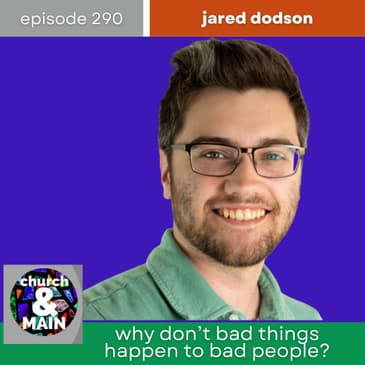

Why bad things happen to good people has always been the classic question of faith. But Gen Z is asking something different: why don't bad things happen to bad people?
Jared Dodson — a Gen Z Bible professor at Bushnell University — joins Dennis to unpack the perspective he's seeing in his students and peers, one where anger at injustice, exposure to political violence, and a deep desire for God's judgment are reshaping how a generation reads scripture. They talk about the imprecatory Psalms, the story of David, the temptation to dehumanize the very people we call unjust, and why nonviolence still matters even when the old approaches feel like they've failed.
The conversation moves through lament, mental health, the book of Job, and how Revelation offers a vision of reconciliation rather than just judgment. It's a generational conversation about anger, justice, and what it might take for older and younger Christians to understand each other.
Shownotes:
GenZ Isn't Asking Why Bad Things Happen to Good People
Walking Alongside Scripture (Jared's Substack)
Join the Church and Main Email List
Facebook | Instagram | Threads | Twitter | Website | YouTube
00:00:26 --> 00:00:31 Hello, and welcome to Church and Main, a podcast for people interested in the
00:00:31 --> 00:00:34 intersection of faith, politics, and culture.
00:00:34 --> 00:00:36 I'm Dennis Sanders, your host.
00:00:37 --> 00:00:44 So, I'm going to start things off today by using a $10 theological term, theodicy.
00:00:45 --> 00:00:52 Now, that can be best described in a term that I've heard a lot in my days.
00:00:53 --> 00:00:57 How can a good God allow evil to exist?
00:00:58 --> 00:01:03 And theodicy tries to answer this question. Now, another way to describe theodicy
00:01:03 --> 00:01:10 is found in the title of a very famous book, What Bad Things Happen to Good People.
00:01:12 --> 00:01:15 Now, for a lot of people, and especially a lot of generations,
00:01:16 --> 00:01:23 that's kind of how we look at things. We look at suffering as something that,
00:01:23 --> 00:01:25 why does it happen to good people?
00:01:26 --> 00:01:30 But that's not how Gen Z looks at things.
00:01:31 --> 00:01:35 Instead of asking, why do bad things happen to good people?
00:01:35 --> 00:01:40 They seem to be asking, why don't bad things happen to bad people?
00:01:42 --> 00:01:48 Jared Dodson is a Gen Z Bible professor, and he teaches students that are also
00:01:48 --> 00:01:53 in his generation, and what he has found is that his students have a very different
00:01:53 --> 00:01:55 way of looking at the problem of evil.
00:01:57 --> 00:02:01 Writing in Christianity Today, he says the following, quote,
00:02:01 --> 00:02:08 time and time again, I instead hear some variation of another question.
00:02:09 --> 00:02:15 Where is God's judgment against oppressors? If God is real, why hasn't he struck
00:02:15 --> 00:02:17 down these people for their sin?
00:02:18 --> 00:02:25 Or, more bluntly, why don't bad things happen to bad people? Unquote.
00:02:26 --> 00:02:34 Now, I don't know about you, but that statement can maybe make older generations
00:02:35 --> 00:02:36 feel a bit uncomfortable,
00:02:38 --> 00:02:41 because could this sense of wanting bad things to happen to bad people lead
00:02:41 --> 00:02:47 to bad conclusions could it lead to violence and where does things like grace
00:02:47 --> 00:02:49 or forgiveness fit into all of this,
00:02:51 --> 00:02:54 Now, this seems to be a continuing series that I have that I've been interviewing
00:02:54 --> 00:03:00 people from Generation Z, and this is now the third person in a row that I'm interviewing,
00:03:02 --> 00:03:06 to kind of ask, basically, what's up with these kids these days?
00:03:08 --> 00:03:13 Jared Dodson is my guest, and we're going to talk about The Odyssey and Generation Z.
00:03:14 --> 00:03:19 Now, I have to say that this interview is one where I think after the interview,
00:03:19 --> 00:03:21 I was able to really understand this viewpoint.
00:03:22 --> 00:03:27 I still don't know if I totally agree with the viewpoint, but I think that Jared
00:03:27 --> 00:03:31 has helped me to understand that there is a method to the madness that's going
00:03:31 --> 00:03:35 on and that we elders, especially those of us who are in the church,
00:03:35 --> 00:03:37 have to pay attention to this.
00:03:38 --> 00:03:42 Before we go into the interview, a little bit about Jared. He teaches biblical
00:03:42 --> 00:03:47 studies and theology at Bushnell University in Eugene, Oregon.
00:03:48 --> 00:03:52 And he also writes about scripture, theology, and culture.
00:03:53 --> 00:03:59 He has a very interesting sub-stack, which I will talk more about after the interview.
00:04:00 --> 00:04:10 So, please join me into this insight into Theodicy and Gen Z with Jared Dodson.
00:04:29 --> 00:04:33 Well, thank you, Jared, for taking the time to chat today. I wanted to start
00:04:33 --> 00:04:36 off by knowing a little bit about who you are.
00:04:36 --> 00:04:43 I know that you are, I want to say, soon to be already professor at Bushnell,
00:04:44 --> 00:04:48 and just wanted to know more about your background, your faith background, and all of that.
00:04:49 --> 00:04:56 Absolutely. No, thank you so much for having me. Yeah. Yeah. So, I am a Gen Z myself.
00:04:56 --> 00:05:03 So, I'm 26. I'm a young adjunct instructor here at Bushnell University in Eugene, Oregon.
00:05:05 --> 00:05:11 I'm an alum from the university here. And then I went to seminary up in Portland,
00:05:11 --> 00:05:13 Oregon at Multnomah University.
00:05:13 --> 00:05:17 I got a Master of Arts in Biblical Studies there.
00:05:18 --> 00:05:24 And I'm actually starting a PhD program in New Testament this coming fall at
00:05:24 --> 00:05:26 St. Andrews University in Scotland.
00:05:26 --> 00:05:28 So, really, really looking forward to that.
00:05:29 --> 00:05:37 Yeah, I grew up in the church. I grew up kind of mostly at First Baptist Church of Eugene,
00:05:38 --> 00:05:43 and have since sort of been trying to discern like where I fit sort of in,
00:05:43 --> 00:05:49 in some of these church conversations and contexts as I'm sure you're very familiar
00:05:49 --> 00:05:51 with, with the work that you do.
00:05:53 --> 00:05:56 But yeah, so, so I have a wife we met here at Bushnell.
00:05:57 --> 00:06:01 My wife's name is Rose. We have a two year old daughter and we currently attend
00:06:01 --> 00:06:05 a Eugene faith center, which is a four square church. So a little bit different.
00:06:05 --> 00:06:09 And yeah, we're, but we're really, really enjoying the community there. All right.
00:06:10 --> 00:06:15 So, of course, the reason I have you on is because you had, I mean,
00:06:15 --> 00:06:18 it was a fascinating article, and I guess I saw in your subject,
00:06:18 --> 00:06:22 this is like your first article for Christianity Today, so congratulations.
00:06:23 --> 00:06:27 Thank you, I appreciate it, yeah. And you talk about, you know,
00:06:28 --> 00:06:33 that your generation isn't asking why bad things happen to good people. Yeah.
00:06:33 --> 00:06:36 And I found that fascinating in reading that and….
00:06:40 --> 00:06:44 I think the first basic question to ask is what led you to write it?
00:06:44 --> 00:06:51 I know that this was something you were noticing in your classes about how people.
00:06:52 --> 00:06:53 Maybe the basic question is,
00:06:54 --> 00:06:59 What did you find out about your generation when it came to how they relate
00:06:59 --> 00:07:02 to injustice or forgiveness?
00:07:03 --> 00:07:07 Yeah, absolutely. No, that's a great question. Yeah, the article really,
00:07:08 --> 00:07:12 you know, I was writing it from a place of my experience as an instructor.
00:07:13 --> 00:07:19 But really, it started actually with things I was noticing from my peers,
00:07:20 --> 00:07:29 and friends of mine who sort of mixed with seeing a similar sort of perspective from my students
00:07:29 --> 00:07:33 kind of made me start thinking like, okay, I feel like I've been trained to
00:07:33 --> 00:07:38 think about this problem of evil or injustice or like you say,
00:07:38 --> 00:07:41 why bad things happen to good people in a certain way.
00:07:41 --> 00:07:48 And yet I feel like my sort of seminary background didn't really give me a lot
00:07:48 --> 00:07:53 of vocabulary or tools to talk about this other side of it, which is like,
00:07:53 --> 00:07:56 where is God's justice in the world against evil?
00:07:56 --> 00:08:02 Why does it seem like maybe evil could be winning at this point in time at some points?
00:08:04 --> 00:08:10 You know, like this was a little bit too direct to find a place in the article, but.
00:08:11 --> 00:08:17 I had a friend who essentially was, who I've been walking with through sort
00:08:17 --> 00:08:22 of a deconstruction of his own faith, and a core reason why he started down
00:08:22 --> 00:08:25 this path of deconstruction was,
00:08:25 --> 00:08:33 because he is not seeing God's judgment against people who seem to be using
00:08:33 --> 00:08:37 his name in vain or committing acts of injustice.
00:08:37 --> 00:08:43 It seems like they're getting away with it. And so this question of where is
00:08:43 --> 00:08:49 God in those things, I had those experiences before becoming an instructor.
00:08:50 --> 00:08:56 And now sort of taking a different position of trying to walk my students through
00:08:56 --> 00:09:02 some of these issues, especially in my Old Testament class that I taught this last spring,
00:09:03 --> 00:09:06 really just brought to life so many of these things.
00:09:06 --> 00:09:12 You know, like I mentioned in the article, my students really wrestling with
00:09:12 --> 00:09:19 the story of David, which I think is healthy. Like, I think it's meant to be wrestled with, right?
00:09:20 --> 00:09:24 But there is a sense in which it seemed like David got off scot-free,
00:09:25 --> 00:09:29 which clearly I don't think that's the good reading of the biblical text because
00:09:29 --> 00:09:32 clearly there are severe outcomes and repercussions.
00:09:32 --> 00:09:36 But the sense was that David,
00:09:37 --> 00:09:45 was sort of this classic man in power who abuses this woman and seems to get
00:09:45 --> 00:09:49 away with it because he repents in the end.
00:09:49 --> 00:09:55 And for some of my students, that idea of being forgiven for repentance seemed insufficient.
00:09:56 --> 00:09:59 Like there should have been more that came along with that. So,
00:09:59 --> 00:10:04 um, that's, that's a little bit long winded, but, um, yeah, that was some of
00:10:04 --> 00:10:08 the, the dialogue I was having coming, coming, uh, into this, um,
00:10:09 --> 00:10:14 And so I had been thinking through these things, wrestling through them a little bit.
00:10:15 --> 00:10:21 And what I've mostly been doing through Substack, which is where I've been sort
00:10:21 --> 00:10:27 of getting some of my thoughts out, is mostly writing content about the Bible.
00:10:27 --> 00:10:31 Because that's my area of interest and expertise.
00:10:32 --> 00:10:39 But I decided as I was thinking about these topics just to write a short note
00:10:39 --> 00:10:41 about some of these things that I'm seeing,
00:10:42 --> 00:10:46 and that ended up getting some attention and that's actually what Christianity
00:10:46 --> 00:10:50 Today saw and asked, hey, I know this isn't what you normally write about in
00:10:50 --> 00:10:54 this space but would you be interested in sort of expanding on your thoughts
00:10:54 --> 00:10:55 here and writing more on that?
00:10:58 --> 00:11:05 In your kind of discussions with your students, do you think that this is something
00:11:05 --> 00:11:09 that is specific to Gen Z as opposed to other generations?
00:11:10 --> 00:11:15 And if so, what is the thing that makes it different? What is it that they're
00:11:15 --> 00:11:19 seeing in the culture that they're looking at this differently?
00:11:20 --> 00:11:22 Yeah. You know, that's a good question. And.
00:11:24 --> 00:11:30 I think that it isn't something new, definitely. I don't think it's something new.
00:11:31 --> 00:11:37 But I think that the way that different generations or maybe at different times
00:11:37 --> 00:11:39 in culture, they're sort of different.
00:11:39 --> 00:11:44 There's a different emphasis or a different sort of priority to the different
00:11:44 --> 00:11:46 sets of questions that rise to the thought.
00:11:46 --> 00:11:51 So asking, you know, why aren't bad things happening to bad people isn't excluding
00:11:51 --> 00:11:54 the other sets of sort of questions about the problem of evil,
00:11:55 --> 00:12:00 but it seems like it's rising in prominence among this generation.
00:12:00 --> 00:12:05 And yeah, and I do think that there are some really significant reasons for that.
00:12:06 --> 00:12:12 I think that, and I go through some of them briefly, but I think that one of
00:12:12 --> 00:12:14 the most significant things is,
00:12:15 --> 00:12:25 the exposure of suffering that's happening in the world that Gen Z has been inundated with through,
00:12:26 --> 00:12:26 social media.
00:12:26 --> 00:12:30 And I don't say social media as like a bad thing, you know, sometimes,
00:12:31 --> 00:12:36 sometimes that is looked at as, as a purely negative force and it definitely can be negative,
00:12:36 --> 00:12:40 but I think being aware of injustice that's happening in the world,
00:12:40 --> 00:12:46 isn't in and of itself a negative thing that, that we should be aware of,
00:12:46 --> 00:12:49 um, the injustice that's going on in the world.
00:12:49 --> 00:12:56 And yet for Gen Z, they have spent most of their lives in this digital world where they,
00:12:57 --> 00:13:03 you know, atrocity is constantly at your fingertips, which is true for all generations
00:13:03 --> 00:13:05 living in this time period.
00:13:06 --> 00:13:11 But Gen Z has been the first generation where that was a formative experience
00:13:11 --> 00:13:18 in their early years as they were starting to develop their thinking around issues like,
00:13:18 --> 00:13:22 evil and justice and God and some of these core questions.
00:13:23 --> 00:13:27 So, I think that that's part of it. And then I think another significant one,
00:13:27 --> 00:13:33 is the rise in political violence and violent rhetoric sort of being,
00:13:33 --> 00:13:34 becoming more mainstream,
00:13:35 --> 00:13:38 and that being viewed as, well,
00:13:39 --> 00:13:46 maybe a more legitimate response to the people I think are evil or the people I disagree with, right?
00:13:46 --> 00:13:49 So, I think that there's, that's two of the main factors, I think,
00:13:49 --> 00:13:53 that I'm seeing in my peers and my students.
00:13:53 --> 00:14:00 I mean, I think that the political violence part is fascinating because I think
00:14:00 --> 00:14:08 about the case involving Luigi Mangione and how,
00:14:11 --> 00:14:17 there were people out there that thought this is the way that you handle things. Yeah.
00:14:18 --> 00:14:21 And that was kind of surprising to hear that, but.
00:14:25 --> 00:14:29 It was just kind of an interesting way, which then makes you wonder,
00:14:31 --> 00:14:37 have older generations really done a good job of explaining how you handle when
00:14:37 --> 00:14:38 there is injustice in the world?
00:14:39 --> 00:14:43 And that someone would either A, take such an extreme, or B,
00:14:44 --> 00:14:52 would say, yeah, I'm okay with this, of a way of handling evil in the world. Yeah.
00:14:54 --> 00:14:57 Yeah, I think the Manchini case is a great example.
00:14:58 --> 00:15:06 And I had a few people sort of reflect on that too, as this seems like a similar sort of trend.
00:15:06 --> 00:15:14 Yeah, where I mean, lots of people that I was aware of seemed in some ways.
00:15:16 --> 00:15:21 You know, not necessarily supportive, but like,
00:15:21 --> 00:15:26 well, it seems like some of these structures like insurance and,
00:15:26 --> 00:15:32 you know, are so broken that maybe it takes something so radical to fix it.
00:15:33 --> 00:15:41 And so, yeah, I think that I think that older generations have done a good job
00:15:41 --> 00:15:44 of like answering their their questions.
00:15:46 --> 00:15:51 But I don't think that they've necessarily done a good job of answering some
00:15:51 --> 00:15:53 of these newer questions.
00:15:53 --> 00:15:58 Like I don't think, like I was saying, I think we often don't have language
00:15:58 --> 00:16:05 or can kind of shut down that perspective that I'm seeing amongst Gen Z.
00:16:05 --> 00:16:09 You know, even in response to the article coming out, I had some people,
00:16:09 --> 00:16:17 many people, being like that this is such a tragedy that Gen Z has this perspective.
00:16:18 --> 00:16:22 And that actually wasn't the intention of the article. The intention of the
00:16:22 --> 00:16:28 article was to say, this is the perspective I think Gen Z broadly shares.
00:16:28 --> 00:16:30 Here are some reasons why.
00:16:31 --> 00:16:33 And biblically, I think that there's actually language to that.
00:16:34 --> 00:16:39 I don't think that that's actually a perspective that is completely rejected
00:16:39 --> 00:16:43 by scripture because we have things like the imprecatory Psalms, right?
00:16:44 --> 00:16:52 That there's space and language for these deep, you know, outcries against injustice.
00:16:53 --> 00:16:55 It just needs to be directed in the right way.
00:16:57 --> 00:17:05 And I'll admit, when I first read it, it being of an older generation of Generation
00:17:05 --> 00:17:09 X, it was kind of like shocking to read that.
00:17:09 --> 00:17:17 And so it's kind of hard to get into the framework of maybe there is something here.
00:17:17 --> 00:17:24 It's not a sense that, oh my God, we're raising a generation of killers or something.
00:17:24 --> 00:17:31 But to understand how that generation see things differently.
00:17:32 --> 00:17:37 Yeah. Which kind of leads me to this question of why is it that you think Gen
00:17:37 --> 00:17:39 Z sees things much differently?
00:17:40 --> 00:17:43 You talk about something about how.
00:17:45 --> 00:17:53 I mean, you even kind of frame how things about, let's say, the response to COVID-19.
00:17:55 --> 00:18:05 And also, how the response to seeing, let's say, someone like David fall wasn't
00:18:05 --> 00:18:10 shock, which I think older generations, that's how they would have responded.
00:18:10 --> 00:18:11 But it was a sense of anger.
00:18:12 --> 00:18:17 Yeah. And so, what is it that's happened, has happened maybe in the wider culture,
00:18:18 --> 00:18:25 that has led them to respond in a different way than, say, an older generation?
00:18:27 --> 00:18:30 Yeah, I think that, I mean, I think you mentioned COVID.
00:18:31 --> 00:18:39 And I think that that, you know, did have really significant effects on my generation.
00:18:40 --> 00:18:45 And I think that, you know, sociologically, like, that's not my field.
00:18:45 --> 00:18:50 But what I've heard is that, you know, that that has had significant effects
00:18:50 --> 00:18:56 on how we view and relate to other people.
00:18:56 --> 00:19:00 And I think that the primary medium through which we've started viewing and
00:19:00 --> 00:19:06 relating to other people is through like digital media and less of a human sort
00:19:06 --> 00:19:11 of embodied viewing of another person as, you know, from a Christian perspective,
00:19:12 --> 00:19:14 created in the image of God, you know.
00:19:14 --> 00:19:21 And so I think that that dissociation from someone's humanity makes it a lot
00:19:21 --> 00:19:26 easier to go to the reaction of anger or judgment.
00:19:28 --> 00:19:31 And yeah, like I said, I think that...
00:19:33 --> 00:19:39 I think that there's also this experience that I teased out a little bit in
00:19:39 --> 00:19:43 the article, but there definitely is much more that could be written on it of.
00:19:44 --> 00:19:50 People generally gravitating towards parts of scripture, like the imprecatory
00:19:50 --> 00:19:56 Psalms, when they feel powerless and oppressed, right?
00:19:57 --> 00:20:02 And that's often the context for these parts of scripture, even like David running
00:20:02 --> 00:20:08 for his life or Israel being oppressed by, by, you know, Assyrians or Babylonians or, or,
00:20:08 --> 00:20:12 you know, or the Exodus, there are even some imprecatory elements there.
00:20:13 --> 00:20:19 And I think that, and then you look at like the, the, the slave tradition in
00:20:19 --> 00:20:23 North America, sort of like looking to some of these, these places in scripture
00:20:24 --> 00:20:28 for not only hope, but also hoping for like their own justice.
00:20:28 --> 00:20:35 Right. um and so i think gen z even though we're living in a time where we have,
00:20:36 --> 00:20:38 much more materially than uh,
00:20:40 --> 00:20:45 you know generations before us i think that there's still a sense where the
00:20:45 --> 00:20:51 tragedy of the world seems so big when you're seeing it all the time,
00:20:51 --> 00:20:57 um when you're seeing the the you know catastrophes overseas when you're seeing
00:20:57 --> 00:21:00 like you know the political turmoil here at home
00:21:01 --> 00:21:07 i think there's just this sense of powerlessness and hopelessness that makes
00:21:07 --> 00:21:10 us want to cry out for,
00:21:11 --> 00:21:17 for someone to like intervene basically um sort of carrying on that that a similar
00:21:17 --> 00:21:21 perspective that's, I think, spoken to in the biblical tradition.
00:21:24 --> 00:21:29 So how do you, I mean, because you said that the response from older generations was a little...
00:21:31 --> 00:21:40 Alarmed, is how do older generations understand where this younger generation
00:21:40 --> 00:21:45 is coming from? Because it seems like there is a way of that happening with- Yeah.
00:21:46 --> 00:21:48 Because you brought up the imprecatory Psalms.
00:21:48 --> 00:21:51 Yeah. And I think that those are important. Obviously, they are not telling
00:21:51 --> 00:21:54 you go and do likewise. Of course, yeah.
00:21:54 --> 00:21:59 But they are explaining kind of a cry of the heart that, you know,
00:22:00 --> 00:22:05 this is not fair, this is unjust, God, you need to come and do something.
00:22:08 --> 00:22:13 And I guess, you know, how do we create a space for people to listen?
00:22:14 --> 00:22:19 And both people who are Gen Z who are in the church, but also those who even
00:22:19 --> 00:22:21 are outside of the church. Yeah.
00:22:23 --> 00:22:29 Yeah, that's, that's a great, that's a great question. Um, thinking about putting
00:22:29 --> 00:22:37 this, like these concepts into practice, uh, I do think can, um, can be difficult.
00:22:37 --> 00:22:41 Cause like I said, I think that the urge is to, um,
00:22:43 --> 00:22:49 correct and not out of like a, a judgment necessarily from older generations
00:22:49 --> 00:22:53 to Gen Z, but like a desire for,
00:22:55 --> 00:23:01 Gen Z to see like the, the, the love and hope and acceptance and beauty that's
00:23:01 --> 00:23:04 found like in the gospel and through Jesus Christ.
00:23:04 --> 00:23:11 And, and I think that there's this tendency to, to rush Gen Z through the process.
00:23:11 --> 00:23:15 Um, I, I do think that that's the still the end goal.
00:23:15 --> 00:23:23 Um, but I even experienced trying to walk through some of these conversations in, in my classes of,
00:23:25 --> 00:23:32 you know, trying to explain how this this.
00:23:34 --> 00:23:39 This naming of evil that my students have is, is right and good,
00:23:39 --> 00:23:44 right? We should be able to say that, that, that is evil. That is unjust.
00:23:45 --> 00:23:48 Um, and, and that something should be done about it.
00:23:50 --> 00:23:55 I think that the trouble is, is that this perspective my students often had,
00:23:56 --> 00:24:03 was that I don't see the thing happening that I should be, that I think should be happening.
00:24:03 --> 00:24:10 And so I'm going do it myself and what i tried to walk them through was that
00:24:10 --> 00:24:16 in doing that they're sort of becoming the actors of injustice that they're decrying
00:24:16 --> 00:24:19 right they're saying these people are,
00:24:20 --> 00:24:23 perpetrating injustice and so i'm going to punish them,
00:24:24 --> 00:24:30 and yet you are viewing them as less than human to allow yourself to punish
00:24:30 --> 00:24:35 them in the way you want to punish them and so you're you're then caught in the same trap.
00:24:36 --> 00:24:37 So I think that.
00:24:41 --> 00:24:45 Yeah, I don't want to, like, diminish the difficulty of walking through that
00:24:45 --> 00:24:47 conversation with Gen Z.
00:24:48 --> 00:24:51 I think the first part does have to come from listening.
00:24:53 --> 00:24:58 I think that there's this tendency to sort of be like Job's friends in a way.
00:24:59 --> 00:25:03 Like, you know, Job's having these, like, these cries of anguish.
00:25:04 --> 00:25:07 And the friends are like, you know, like, have you read Proverbs?
00:25:07 --> 00:25:09 That's not, you know, like, that's not.
00:25:11 --> 00:25:16 Yeah exactly yeah yeah uh they echo a lot of a lot of proverbs and yet you know
00:25:16 --> 00:25:18 you have to hold the two together,
00:25:19 --> 00:25:28 um and so i think that that is pointing to the first response to a cry of anguish
00:25:28 --> 00:25:33 should be like listening and coming around side and,
00:25:34 --> 00:25:36 uh being with the person um,
00:25:37 --> 00:25:41 And then once you have that trust where they can feel like they're heard,
00:25:42 --> 00:25:47 then I think we can start moving in the direction of pointing them to something
00:25:47 --> 00:25:51 maybe beyond just the judgment and towards something more hopeful.
00:25:53 --> 00:25:57 I don't know if you have ever seen the movie Unforgiven.
00:25:59 --> 00:26:06 I don't think so. Yeah, it came out about 30 years ago with Clint Eastwood.
00:26:06 --> 00:26:09 Okay. And the main gist of the story is.
00:26:11 --> 00:26:17 This woman who is a sex worker is raped.
00:26:18 --> 00:26:23 And kind of her fellow workers basically want vengeance.
00:26:23 --> 00:26:31 And the character of Clint Eastwood's character kind of has tried to leave a
00:26:31 --> 00:26:36 life of crime and all that, and it's got pulled in,
00:26:36 --> 00:26:39 to kind of exact justice, and it,
00:26:41 --> 00:26:44 goes, you know, badly.
00:26:45 --> 00:26:53 I mean, the people who did the crime get punished, but it's such a vengeful
00:26:53 --> 00:26:59 way that everyone is just kind of shocked and everything. Yeah, yeah.
00:26:59 --> 00:27:06 But it was just an interesting movie about judgment and...
00:27:08 --> 00:27:13 You know, Vengeance, you could even talk about, you know, where does forgiveness fit in?
00:27:15 --> 00:27:19 So, all of this just makes me think about that. And so, if you ever have a chance,
00:27:20 --> 00:27:21 you should see that movie.
00:27:22 --> 00:27:27 Yeah, yeah, yeah, definitely. Yeah, I recommend it to my students, maybe. Yeah, yeah.
00:27:27 --> 00:27:34 Yeah, because I really do think that, you know, it's a cycle that we can easily get trapped in.
00:27:35 --> 00:27:44 Um, and, and I think that we're, we're Gen Z is being shown that cycle through culture.
00:27:45 --> 00:27:48 Um, and so I think it's kind of the church's responsibility to show them a way
00:27:48 --> 00:27:54 out of the cycle that, that I don't think they largely can even see for themselves right now. Hmm.
00:27:56 --> 00:28:01 Is it because they just haven't really had any chance to, to see another way
00:28:01 --> 00:28:06 that they're just kind of and that this is just second nature to them um,
00:28:08 --> 00:28:14 i i think so um i think it could it could depend but you know one thing that
00:28:14 --> 00:28:15 was interesting for me was that,
00:28:16 --> 00:28:23 i saw similar perspectives with nuance of course from my students who came from
00:28:23 --> 00:28:27 with a christian like a church home background and those who didn't.
00:28:30 --> 00:28:37 And yeah, I think that for some of my students who came from a church background,
00:28:39 --> 00:28:45 You know, one thing I mentioned in the article is having students who weren't
00:28:45 --> 00:28:52 shocked by sort of the judgment or the conquest narratives in Joshua,
00:28:53 --> 00:28:59 which going into, I was all prepared to deal with, like, the difficulty of these texts.
00:28:59 --> 00:29:03 And then some of my students kind of wrote them off as like,
00:29:03 --> 00:29:08 well, you know, the Canaanites were so evil, they had it coming to them. They deserved it.
00:29:10 --> 00:29:14 And yet I had other students who,
00:29:15 --> 00:29:25 yeah, just couldn't really see how there could be a world where no one was beyond redemption.
00:29:25 --> 00:29:28 No one was beyond forgiveness.
00:29:29 --> 00:29:32 And I had a student in particular that I spent quite a bit of time and like
00:29:32 --> 00:29:36 office hours with who really struggled with that concept.
00:29:37 --> 00:29:44 But I think both those perspectives end up doing the dehumanizing thing we talked
00:29:44 --> 00:29:48 about earlier, that both of them are seeing something and saying,
00:29:48 --> 00:29:50 oh, they're evil, they're not human,
00:29:52 --> 00:29:56 instead of maybe a more complicated holding both those things together.
00:29:56 --> 00:29:58 They're doing evil things, and yet they're still human.
00:30:02 --> 00:30:06 Has there been anything, and, you know, since you are of this same generation,
00:30:07 --> 00:30:12 any type of thing in your own life and how you've struggled with,
00:30:13 --> 00:30:20 and I will use the $10 word again that we said before that we started recording, theodicy,
00:30:22 --> 00:30:29 and kind of the justice of God that helps you to relate with your students?
00:30:30 --> 00:30:32 Oh, absolutely. I mean, yeah,
00:30:35 --> 00:30:41 I think that there is a whole host of things,
00:30:44 --> 00:30:53 where I feel like the urge or like the tendency with them to wonder where,
00:30:54 --> 00:30:58 and I think everyone does this in different ways, but wonder where God is in,
00:30:58 --> 00:31:05 like the powerful seeming to be evil and seeming to be winning. Like.
00:31:08 --> 00:31:13 I think that's a perspective that I share and sometimes struggle with in like
00:31:13 --> 00:31:16 contemporary American culture.
00:31:19 --> 00:31:27 And I think the thing that sort of has distinguished my way of thinking.
00:31:30 --> 00:31:34 Has really just been a...
00:31:36 --> 00:31:45 Sort of like a radical belief in um just like the ontological like the the,
00:31:46 --> 00:31:54 the value the inherent value of people leading me towards a a belief uh in like
00:31:54 --> 00:32:00 non-violence um and and kind of developing this framework of thinking that,
00:32:00 --> 00:32:11 actually I would say that the Christian response is to not oppose violence with violence,
00:32:12 --> 00:32:14 not meet evil with evil.
00:32:14 --> 00:32:18 And I think that culturally that of course has a,
00:32:18 --> 00:32:24 really deep tradition in Christianity, but in sort of modern evangelical Christianity,
00:32:25 --> 00:32:29 uh non-violence has not really been a popular position um,
00:32:30 --> 00:32:39 that i think even things like just war theory can be misused or,
00:32:40 --> 00:32:44 um sort of give some credence to um.
00:32:46 --> 00:32:50 Violence being being used as an improper reaction and so i think that a lot
00:32:50 --> 00:32:54 of my students who mostly do come from evangelical backgrounds,
00:32:54 --> 00:32:57 are bringing this with them.
00:32:58 --> 00:33:03 And I think that I've just kind of stepped outside of that idea.
00:33:03 --> 00:33:07 They would say some violence is okay, and I would say I don't think any violence
00:33:07 --> 00:33:10 is okay. And I think that kind of gives me a difference of perspective.
00:33:14 --> 00:33:20 You kind of also talk about the times, obviously, the times that we live in.
00:33:20 --> 00:33:23 You were talking earlier about political violence.
00:33:23 --> 00:33:27 Yeah. And you list some in your article. Yeah.
00:33:29 --> 00:33:34 How is that having an effect on students when they see this?
00:33:36 --> 00:33:42 And what are the questions that they are bringing up about that? Yeah.
00:33:44 --> 00:33:44 Great question.
00:33:48 --> 00:33:51 And I think it has some profound effects.
00:33:52 --> 00:33:56 And I do think that I tried to be really intentional about.
00:33:59 --> 00:34:06 Listing examples of political violence happening on both sides of the aisle. And I do think,
00:34:09 --> 00:34:14 that that is affecting my students of all stripes.
00:34:14 --> 00:34:24 I would say that I hear calls for political violence or those kinds of ideas,
00:34:24 --> 00:34:27 more often from my students who,
00:34:28 --> 00:34:33 are, you know, in opposition to the current government structure.
00:34:33 --> 00:34:37 That could just be because that's the government structure they're opposing.
00:34:37 --> 00:34:39 So they're on the other side.
00:34:40 --> 00:34:47 But I have seen really a uptick in rhetoric surrounding,
00:34:48 --> 00:34:51 you know, like, wouldn't things just be better if this person,
00:34:51 --> 00:34:55 this person, this person, you know, fill in the blank died or whatever.
00:34:58 --> 00:35:01 And so, yeah, I think that there is this, this perception that that,
00:35:03 --> 00:35:11 you know, violence towards a single individual could have an effect on the system or on the problems.
00:35:12 --> 00:35:18 Whereas I, of course, don't think that it would. I think the system is broken itself.
00:35:20 --> 00:35:27 But yeah, I think that they are asking more and more, like, why not?
00:35:27 --> 00:35:31 Like, why are these sort of response is not okay.
00:35:31 --> 00:35:34 And one thing I've actually been thinking about is,
00:35:36 --> 00:35:45 I think that sort of in terms of the, like the civil rights movement and the work of Dr.
00:35:45 --> 00:35:53 King towards nonviolence, I think that there's a growing perspective that maybe
00:35:53 --> 00:35:58 that that was insufficient, that, you know, in terms of, like,
00:35:58 --> 00:36:03 injustice still going on today, systems still being broken,
00:36:05 --> 00:36:09 everything from, you know, like racial injustice and police reform,
00:36:11 --> 00:36:16 to politicians and, you know, Epstein, if you want. I mean, that's been something
00:36:16 --> 00:36:20 my generation's been thinking a lot about, that the system still seems broken
00:36:20 --> 00:36:24 and it seems like we tried the nonviolence thing and maybe it didn't work.
00:36:27 --> 00:36:35 And so, it almost seems like there's sort of this resurgence in maybe a sort
00:36:35 --> 00:36:40 of Malcolm X style response rather than a Martin Luther King Jr. style response.
00:36:42 --> 00:36:49 If I could go out on that. No, I think that that's an interesting way of looking at it.
00:36:51 --> 00:36:55 Because I remember always, those are always kind of, I think,
00:36:55 --> 00:37:00 two ways of looking at it that are held in tension. Yeah.
00:37:03 --> 00:37:04 It's also interesting just because
00:37:04 --> 00:37:11 of differing outcomes of how those two ended up where they ended up.
00:37:12 --> 00:37:19 Yeah. And so, yeah, I think that that's, I mean, I just haven't thought about
00:37:19 --> 00:37:24 it that way, but that is a fascinating way of looking at it. Yeah, yeah.
00:37:25 --> 00:37:30 One thing that I noticed in the article is, of course, a lot of what you were
00:37:30 --> 00:37:37 focusing on was, especially stuff in the Old Testament, where there is a lot
00:37:37 --> 00:37:40 of examples of judgment. Mm-hmm.
00:37:41 --> 00:37:46 So, how does that then relate to the New Testament where we talk about,
00:37:47 --> 00:37:51 you know, we're introduced to Jesus and talking about, you know,
00:37:51 --> 00:37:59 turning the other cheek and about forgiving his tormentors on the cross? Yeah. Yeah.
00:38:00 --> 00:38:03 Like, how do you bring those two things together? Because I don't think it's,
00:38:04 --> 00:38:08 getting rid of the, as you talked about, the injustice or the judgment.
00:38:09 --> 00:38:16 But obviously, Jesus has a way of showing how you deal with this that's different.
00:38:18 --> 00:38:19 Yeah, absolutely.
00:38:21 --> 00:38:29 I think that, yeah, like you said, it's important to hold those two in tension together.
00:38:31 --> 00:38:38 That one thing I tried to emphasize again was that, like you said,
00:38:38 --> 00:38:45 Scripture isn't condoning things like the things that the imprecatory Psalms call for.
00:38:45 --> 00:38:48 They're not prescriptive, right? Like go and do these things.
00:38:49 --> 00:38:57 But scripture is giving voice to these sets of questions and these experiences and these emotions.
00:38:59 --> 00:39:06 And then I think that the New Testament in really beautiful ways is showing
00:39:06 --> 00:39:09 the way to move beyond those things.
00:39:10 --> 00:39:14 Not that we're casting them aside, but we're actually dealing with them in a
00:39:14 --> 00:39:21 way that can be healthy and can actually lead to more peace and more reconciliation.
00:39:22 --> 00:39:28 And of course, we see that all the time in the example of Jesus's life and ministry.
00:39:29 --> 00:39:33 But I also think that we see that in the book of Revelation.
00:39:33 --> 00:39:38 You know, if we're talking about texts that were written, like in the face of
00:39:38 --> 00:39:40 powerlessness and persecution,
00:39:41 --> 00:39:47 um you know revelation has to be right there amongst them um and,
00:39:48 --> 00:39:52 i think revelation gets a bad rap you know for for some of the ways that it's
00:39:52 --> 00:39:58 read but i think that it really is giving voice to like this persecuted community
00:39:58 --> 00:40:01 likely facing persecution under nero um.
00:40:03 --> 00:40:08 Or domitian and you know, there's our debates, but facing persecution under,
00:40:09 --> 00:40:10 the Roman emperor of the time,
00:40:12 --> 00:40:20 And giving this voice to the martyrs actually being given glory and being like
00:40:20 --> 00:40:26 elevated and this restoration of all things in the end, right?
00:40:27 --> 00:40:30 That all things are redeemed and there's a new heavens and a new earth.
00:40:31 --> 00:40:38 And so I think that it's really important that, like, Revelation is read with
00:40:38 --> 00:40:41 these other texts that talk about the experience of, like, powerlessness and
00:40:41 --> 00:40:45 hopelessness and see Revelation.
00:40:48 --> 00:40:54 Not for its judgment, but for its vision of, like, reconciliation in the end.
00:40:57 --> 00:41:01 You know i one of the things in in thinking about the article that also came
00:41:01 --> 00:41:02 forward and we've talked about
00:41:02 --> 00:41:07 imprecatory psalms and all that yeah is also the concept of lament um,
00:41:08 --> 00:41:12 yeah one of the things that i have been wrestling with and thinking about a
00:41:12 --> 00:41:17 lot um because i live in in Minneapolis,
00:41:18 --> 00:41:22 were the ICE actions earlier this year.
00:41:22 --> 00:41:26 And that brought about, for me, a lot of thoughts about the concept,
00:41:26 --> 00:41:28 the biblical concept of lament.
00:41:28 --> 00:41:33 And I'm kind of curious, where does lament fit in in all of this?
00:41:35 --> 00:41:39 Yeah. I think that, you know,
00:41:40 --> 00:41:46 it's interesting to think about, and again, I don't want to over like psychologize
00:41:46 --> 00:41:52 the process but it is interesting to think about sort of like the stages of grief you know um,
00:41:53 --> 00:41:59 and we and we often begin with anger in those stages um and then have to sort
00:41:59 --> 00:42:06 of like move forward and oftentimes like despair or lament follows anger,
00:42:06 --> 00:42:08 um and so i i,
00:42:10 --> 00:42:23 The way I think of it, at least, is that I think that lament is a step towards restoration.
00:42:25 --> 00:42:32 I think that being able to move past the anger at what someone has done.
00:42:34 --> 00:42:37 Even if the anger is well-placed and the anger has its role, right?
00:42:37 --> 00:42:46 To move past that into a place of lament with the outcomes of the action.
00:42:48 --> 00:42:52 Because the anger is still directed at the person who committed the injustice.
00:42:52 --> 00:42:54 Lament is directed at the victim.
00:42:56 --> 00:43:02 Lament is directed at the people who are affected by this evil and coming alongside
00:43:02 --> 00:43:07 them and being able to empathize and be with them.
00:43:07 --> 00:43:13 And I think that that can actually be a powerful move at times.
00:43:16 --> 00:43:20 Against the offender, right? Or whoever it is.
00:43:22 --> 00:43:25 That if we're so focused on the anger, it's keeping the person,
00:43:25 --> 00:43:31 presumably a person of power, it's keeping the attention directed at the person in power.
00:43:31 --> 00:43:35 And lament directs the attention at the powerless, you know,
00:43:35 --> 00:43:38 the people who are affected by the action.
00:43:39 --> 00:43:43 So I think that that's a healthy step towards that.
00:43:43 --> 00:43:49 And I think that, yeah, of course, to hold the two together is important.
00:43:49 --> 00:43:57 And reading things like Jeremiah and Lamentations and Job, give us that.
00:43:57 --> 00:43:59 And lament Psalms as well.
00:44:00 --> 00:44:07 Give us that language where it's not just about ourselves or the bad guy.
00:44:08 --> 00:44:12 It's actually about these other people who are affected as well.
00:44:13 --> 00:44:19 And have you seen examples, especially among your students, that they've shared
00:44:19 --> 00:44:23 or even in class been able to kind of express lament?
00:44:25 --> 00:44:30 Yeah, you know, that's a great question. And I hadn't even, like,
00:44:31 --> 00:44:37 thought about it directly in the context of sort of the content of the article.
00:44:37 --> 00:44:46 Um but yeah i think that some of the most beautiful moments in class were people
00:44:46 --> 00:44:50 being really moved and really compelled by um.
00:44:52 --> 00:45:01 Scriptures like giving words and vocabulary and like voice to moments of like
00:45:01 --> 00:45:06 profound despair um and one thing i tried to talk about a lot especially,
00:45:06 --> 00:45:12 with the witness of the old testament and the all the various kinds of psalms how um,
00:45:13 --> 00:45:19 you know this whole range of human emotion as is found especially in the book of psalms um,
00:45:21 --> 00:45:27 and so any of those can be accepted and brought before god you know um and so
00:45:27 --> 00:45:31 i think that especially as we talked about things like despair and lament um,
00:45:32 --> 00:45:38 the the frequency of those coming up in the Old Testament was a surprise.
00:45:40 --> 00:45:47 And even, you know, the example of Jesus's own moments before the cross,
00:45:47 --> 00:45:51 you know, however we want to articulate what that experience was like.
00:45:52 --> 00:45:57 But yeah, some of the most impactful moments from the class were, you know,
00:45:57 --> 00:46:03 I think almost everyone was brought to tears and really moved by it were moments
00:46:03 --> 00:46:09 thinking about how Scripture is giving a voice to those kinds of experiences
00:46:09 --> 00:46:11 that really resonated with my students.
00:46:13 --> 00:46:18 One thing I've wondered, especially about this generation is,
00:46:19 --> 00:46:23 at least from what I've heard, maybe even what I've seen, is that they talk
00:46:23 --> 00:46:31 a lot more about mental illness more than other generations.
00:46:32 --> 00:46:37 I think older generations talk about it a little bit, but.
00:46:40 --> 00:46:45 We're not as open about talking about it. Yeah. In a way that I think younger
00:46:45 --> 00:46:48 generations talk about it with some ease. Yeah.
00:46:51 --> 00:46:54 Does that factor, do you think that that factors into this?
00:46:54 --> 00:46:59 Because I think that there seems to be a connection between talking about,
00:46:59 --> 00:47:09 let's say, depression or anxiety and talking about lament or judgment or injustice. Yeah.
00:47:12 --> 00:47:14 I i do think so um.
00:47:16 --> 00:47:20 Yeah i would i i would say like from my own experience that i think that that
00:47:20 --> 00:47:23 is like a strong like correlation.
00:47:25 --> 00:47:29 Um and yeah i do think that one of the reasons why those moments were compelling
00:47:29 --> 00:47:33 uh and maybe this also goes back to maybe some of the ways older generations,
00:47:34 --> 00:47:40 haven't been as able to have some of these difficult conversations with gen
00:47:40 --> 00:47:46 z or or be able to listen at times to Gen Z's experience,
00:47:46 --> 00:47:49 where the reason why they found it so compelling.
00:47:50 --> 00:47:54 In scripture was because that was one of the first times where they've heard
00:47:54 --> 00:47:57 that scripture actually gives voice to that, right?
00:47:57 --> 00:48:01 That if those kinds of conversations are uncomfortable for older generations,
00:48:01 --> 00:48:04 they've maybe never heard it much before.
00:48:05 --> 00:48:10 And so to see it recognized and acknowledged and accepted by,
00:48:10 --> 00:48:13 by God, at least the naming of the emotion is accepted, right?
00:48:14 --> 00:48:19 Um, then that, that could be really, really significant for people.
00:48:19 --> 00:48:28 Um, and I also think just the, uh, the effects that it's had,
00:48:28 --> 00:48:32 um, in terms of like suicidality and depression and stuff.
00:48:32 --> 00:48:37 Um i think that you would be hard pressed to find,
00:48:37 --> 00:48:45 someone in gen z who didn't have some kind of story of uh you know a family
00:48:45 --> 00:48:51 member or friend or a peer to some extent who wasn't affected by one of those things,
00:48:51 --> 00:48:54 um and so i think that.
00:48:56 --> 00:48:59 And of course there are all kinds of reasons why people go into why that's happening,
00:48:59 --> 00:49:05 but just the fact that it is happening, I think is making Gen Z talk about it more because they,
00:49:06 --> 00:49:08 if the older generations aren't willing to talk about it,
00:49:09 --> 00:49:11 they'll talk about it amongst themselves.
00:49:11 --> 00:49:16 Uh, but then to see it acknowledged in scripture, I think really makes a difference.
00:49:17 --> 00:49:23 Yeah, because I mean, I see that among nephews that I have who are Gen Z,
00:49:23 --> 00:49:30 is that, well, one, it's just a much more present reality in their lives. Yeah.
00:49:32 --> 00:49:38 In a way that, not that it wasn't in my generation, but I don't think we talked about it as much.
00:49:38 --> 00:49:43 Yeah, yeah. Or even maybe admitted it to ourselves as much. Yeah, yeah.
00:49:45 --> 00:49:46 So, if.
00:49:49 --> 00:49:55 In the church and with older, with this generation, looking at this,
00:49:55 --> 00:50:01 let's say, because I'm a pastor from a pastoral perspective, how do you,
00:50:04 --> 00:50:07 I'm not going to use the word deal because that sounds terrible,
00:50:07 --> 00:50:12 but how do you reach or connect with this generation to try to understand them?
00:50:12 --> 00:50:14 Because I think that there is going to
00:50:14 --> 00:50:18 be a disconnect just because of the generations and how we look at this.
00:50:18 --> 00:50:25 And as I said earlier, I think I looked at this like a lot of your older peers looked at it.
00:50:27 --> 00:50:32 How do we kind of cross that bridge to understand where they're coming from?
00:50:32 --> 00:50:37 You know, not necessarily to tell them, you know, yeah, this is the answer,
00:50:37 --> 00:50:44 but to help us understand where your generation is coming from. Yeah.
00:50:46 --> 00:50:46 Yeah.
00:50:54 --> 00:51:02 I can't i can't think of like easy answers for for a sunday morning which which
00:51:02 --> 00:51:05 i i would love i would love i would love if,
00:51:05 --> 00:51:11 i could give those um and i probably should maybe qualify this because it wasn't
00:51:11 --> 00:51:15 as much as sunday morning it's more in a pastoral care way so yeah yeah that
00:51:15 --> 00:51:17 would be more one-on-one or in
00:51:17 --> 00:51:22 a small group because yeah it it doesn't work as much on a sunday morning you're
00:51:22 --> 00:51:27 not gonna yeah yeah which which i think i think even even asking like okay the
00:51:27 --> 00:51:30 pastoral care question like i think that that is,
00:51:31 --> 00:51:37 a great start is thinking of this through a lens of of one-on-one pastoral care,
00:51:37 --> 00:51:42 um like you said or or small group past you know um but not um,
00:51:43 --> 00:51:45 not like from a pulpit on a Sunday.
00:51:46 --> 00:51:53 And obviously, obviously pastors are, are way over, overburdened and overworked and overloaded.
00:51:53 --> 00:52:02 Um, but I do think that there's real meaning and importance,
00:52:02 --> 00:52:04 um, especially for Gen Z.
00:52:05 --> 00:52:11 I think for older, um, mentors, older, you know, saints in the faith,
00:52:11 --> 00:52:15 older people that they can look up to,
00:52:16 --> 00:52:22 that actually want to listen to them and not to tell them what to think or how to think.
00:52:24 --> 00:52:32 But to hear about their experience and what they're seeing online versus maybe
00:52:32 --> 00:52:37 what other generations are hearing from their own outlets.
00:52:37 --> 00:52:42 Because we're all immersed in the media, right? Just different medias.
00:52:43 --> 00:52:44 Um...
00:52:46 --> 00:52:55 So, yeah, I think that that perspective of this is not me telling you how to
00:52:55 --> 00:52:59 think about theodicy or the problem of evil.
00:53:00 --> 00:53:05 And this isn't me saying another here's what's wrong with your generation speech,
00:53:06 --> 00:53:07 which sometimes happens.
00:53:08 --> 00:53:12 Um but yeah trying to,
00:53:14 --> 00:53:18 in a in a like person-to-person way understand the the perspective that that
00:53:18 --> 00:53:27 they're coming from um and i think that that really can almost only come through conversation um,
00:53:29 --> 00:53:34 yeah i don't know i could spitball like i think that there is something to.
00:53:37 --> 00:53:47 Having this be a welcomed and named thing at church where those kinds of questions
00:53:47 --> 00:53:50 and wrestlings are invited and acknowledged.
00:53:51 --> 00:53:54 Just how we've been talking about how scripture acknowledges them.
00:53:55 --> 00:53:59 I think that there is something significant to that. But in terms of on the
00:53:59 --> 00:54:05 individual basis, yeah, I think it can really only come through human interaction
00:54:05 --> 00:54:07 probably in a one-to-one setting.
00:54:09 --> 00:54:13 Yeah, and I think you had said earlier about Job's friends, and I think the
00:54:13 --> 00:54:17 thing that I remember—and I actually did preach this in a sermon—was.
00:54:19 --> 00:54:26 You know, the first time we hear about Job's friends is that they sit with him
00:54:26 --> 00:54:29 for seven days and say nothing. Yeah, yeah.
00:54:30 --> 00:54:35 And there was something important about that. Yeah. They messed up in a lot
00:54:35 --> 00:54:36 of things, but they got that right.
00:54:37 --> 00:54:41 That they didn't, for a time, just didn't say anything. And maybe the important
00:54:41 --> 00:54:46 thing there is to listen. Yeah, for sure.
00:54:48 --> 00:54:53 I think Job is the paradigmatic example for that.
00:54:53 --> 00:55:00 Where I joked in a class that everything was going great until they decided to open their mouths.
00:55:00 --> 00:55:05 You know, in terms of his, yeah, yeah, his, his, obviously things were bad,
00:55:05 --> 00:55:09 but in terms of their relationship, their dynamic together.
00:55:10 --> 00:55:14 And then it's interesting, of course, that the prologue of Job at the end of
00:55:14 --> 00:55:21 the book, you know, Job is the one who's, who's held up by Yahweh as,
00:55:21 --> 00:55:25 as speaking truly about, about him.
00:55:27 --> 00:55:31 The friend's perspective is rejected and they even have to bring sacrifices
00:55:32 --> 00:55:34 to Joe where he forgives them.
00:55:36 --> 00:55:41 So yeah, I think that that is really intentional there between the epilogue
00:55:41 --> 00:55:44 at the beginning and then the prologue and the epilogue at the end.
00:55:48 --> 00:55:55 How do you think that this generation can teach or will teach the wider culture
00:55:55 --> 00:56:03 about things such as judgment and lament and maybe ultimately forgiveness? Yeah.
00:56:04 --> 00:56:09 Yeah, that's a great question. Yeah, like I said towards the beginning…,
00:56:12 --> 00:56:18 i wanted to to sort of like name this experience in the article and and bring
00:56:18 --> 00:56:24 in things like the imprecatory psalms to try to say that,
00:56:26 --> 00:56:33 this shouldn't just be like dismissed as as bad theology or overlooked that
00:56:33 --> 00:56:38 there actually is something like deep and significant and true in scripture
00:56:39 --> 00:56:48 about a profound desire for things to be set right and for justice to come and for evil to be judged.
00:56:50 --> 00:56:56 And that's actually something that can be really beautiful when it leads to
00:56:56 --> 00:56:58 reconciliation, right?
00:56:58 --> 00:57:00 When it leads to the redemption of all things.
00:57:01 --> 00:57:10 And so I think that my hope is that we would be more aware of sort of that side
00:57:10 --> 00:57:13 of our faith and more in tune with,
00:57:14 --> 00:57:18 you know, like Job, more in tune with those who suffer and,
00:57:21 --> 00:57:23 more able to acknowledge,
00:57:25 --> 00:57:31 the evil in the world and not be afraid of like naming that while still being
00:57:31 --> 00:57:38 unwilling to respond to evil with evil ourselves, to try to point towards a different path,
00:57:40 --> 00:57:46 which I think is where the generational divide is, is that I think older generations
00:57:46 --> 00:57:49 see this path of redemption.
00:57:50 --> 00:57:53 Younger generations see this need for judgment.
00:57:54 --> 00:57:59 And I think that in a really complicated and messy, but beautiful way,
00:57:59 --> 00:58:01 I think scripture is holding both of those together.
00:58:02 --> 00:58:06 So I think we kind of need each other in dialogue to see a bigger picture.
00:58:08 --> 00:58:12 Yeah, and I think that that's, even within this discussion, has been helpful
00:58:12 --> 00:58:14 to see that. Because I think...
00:58:19 --> 00:58:24 I think older generations want to get to that forgiveness and reconciliation,
00:58:26 --> 00:58:31 and maybe that's partially because we can see where judgment goes off the rails,
00:58:33 --> 00:58:38 but that doesn't mean that you should ignore the injustice or the anger.
00:58:39 --> 00:58:45 Because I think you don't get to the forgiveness and reconciliation unless you
00:58:45 --> 00:58:48 have that thorough accounting as well.
00:58:48 --> 00:58:51 Yeah, absolutely. Absolutely.
00:58:52 --> 00:58:57 So if people want to know more, I know you have a really interesting Substack.
00:58:59 --> 00:59:00 Where should they go?
00:59:01 --> 00:59:12 Yeah, Substack is a great place. It's just jndodson at substack.com and that's
00:59:12 --> 00:59:13 where I do most of my writing.
00:59:16 --> 00:59:23 I'm currently just going through the Bible book by book and pulling out some
00:59:23 --> 00:59:25 of the things that I think are
00:59:25 --> 00:59:29 overlooked or misunderstood or some of the challenging parts of Scripture.
00:59:30 --> 00:59:36 Just talked about judges and it's sort of two different portrayals of women
00:59:36 --> 00:59:38 and how we hold those together.
00:59:39 --> 00:59:43 Oh, yeah. Yeah. So, which is a tough one. Yeah.
00:59:44 --> 00:59:47 I know. And I know where you're going with that one. Oh, gosh. Yes.
00:59:49 --> 00:59:54 So, that's a tough one. They're not normally that intense, but that's been a
00:59:54 --> 00:59:56 really fun, really fun exercise.
00:59:57 --> 01:00:00 Yeah. So, that's the main place where people can find me. Yeah,
01:00:00 --> 01:00:04 Walking Alongside Scripture is the name of the blog.
01:00:04 --> 01:00:08 Okay. Well, Jared, thank you so much for taking this time.
01:00:09 --> 01:00:10 This was really helpful, I
01:00:10 --> 01:00:15 think, and I hope that it's insightful for all generations to understand.
01:00:16 --> 01:00:20 And thank you so much for that article. Of course, yeah. Thanks so much,
01:00:20 --> 01:00:22 Dennis, for having me. All right.
01:00:50 --> 01:00:54 So, there was a lot to take in in this episode. I wonder what your thoughts are.
01:00:54 --> 01:00:58 As usual, you can always send an email to churchinmain at substack.com with
01:00:58 --> 01:01:02 your thoughts, opinions, questions.
01:01:04 --> 01:01:08 I will also include links to the article that he wrote for Christianity Today
01:01:08 --> 01:01:13 and also links to his substack, which I think is a very interesting one that
01:01:13 --> 01:01:15 talks about biblical theology.
01:01:16 --> 01:01:20 As usual, if you want to learn more about the podcast, listen to past episodes,
01:01:20 --> 01:01:22 or donate, check me out, churchinmain.org.
01:01:23 --> 01:01:27 You can also visit churchinmain.substead.com to read related articles.
01:01:28 --> 01:01:32 I just have one up that went up actually on Saturday, some thoughts about the
01:01:32 --> 01:01:35 semi-quincentennial of America.
01:01:35 --> 01:01:38 So I hope that you will consider reading that.
01:01:39 --> 01:01:45 And you can also know that I do put these episodes up, usually not every one
01:01:45 --> 01:01:47 of them, but I do put most of them up.
01:01:48 --> 01:01:50 They usually follow a week after they debut on the main site.
01:01:52 --> 01:01:57 Also, if you are in Substack, you can become a paid member, which is more of
01:01:57 --> 01:02:00 a donation. I don't really put anything behind a paywall.
01:02:01 --> 01:02:07 It's $5 a month or $60 a year. And again, you can find all of that at churchinmain.substack.com.
01:02:08 --> 01:02:13 Also, please remember to rate and review this episode if you can,
01:02:13 --> 01:02:16 because when you do that, that helps others find the podcast.
01:02:17 --> 01:02:22 And if you like this, doing that helps others know about the podcast.
01:02:22 --> 01:02:25 And also consider subscribing on your favorite podcast app.
01:02:26 --> 01:02:29 That is it for this episode of Church in Maine. I'm Dennis Sanders,
01:02:29 --> 01:02:34 your host. As usual, thank you so much for listening. This really does mean a lot.
01:02:34 --> 01:02:38 Take care, everyone. Godspeed. And I will see you very soon.