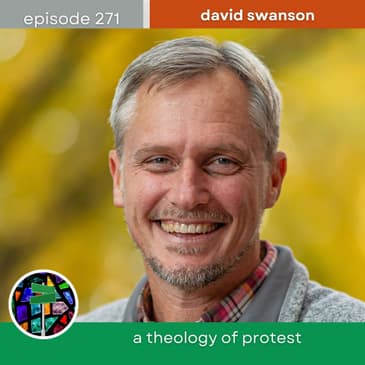
In this conversation, David Swanson discusses his experiences as a pastor in Bronzeville, Chicago, and the role of protest within the Christian faith. He reflects on the importance of community engagement, the theological underpinnings of protest, and the connections between spiritual practices and activism. Swanson emphasizes the need for lament in protest, the significance of bearing witness, and offers guidance for those new to activism. He encourages Christians to participate in protests as an expression of their faith and to recognize the historical context of protest within Christianity.
Suggested Reading and Listening:
📝A Christian Theology of Protest: Bearing Faithful Witness in a Time of Unrest
Join the Church and Main Email List
Facebook | Instagram | Threads | Twitter | Website | YouTube
00:00:27 --> 00:00:30 Hello, everyone, and welcome to Church in Maine, a podcast for people interested
00:00:30 --> 00:00:33 in the intersection of faith, politics, and culture.
00:00:33 --> 00:00:35 I'm Dennis Sanders, your host.
00:00:37 --> 00:00:45 January 23rd, 2026 happened to be one of the coldest days in Minneapolis for a very long, long time.
00:00:46 --> 00:00:50 The high for that day was around nine below zero, if I can remember.
00:00:51 --> 00:00:57 The wind chills were in the 20s below zero. That's all Fahrenheit.
00:00:59 --> 00:01:06 Of course, it was not a day for anyone to be outside, let alone outside walking.
00:01:07 --> 00:01:11 And normally, I would be inside keeping warm.
00:01:12 --> 00:01:15 And yet, on that day,
00:01:15 --> 00:01:20 I and my husband, along with tens of thousands of other people,
00:01:20 --> 00:01:29 made their way to Minneapolis, to downtown Minneapolis, to march against the ice surge in Minnesota.
00:01:30 --> 00:01:36 Now, you need to know a few things about me. I'm not someone that's on the political left.
00:01:37 --> 00:01:39 To be honest, I'm far more of a moderate.
00:01:41 --> 00:01:44 The other thing you should know is that I'm not someone that protests a lot.
00:01:45 --> 00:01:47 In fact, I really don't like to protest.
00:01:48 --> 00:01:52 It's not that I have anything against it. I'm just not into it.
00:01:52 --> 00:01:57 I've done it before, but I am not a protester in the least.
00:01:57 --> 00:02:04 And yet, here I was, on this incredibly frigid day, wearing multiple layers
00:02:04 --> 00:02:11 of clothing, marching along with many others, because I felt that it was important.
00:02:13 --> 00:02:19 Protesting is American. It has been in our blood since our founding.
00:02:20 --> 00:02:25 Many of the moves for social change, such as the civil rights movement,
00:02:26 --> 00:02:29 came from people who marched in the streets.
00:02:30 --> 00:02:36 Now, while protesting is very American, is it Christian?
00:02:37 --> 00:02:41 My guess for today would say emphatically, yes.
00:02:42 --> 00:02:46 David Swanson is an ordained minister in the Evangelical Covenant Church,
00:02:46 --> 00:02:51 And he wrote an essay that appeared last month on the website of Christians
00:02:51 --> 00:02:56 for Social Action called A Christian Theology of Protests,
00:02:56 --> 00:02:58 Bearing Faithful Witness in a Time of Unrest.
00:02:59 --> 00:03:06 In the article, he makes the case that hitting the streets for social change is Christian.
00:03:06 --> 00:03:10 He writes, Christian protest begins in prayer.
00:03:10 --> 00:03:19 In fact, Scripture portrays God's people protesting God more than any specific
00:03:19 --> 00:03:23 person, government, or social system.
00:03:24 --> 00:03:28 And that's just kind of starting about the protest towards God.
00:03:29 --> 00:03:33 It's not even just the protest towards governments and people.
00:03:34 --> 00:03:41 So today, we're going to talk about the theology of protest and why it matters,
00:03:42 --> 00:03:44 especially in the moment that we're in.
00:03:44 --> 00:03:48 Before we go into that conversation, a little bit about David.
00:03:48 --> 00:03:55 He's an author, and he's also the founding pastor of New Community Covenant Church in Chicago.
00:03:56 --> 00:04:01 He lives with his family on the South Side. He's the author of Rediscipling
00:04:01 --> 00:04:05 the White Church, From Cheap Diversity to True Solidarity,
00:04:05 --> 00:04:12 and Plundered the Tangled Roots of Racial and Environmental Injustice.
00:04:12 --> 00:04:18 So with all of that here is my conversation with David Swanson.
00:04:38 --> 00:04:43 Okay. Well, I wanted to start out and say welcome and to kind of start things
00:04:43 --> 00:04:48 out by learning a little bit more about you and your kind of spiritual background
00:04:48 --> 00:04:51 and just all around who you are.
00:04:52 --> 00:04:55 Yeah, well, thanks for having me, Dennis. I appreciate it.
00:04:55 --> 00:04:59 So I pastor a church here on the south side of Chicago. It's a church that we
00:04:59 --> 00:05:04 started as a multiracial congregation about 16 years ago this coming Easter.
00:05:06 --> 00:05:11 And super thankful to get to pastor this congregation and be a part of this community.
00:05:11 --> 00:05:14 Very grateful for the other churches in our neighborhood and all that we've
00:05:14 --> 00:05:16 learned from them over the years.
00:05:17 --> 00:05:24 We gather at a park district gym on Sunday mornings and set up chairs and plug-in instruments.
00:05:24 --> 00:05:29 And folks who've had that experience know a little bit what that's like.
00:05:29 --> 00:05:33 And we also have a nonprofit that we launched from the church about eight years
00:05:33 --> 00:05:37 ago that is built on restorative justice principles.
00:05:37 --> 00:05:42 And so we get to serve in three local high schools and one elementary school,
00:05:42 --> 00:05:44 running cohorts around peace circles.
00:05:44 --> 00:05:48 Our goal is really to help nurture community in our neighborhood,
00:05:49 --> 00:05:51 particularly among young people.
00:05:51 --> 00:05:55 We get to run a community garden and the back to school fair and lots of other
00:05:55 --> 00:05:59 really fun things that we get to be a part of in our community.
00:05:59 --> 00:06:02 And I guess the last thing I would say is, you know, for folks who are not from
00:06:02 --> 00:06:07 Chicago, Our neighborhood is called Bronzeville, which is sort of the equivalent
00:06:07 --> 00:06:12 of Harlem in New York City in terms of its kind of pedigree and legacy and significance.
00:06:13 --> 00:06:17 And it's just been such a gift to get to do ministry in this neighborhood.
00:06:17 --> 00:06:21 It's such a spirit of collaboration, learning from one another.
00:06:21 --> 00:06:25 Everybody doesn't have to do everything because we are all kind of working together,
00:06:25 --> 00:06:29 taking on different pieces of the work and the ministry and the community.
00:06:29 --> 00:06:35 So just so much joy getting to be a part of the work in our neighborhood.
00:06:37 --> 00:06:43 That's great to hear. And I think one of the reasons I wanted to chat with you
00:06:43 --> 00:06:49 is a little bit because of the article you wrote for Christians for Social Action
00:06:49 --> 00:06:52 on a Christian theology of protest.
00:06:52 --> 00:06:59 And I think that that is timely for the reason that you're in Chicago and I'm
00:06:59 --> 00:07:07 in Minneapolis and both places have known protests for reasons,
00:07:07 --> 00:07:09 for obvious reasons.
00:07:09 --> 00:07:16 And so I'm kind of curious what led you to write the article and kind of also
00:07:16 --> 00:07:22 because obviously I'm assuming it came in the context of what y'all experienced in Chicago.
00:07:24 --> 00:07:27 Why did you kind of come out with what led you to talk about this?
00:07:28 --> 00:07:35 Yeah, well, it goes back to actually our context in this particular community.
00:07:36 --> 00:07:41 Really, from the beginning, there have been moments of protest from our church's
00:07:41 --> 00:07:44 beginning, that is, moments of protest in our city and in our neighborhood,
00:07:44 --> 00:07:48 sometimes having to do with national events,
00:07:49 --> 00:07:52 sometimes having to do with very local events in Chicago.
00:07:52 --> 00:07:55 Most people know Chicago has a history of protest.
00:07:56 --> 00:08:03 And, you know, one of my learnings very early on was how involved many of the
00:08:03 --> 00:08:05 majority African American congregations
00:08:05 --> 00:08:09 in our community continue to be in different acts of protest.
00:08:09 --> 00:08:13 And, of course, protest looks a lot of different ways depending on the moment,
00:08:13 --> 00:08:14 depending on the community.
00:08:14 --> 00:08:20 But we learned from that very early on. And so we recognized in the first few
00:08:20 --> 00:08:23 years of our congregation's existence that this would probably be something
00:08:23 --> 00:08:25 that would be important to us as well.
00:08:25 --> 00:08:30 And most of that has been following along and participating and supporting with
00:08:30 --> 00:08:33 other churches or organizations who might be protesting,
00:08:33 --> 00:08:41 say, gun violence or the influx of guns across the border from Indiana into the city of Chicago.
00:08:41 --> 00:08:45 Sometimes it has to do with police brutality, police accountability, and so on.
00:08:46 --> 00:08:52 So this has been something we've done for a while. And in more recent years,
00:08:52 --> 00:08:58 particularly in the second Trump administration, as protesting has increased,
00:08:58 --> 00:09:02 I had just started to hear some commentary about, you know,
00:09:03 --> 00:09:05 these folks who are just protesting but aren't really doing anything,
00:09:06 --> 00:09:07 you know, kind of taking to the streets.
00:09:07 --> 00:09:10 But what do you do after you've taken to the streets?
00:09:10 --> 00:09:14 And I thought, boy, that is so not my experience.
00:09:14 --> 00:09:19 The folks who I've seen protest are actually the ones who are doing most of
00:09:19 --> 00:09:25 the building work, the organizing work, the congregational work and so on.
00:09:25 --> 00:09:32 And so I just felt a little confused by that false bifurcation between protesting
00:09:32 --> 00:09:35 and building. It didn't line up with my experience at all.
00:09:36 --> 00:09:42 And Dennis, that just caused me to reflect a little bit. So what do we as Christians,
00:09:42 --> 00:09:47 that's my tradition, what do we think about the act of protest?
00:09:47 --> 00:09:52 How does it fit in to our identity? How does it fit into our ministry?
00:09:52 --> 00:09:58 How does it fit into actually the good work of building, creating, organizing, and so on?
00:09:58 --> 00:10:04 I wanted to make a case for those who might be a little bit more skeptical.
00:10:04 --> 00:10:09 Or on the other hand, those who just have jumped right into protesting without
00:10:09 --> 00:10:12 necessarily recognizing that there is a tradition here.
00:10:12 --> 00:10:19 There is a way of theologizing about this that places these acts in a broader context.
00:10:20 --> 00:10:24 And I think one of the things that you do in the article is that you focus,
00:10:24 --> 00:10:28 you actually kind of use examples from Scripture.
00:10:29 --> 00:10:36 I think one that is really memorable is, I mean, it's the old tale that we grew
00:10:36 --> 00:10:40 up in Sunday school learning was Shadrach, Meshach, and Abednego.
00:10:41 --> 00:10:46 And could you kind of explain a little bit how that could be viewed as a form of protest?
00:10:47 --> 00:10:52 Yeah, I try to say in the piece that, you know, these different examples that
00:10:52 --> 00:10:57 I give in scripture certainly include elements aside from protest.
00:10:57 --> 00:11:00 They involve prayer, they involve lament, they involve grief,
00:11:00 --> 00:11:02 but isn't this what protest is?
00:11:03 --> 00:11:07 Doesn't protest contain a multitude of human experiences and emotions and so on?
00:11:07 --> 00:11:12 And so I think in that case, here you see, you know, three young people in a
00:11:12 --> 00:11:19 situation of captivity and exile, having a significant amount of their agency taken from them.
00:11:20 --> 00:11:25 You know, from one vantage point, you would think there's very little that one
00:11:25 --> 00:11:27 could do in a situation like that.
00:11:27 --> 00:11:34 They're brought right up to the edge of imperial power, superiority, domination, and so on.
00:11:34 --> 00:11:45 And yet, in that context, these three young people, they recognize that they do still have agency.
00:11:45 --> 00:11:54 They still do have a power to say no, to draw lines, to say out of our identity
00:11:54 --> 00:11:58 who we know we are as the people of God.
00:11:58 --> 00:12:04 There are lines that we just simply cannot cross. And so that even in a situation
00:12:04 --> 00:12:09 where you would think, you're spitting into the wind, what do you even hope
00:12:09 --> 00:12:12 to accomplish from a situation like this?
00:12:12 --> 00:12:20 Their identity, their integrity allowed them to stake out a position of moral clarity.
00:12:21 --> 00:12:28 Both with their words and then with their very courageous actions saying, hey, if we die, we die.
00:12:29 --> 00:12:35 And yet, even then, we understand that we've taken the stand that we are called
00:12:35 --> 00:12:38 to as the people of God in this moment.
00:12:38 --> 00:12:41 Uh that it's it's it's clarifying for
00:12:41 --> 00:12:44 me in a moment where it can increasingly feel
00:12:44 --> 00:12:46 as though um we too are
00:12:46 --> 00:12:50 spitting into the wind you know what what what what actions can
00:12:50 --> 00:12:55 we we take in a moment like this i think we need their example that reminds
00:12:55 --> 00:13:03 me of recently hearing a podcast with um the writer uh david french and he brings
00:13:03 --> 00:13:07 up something about people wondering if.
00:13:09 --> 00:13:12 What in this context, if anything, is effective.
00:13:12 --> 00:13:18 And he actually brings up something to the effect of Martin Luther King and
00:13:18 --> 00:13:23 the Civil Rights Movement that a lot of what they did, they had no idea if it
00:13:23 --> 00:13:25 would be effective at all.
00:13:25 --> 00:13:27 And of course, we're all looking at it from history.
00:13:28 --> 00:13:32 But at the time, they didn't know if any of this would work.
00:13:33 --> 00:13:38 I think that's a really important point to make.
00:13:38 --> 00:13:43 We are formed in a very pragmatic society.
00:13:43 --> 00:13:47 We Americans, cost-benefit analysis, right?
00:13:47 --> 00:13:51 We want to know how effective, efficient something is going to be.
00:13:51 --> 00:13:55 That's one of the reasons why it was important in that piece for me to situate
00:13:55 --> 00:14:01 protesting in our identity, to say this is just – we are a protesting people.
00:14:01 --> 00:14:09 That is part of who we are. And so, obviously, the civil rights movement was so strategic.
00:14:09 --> 00:14:14 There was training, there were retreats, there was knowledge that was – there
00:14:14 --> 00:14:19 were practices that they would go through. So they were very, very strategic.
00:14:19 --> 00:14:24 And yet there always does have to come this point where we say,
00:14:24 --> 00:14:31 even if strategy fails, even if our tactics don't quite see us through.
00:14:32 --> 00:14:33 This is simply who we are.
00:14:33 --> 00:14:41 There is a moral imperative for us to live as the kind of people we say that we are.
00:14:41 --> 00:14:46 And so I think that ought to be our starting point, particularly in a moment
00:14:46 --> 00:14:47 like we're living through now.
00:14:48 --> 00:14:51 I was just on a phone call with an organizer here in the city,
00:14:51 --> 00:14:55 a labor organizer. We're talking about doing some trainings around know your
00:14:55 --> 00:14:57 rights for different communities.
00:14:58 --> 00:15:01 We need to do that. We need to do that strategic work.
00:15:01 --> 00:15:07 And yet, if it's not coming from a place of moral conviction out of our identity
00:15:07 --> 00:15:15 as the people of God, then when those strategies seem to fail us, we'll pull back.
00:15:15 --> 00:15:18 You know, or when our tactics seem to not be taking us fast enough,
00:15:18 --> 00:15:22 far enough, then we'll pull back rather than that Shadrach, Meshach,
00:15:22 --> 00:15:26 and Abednego, you know, example of like, hey, if you got to toss us into the
00:15:26 --> 00:15:28 furnace, we're ready to go because we know who we are.
00:15:30 --> 00:15:33 So, I mean, that kind of leads me to thinking about,
00:15:34 --> 00:15:37 spiritual practices and protests.
00:15:38 --> 00:15:41 So, are there linkages between the two?
00:15:41 --> 00:15:45 And that reminds me of some things that I've read from people about,
00:15:45 --> 00:15:51 you know, church services and before protests and all that.
00:15:51 --> 00:15:54 What are the connections between those two?
00:15:55 --> 00:16:00 Yeah, I mean, you know, Dr. King would write about this, the kind of need for
00:16:00 --> 00:16:03 that moral clarity and spiritual purity.
00:16:04 --> 00:16:08 Oftentimes the civil rights protesters would carry these little cards in their
00:16:08 --> 00:16:12 back pockets of the 10 commitments that they had agreed to.
00:16:12 --> 00:16:20 I have often facilitated trips down to Atlanta and stood at the King Memorial
00:16:20 --> 00:16:23 looking at the seven principles of nonviolence.
00:16:23 --> 00:16:28 And you ask yourself, could I say yes to that today, you know?
00:16:28 --> 00:16:33 And then considering 50, 60 years ago saying yes to that in the face of white
00:16:33 --> 00:16:35 supremacist Jim Crow violence, it's just,
00:16:35 --> 00:16:42 it's mind boggling to think of the depth of character required,
00:16:42 --> 00:16:45 you know, to put your body on the line,
00:16:45 --> 00:16:49 children putting themselves in front of fire hoses and dogs and so on.
00:16:50 --> 00:16:55 One of the really formative experiences for me has been visiting 16th Street
00:16:55 --> 00:17:01 Baptist Church in Birmingham and sitting in that sanctuary,
00:17:01 --> 00:17:08 imagining the worship, imagining the preaching, imagining the inspiration and
00:17:08 --> 00:17:10 organizing before that.
00:17:11 --> 00:17:17 You were to walk down those stairs out into Kelly Ingram Park and face what was waiting for you.
00:17:18 --> 00:17:23 I've walked across Edmund Pettus Bridge and similarly trying to imagine what
00:17:23 --> 00:17:28 must have that felt like to be a part of this moving congregation walking the
00:17:28 --> 00:17:31 crest of a bridge when you couldn't see what was on the other side,
00:17:31 --> 00:17:34 but you could imagine what was on the other side.
00:17:34 --> 00:17:39 So I think that question of spiritual practices for the sustainability of protest,
00:17:39 --> 00:17:43 if it's not just going to be a one-off, occasional, you know,
00:17:43 --> 00:17:45 when all of the stars align, but more of a.
00:17:47 --> 00:17:52 Eugene Peterson would call this kind of discipleship a long obedience in the same direction.
00:17:53 --> 00:17:56 It does require that kind of spiritual formation.
00:17:56 --> 00:18:02 And I would say corporately, like communally, we do those kinds of practices
00:18:02 --> 00:18:08 of contemplation, of reading scripture, of praying, of examining our own hearts.
00:18:08 --> 00:18:16 We do those sorts of things together, and then we step outside visibly in the
00:18:16 --> 00:18:18 act of protest together as well.
00:18:19 --> 00:18:25 Yeah, one of the things that I have been, I was on a podcast recently kind of
00:18:25 --> 00:18:27 talking about how things are here,
00:18:27 --> 00:18:38 and one of the things that I have been starting to think about a lot more is the concept of lament.
00:18:38 --> 00:18:42 And I know you just talked about grief and protest.
00:18:43 --> 00:18:47 Where do those two connect? Because I think when we think of protest,
00:18:47 --> 00:18:54 sometimes we think of it as anger, but we don't think about grief or lament. Yeah.
00:18:55 --> 00:19:00 Boy, man, Dennis, I think that is a really, really important question.
00:19:00 --> 00:19:05 We need to bring our anger to these moments. I think one of the.
00:19:07 --> 00:19:11 One of the elements that I have witnessed over the years is how important it
00:19:11 --> 00:19:14 is to be angry together in public.
00:19:14 --> 00:19:18 There's something healing about that, to recognize that this anger is not just
00:19:18 --> 00:19:21 mine, that there is a community that shares.
00:19:21 --> 00:19:24 I'm not crazy for being angry at what I'm seeing.
00:19:24 --> 00:19:29 There's something important about that. Um, but, but, but, uh,
00:19:30 --> 00:19:35 anger that does not also then grow to include grief, lament,
00:19:35 --> 00:19:42 sadness, and then also joy, hope, resilience, uh, can become consuming,
00:19:42 --> 00:19:44 uh, can become all consuming.
00:19:44 --> 00:19:50 And so, yeah, I have found it to be important that we include the space to name
00:19:50 --> 00:19:53 those things that we are grieving.
00:19:53 --> 00:19:57 And what is grief but acknowledging loss? And so the protest,
00:19:57 --> 00:20:02 yes, it acknowledges what we are asking for, but it also makes space to say
00:20:02 --> 00:20:05 this is what we have lost. We have lost trust.
00:20:05 --> 00:20:08 We have lost faith. We have lost these lives.
00:20:09 --> 00:20:15 We have lost safety. We have lost, you know, a kind of hope in a particular sort of future.
00:20:15 --> 00:20:20 We have lost a sense of community, integrity or, you know, lots of different
00:20:20 --> 00:20:25 examples of what can be lost. And lament holds that, right?
00:20:25 --> 00:20:32 Lament is the kind of protest to God in prayer of what has been lost.
00:20:33 --> 00:20:39 And lament is big. It's hard to find lament in scripture that does not include
00:20:39 --> 00:20:44 praise, that does not include confession, that does not include a resilience and courage.
00:20:45 --> 00:20:47 Lament is big enough to hold all of that.
00:20:48 --> 00:20:51 But developing that vocabulary of lament, I think,
00:20:51 --> 00:21:01 allows a kind of emotional expansiveness that can hold, can contain communally
00:21:01 --> 00:21:04 that which needs to be expressed in the act of protest,
00:21:04 --> 00:21:11 rather than kind of just funneling everything down to one constricting emotion.
00:21:13 --> 00:21:23 Yeah, I think it is helpful and important, as you said, for both anger and lament at this time.
00:21:25 --> 00:21:30 Especially, I think, in communal ways, because I think so much of our,
00:21:30 --> 00:21:33 especially our anger, can be in front of a screen.
00:21:34 --> 00:21:37 And I don't think that that's always very helpful.
00:21:37 --> 00:21:42 And sometimes a more communal thing can be much more helpful because it,
00:21:42 --> 00:21:45 I think, frees people in some ways.
00:21:46 --> 00:21:53 Yes. No, absolutely. We need to see our experience mirrored in the experience
00:21:53 --> 00:22:00 of somebody else. Even if the nuances are different, and a screen just can't do that for us.
00:22:00 --> 00:22:05 It can approximate it, but you lose body language, you lose tone of voice,
00:22:05 --> 00:22:07 you lose physical proximity.
00:22:07 --> 00:22:10 Um i i've i've often
00:22:10 --> 00:22:13 uh explained the the protest that
00:22:13 --> 00:22:16 i've been a part of in downtown chicago when we're walking through the streets
00:22:16 --> 00:22:24 as a kind of um um mobile worship service uh and and granted many of the people
00:22:24 --> 00:22:30 there don't share my faith but but there is something about um speaking truth
00:22:30 --> 00:22:35 publicly in a society which so often lies to us,
00:22:36 --> 00:22:41 that is an act of worship, particularly for Christians who say we worship the one who is the truth.
00:22:43 --> 00:22:46 There is a kind of worshipful quality to that.
00:22:47 --> 00:22:52 You know, one of the things I found interesting in your essay was,
00:22:52 --> 00:23:00 I think it was kind of talking about the fact of protests in societies that
00:23:00 --> 00:23:03 aren't like the United States, that isn't a democracy.
00:23:04 --> 00:23:09 And kind of that some people would think because of the society that we're in,
00:23:09 --> 00:23:15 well, we don't really need that as much, which kind of made me scratch my head a bit because.
00:23:17 --> 00:23:21 Didn't we protest during the civil rights movement?
00:23:21 --> 00:23:24 I mean, it's like, you know, there were hits. I mean, there,
00:23:25 --> 00:23:30 I mean, I, I know enough American history to know that's always been part of it.
00:23:30 --> 00:23:35 And in fact, that that's kind of a part of our constitution or bill of rights.
00:23:35 --> 00:23:40 Yes. So I'm kind of curious, I mean, did you actually meet people that kind of thought that way?
00:23:41 --> 00:23:46 And I'm kind of curious, why would you, they kind of think that way?
00:23:47 --> 00:23:51 Yeah, I think in large part, these are folks who don't come from a Christian
00:23:51 --> 00:23:53 tradition that has included protest.
00:23:54 --> 00:24:01 And so there just hasn't been that theological memory of why we do this.
00:24:02 --> 00:24:06 And so it just felt important to me to take that argument seriously,
00:24:06 --> 00:24:08 because the context is different, right?
00:24:08 --> 00:24:12 What we find in Scripture is its own particular context, and ours is different.
00:24:12 --> 00:24:16 And like you say, we have a long tradition in this country of Christian protests
00:24:16 --> 00:24:18 and good theological reflection on that.
00:24:18 --> 00:24:23 But we know the way our kind of racialized church works in this country is that
00:24:23 --> 00:24:28 many, particularly white Christians, don't have that memory.
00:24:28 --> 00:24:31 And so it felt important to say, yeah, the context is different,
00:24:31 --> 00:24:37 and we ought to consider that because it'll shape the nature of our protest.
00:24:37 --> 00:24:43 We are protesting a kind of Christian nationalism right now that would have
00:24:43 --> 00:24:48 just been very strange to the early Christians living through the Roman Empire.
00:24:48 --> 00:24:53 You know, and so we ought to think about that. Does that mean we don't protest?
00:24:53 --> 00:24:55 And I try to make the case, no, actually, it doesn't.
00:24:56 --> 00:25:01 But it will shape how we protest. It'll shape how we speak the truth.
00:25:01 --> 00:25:05 It'll probably ratchet up the kind of responsibility that Christians have in
00:25:05 --> 00:25:10 this moment to speak the truth about those forms of Christian supremacy,
00:25:10 --> 00:25:12 domination, nationalism, and so on.
00:25:14 --> 00:25:23 So I want to try to invite those Christian friends for whom protest is new,
00:25:23 --> 00:25:27 and as much as I wish it weren't, it is,
00:25:27 --> 00:25:29 and they're kind of tuning into it right now.
00:25:30 --> 00:25:34 I want to try to provide some on-ramps for them to say, oh, okay,
00:25:34 --> 00:25:40 no, this is in fact something that as a Christian, I have a way to think about
00:25:40 --> 00:25:42 and to participate in. Mm-hmm.
00:25:44 --> 00:25:49 Well, and if you were, I mean, there are people, obviously, part of this is
00:25:49 --> 00:25:53 to write to people who this might be something new.
00:25:54 --> 00:25:59 If someone does decide to want to do this, I mean, what were,
00:25:59 --> 00:26:06 how would you help them get used to something that is, they've never done before?
00:26:06 --> 00:26:12 This is something very different. I mean, what advice would you give them or
00:26:12 --> 00:26:17 how would you help them kind of hold their hand as they take this step?
00:26:17 --> 00:26:24 I remember during COVID and the protests that were provoked by George Floyd's
00:26:24 --> 00:26:30 murder and others, somebody reached out and said, I've never been to a protest before.
00:26:30 --> 00:26:32 What should my sign say?
00:26:32 --> 00:26:36 And yeah, I loved that question. I thought, oh, great.
00:26:37 --> 00:26:40 This is somebody who's, they're taking some steps, you know,
00:26:40 --> 00:26:45 and out of their Christian conviction, they believe they need to be publicly present right now.
00:26:45 --> 00:26:48 And so I said, oh, you know, there's actually some great passages of scripture
00:26:48 --> 00:26:53 you could just put on your sign about God's heart for justice or God's character of righteous.
00:26:54 --> 00:26:57 Oh, thank you so much. She sent me a picture of her holding up her sign.
00:26:58 --> 00:27:02 Now, I know for a fact, in this person's case, that's not the end of their story.
00:27:02 --> 00:27:05 They've continued to take steps and mature in their faith in this way.
00:27:07 --> 00:27:11 But I love that learner's posture to say, you know what? I've not done this
00:27:11 --> 00:27:13 before. I don't know what this feels like.
00:27:13 --> 00:27:18 So I would say, okay, you're stepping into a situation where you're not in control.
00:27:20 --> 00:27:26 It may not always feel spiritual to you. There might be some people who are angry here.
00:27:26 --> 00:27:29 There might be some people using non-churchy words, you know,
00:27:29 --> 00:27:31 to express their anger in this space.
00:27:32 --> 00:27:36 And that's okay. You can still be present in this space.
00:27:37 --> 00:27:43 The focus of the piece, I tried to structure around this idea of bearing witness,
00:27:43 --> 00:27:47 which for me takes a lot of the pressure off.
00:27:47 --> 00:27:51 You're not there to control something. You're not here to steer something.
00:27:51 --> 00:27:56 You get to simply show up and bear witness to God's heart for justice,
00:27:57 --> 00:28:00 for God's heart for righteousness, to bear witness to the pain that's being
00:28:00 --> 00:28:03 expressed in this moment. This is what Christians do.
00:28:03 --> 00:28:07 We are witness bearers, and we can do it in this space as well.
00:28:07 --> 00:28:11 So I desire that to take some of the pressure off for some folks.
00:28:12 --> 00:28:17 And then in a moment like this, you know better than I do live in Minneapolis right now.
00:28:17 --> 00:28:21 There are lots of different ways that we can participate in acts of protest.
00:28:21 --> 00:28:27 There are black churches in our city who've been really engaged in economic
00:28:27 --> 00:28:28 boycotts in this moment.
00:28:28 --> 00:28:32 That's a way that we can participate in protest. There are folks standing up
00:28:32 --> 00:28:36 for refugees and for immigrants. That's a way that we can protest.
00:28:36 --> 00:28:40 There are folks signing up for rapid response teams when ICE shows up into a neighborhood.
00:28:42 --> 00:28:49 A person's race or accent right now is going to shape how they think they can safely protest.
00:28:49 --> 00:28:51 There's all kinds of factors to consider.
00:28:51 --> 00:28:57 But thankfully, in this moment at least, there are so many different on-ramps
00:28:57 --> 00:28:58 for folks to try this out.
00:28:58 --> 00:29:02 And then the last thing I'd say is go together. You know, find someone to go with you.
00:29:03 --> 00:29:05 Maybe they're new as well. Maybe they've got a little bit of experience.
00:29:05 --> 00:29:09 But go together, have the experience together, and then talk about it together.
00:29:09 --> 00:29:11 What was that like? What did you notice?
00:29:11 --> 00:29:15 What would you do next time? You know, what is God speaking to you in this space?
00:29:16 --> 00:29:20 Expect to hear from God. Expect God to move you to shape your heart in some way.
00:29:21 --> 00:29:24 Don't separate this from your discipleship to Jesus.
00:29:24 --> 00:29:29 This is part of your discipleship to Jesus. So expect God to be moving,
00:29:29 --> 00:29:33 speaking in this experience, and be sure to set a little time aside to reflect on that.
00:29:34 --> 00:29:41 I think one of the things that I think about, because I went to the kind of
00:29:41 --> 00:29:45 big protest a few weeks ago in Minneapolis,
00:29:45 --> 00:29:51 and I will say I don't always agree with everything that's on there.
00:29:51 --> 00:29:55 I mean, obviously, I'm there because of what I see what's been happening here in the ground.
00:29:55 --> 00:30:00 Yeah. And I think kind of when you talk about bearing witness,
00:30:00 --> 00:30:07 I think that that is helpful because I think it's, you don't have to agree with
00:30:07 --> 00:30:13 everything that you're doing this because of what you feel God is calling you to do in this moment.
00:30:13 --> 00:30:16 It's not about, you know, accepting
00:30:16 --> 00:30:21 the entire agenda, whatever the organizers are. I think that helps.
00:30:21 --> 00:30:26 I agree. It takes a lot of the pressure off, you know, and boy,
00:30:26 --> 00:30:30 you know, if, if Christians only show up in places where we agree with,
00:30:30 --> 00:30:33 with everything that everybody says or believes, we're, we're going to be a
00:30:33 --> 00:30:34 very cloistered group of people.
00:30:35 --> 00:30:39 I'll just say one of my, one of my experiences in these spaces,
00:30:39 --> 00:30:42 I'll sometimes, you know, bring a sign or make a sign.
00:30:42 --> 00:30:46 And the one I currently have just says, you know, when you welcome the stranger,
00:30:46 --> 00:30:50 you welcome to meet Jesus, you know, something, and I, it's very simple.
00:30:51 --> 00:30:54 And you know here I'm showing up in a space and some people are you know.
00:30:56 --> 00:31:00 Ice, you know, really loudly chants, you know, profanity, you know.
00:31:01 --> 00:31:03 Again, real anger, understandable anger, right?
00:31:04 --> 00:31:08 And often expressed in ways as like, ah, sometimes as a Christian,
00:31:08 --> 00:31:13 you know, called to love all of my neighbors, it can feel like we're otherizing,
00:31:13 --> 00:31:16 we're making enemies, you know, of those who,
00:31:17 --> 00:31:20 again, understandably, we're feeling anger toward.
00:31:21 --> 00:31:25 Um, so, so I, I share that, that, that, that feeling that you're describing,
00:31:25 --> 00:31:28 but I'm always amazed as I'm just standing there with my little sign,
00:31:28 --> 00:31:32 how many people come up who clearly are, are coming from different places and
00:31:32 --> 00:31:34 just say, Hey, thank you for being here.
00:31:35 --> 00:31:39 I'm, I'm, I'm really glad that you're here. And that's, you know, that's it.
00:31:39 --> 00:31:43 That might be the extent of the conversation, but, but never,
00:31:43 --> 00:31:45 never have I felt ostracized.
00:31:45 --> 00:31:47 Never have I felt condemned.
00:31:48 --> 00:31:54 Boy, we're glad that you're here. We're glad that what you represent is in this space with us as well.
00:31:55 --> 00:32:01 It might not be everybody's experience, but I would invite Christian folks to
00:32:01 --> 00:32:06 show up in spaces like that, and I think you would experience a kind of hospitality
00:32:06 --> 00:32:07 that would be pretty meaningful.
00:32:09 --> 00:32:12 So if people, I mean, you know, obviously—,
00:32:13 --> 00:32:18 It's going to be a few years of kind of dealing with stuff, unfortunately.
00:32:18 --> 00:32:25 But if there are people that are out there and they might be interested in doing
00:32:25 --> 00:32:32 something, how would you suggest that they take those first steps?
00:32:33 --> 00:32:41 I have a friend who pastors in our city here. He leads a majority second generation
00:32:41 --> 00:32:45 Asian American church, and they have really felt this moment very personally.
00:32:45 --> 00:32:52 And he likes to say, in most things we follow and in a few things we lead.
00:32:52 --> 00:32:57 And I love that perspective. And it's been true for me and for our church as
00:32:57 --> 00:33:02 well. Most of the time, we just get to join what others are leading,
00:33:02 --> 00:33:04 are organizing, are facilitating.
00:33:04 --> 00:33:08 And so that would be my encouragement as a first step is to just notice what
00:33:08 --> 00:33:12 is already happening and how can you participate.
00:33:12 --> 00:33:18 And then as best you can, starting as local as you can and then moving out from there.
00:33:18 --> 00:33:22 So is there something happening in the neighborhood or the neighborhood next
00:33:22 --> 00:33:25 door? If you're in a suburb, in your suburb or the next suburb.
00:33:26 --> 00:33:30 And between those two things, I think distance and then who's leading something
00:33:30 --> 00:33:33 you can participate in, you'll find stuff pretty quickly.
00:33:34 --> 00:33:36 But then there will come these moments where we recognize that.
00:33:37 --> 00:33:41 We're called to do something. We're called to help organize or lead.
00:33:41 --> 00:33:46 And we should be open to that. I don't feel like I'm ever looking for those moments.
00:33:47 --> 00:33:51 I'm trying to delegate those to others and say, hey, let me just follow you.
00:33:51 --> 00:33:56 But then I do think there'll be moments where a community discerns together.
00:33:56 --> 00:34:01 No, because of who we are, of our location, of our experience,
00:34:01 --> 00:34:03 of our perspective, and of this
00:34:03 --> 00:34:08 present moment, we are called to actually organize, to lead something.
00:34:09 --> 00:34:13 In that case, then I think, be as specific as you can be.
00:34:13 --> 00:34:20 Work out of the particularities of your local community and the particular thing
00:34:20 --> 00:34:23 that you feel called to bear witness to.
00:34:24 --> 00:34:28 And then others will want to participate with you in that.
00:34:29 --> 00:34:35 When we try to be all things to all people, it's not that we can't do that,
00:34:36 --> 00:34:41 but I think we can water down our ability to actually speak truth to power in a moment like this.
00:34:42 --> 00:34:49 So for example, a handful of years ago, the governor of Texas was busing,
00:34:49 --> 00:34:53 recently arrived migrants from the southern border to Chicago.
00:34:54 --> 00:34:59 They were getting dropped off all over the city in the dead of night with no,
00:34:59 --> 00:35:01 you know, no instructions, no housing.
00:35:01 --> 00:35:07 And then he was going on TV saying, you know, talking about how violent Chicago
00:35:07 --> 00:35:13 was because, you know, all this, this gun violence and how our laws weren't working and
00:35:13 --> 00:35:18 Of course, here in Chicago, we understand that this is the case because guns
00:35:18 --> 00:35:22 can cross borders very easily, and you just have to drive a few miles into the
00:35:22 --> 00:35:24 state of Indiana, and it's different gun laws there.
00:35:25 --> 00:35:29 I thought, boy, this is a moment when the church should bear witness to the truth.
00:35:31 --> 00:35:35 I couldn't find anybody else doing it, and so I said, okay, I think this is
00:35:35 --> 00:35:36 something I'm supposed to do.
00:35:36 --> 00:35:43 And so we organized a clergy faith leader event at the gun shop in Indiana that
00:35:43 --> 00:35:47 sells the most amount of guns used in Chicago homicides.
00:35:47 --> 00:35:49 We have these statistics.
00:35:49 --> 00:35:55 And we did a die-in with clergy in front of the gun shop, shut the gun shop down for the day.
00:35:56 --> 00:36:01 And the different faith leaders would pray as they were lying on the pavement
00:36:01 --> 00:36:07 there, praying for God to act, praying for God to move, praying for God's justice to be done.
00:36:07 --> 00:36:10 And at our press conference, we explained why we were doing this,
00:36:11 --> 00:36:15 the lies that were being told about what's happening in our city and the fact
00:36:15 --> 00:36:19 that we wanted to bear witness to the truth of what actually does happen.
00:36:22 --> 00:36:25 I'm happy to say that I don't think just because of that for sure,
00:36:25 --> 00:36:27 But that gun shop has since closed down.
00:36:27 --> 00:36:31 But there will be those kinds of moments where a local community says,
00:36:31 --> 00:36:34 hey, it doesn't seem like anyone else has said yes to this.
00:36:34 --> 00:36:37 And so we're going to say yes to this and take this on.
00:36:40 --> 00:36:45 So if people want to know more kind of about you or to kind of get in contact
00:36:45 --> 00:36:48 or maybe even get more tips, where should they go?
00:36:50 --> 00:36:54 Excuse me. Yeah, I don't know how many more tips I have. I think I've shared
00:36:54 --> 00:36:57 all of them in our conversation. You've asked wonderful questions.
00:36:58 --> 00:37:01 But I do have a little website just with contact information.
00:37:03 --> 00:37:09 It's dwswanson.com. And so folks can find me there. Okay.
00:37:09 --> 00:37:14 Well, thank you, David, for taking the time. I think this is important.
00:37:14 --> 00:37:18 It's important for the times that we're in, kind of no matter where we are,
00:37:19 --> 00:37:24 whether it's Chicago, Minneapolis, or Albuquerque for this.
00:37:24 --> 00:37:31 And I think it's also great to see that linkage between protest and our faith,
00:37:31 --> 00:37:36 that those things do matter. So thank you for taking the time.
00:37:36 --> 00:37:42 Yeah, thanks for having me, Dennis. And yeah, God bless you and Minneapolis, St. Paul in this season.
00:37:42 --> 00:37:47 I pray God's shalom for you and for your cities. Thank you so much.
00:38:19 --> 00:38:26 Put a link to David's article in the show notes as also a link to his website
00:38:26 --> 00:38:29 that will be available as well.
00:38:29 --> 00:38:33 As usual, I'm always curious to know what people's thoughts are about the episode.
00:38:35 --> 00:38:39 Please let me know what do you think about a theology of protests.
00:38:40 --> 00:38:46 Feel free to leave me a note by emailing churchandmain.substack.com.
00:38:46 --> 00:38:51 And as usual, if you want to learn more about the podcast, listen to past episodes,
00:38:51 --> 00:38:54 or donate, check us out at churchandmain.org.
00:38:55 --> 00:39:00 And you can also go to churchandmain.substack.com to read related articles.
00:39:00 --> 00:39:09 I just have a new one out that is about grace and kind of racial reconciliation,
00:39:10 --> 00:39:17 especially how we think about history in our, basically in our culture.
00:39:17 --> 00:39:22 So, check that out. Again, that's at churchandmain.substack.com to read that
00:39:22 --> 00:39:28 article, which is entitled American Grace. And you can also to check us out
00:39:28 --> 00:39:32 at churchinmain.org for past podcast episodes.
00:39:33 --> 00:39:38 I also hope that you will consider subscribing to the podcast on your favorite podcast app.
00:39:38 --> 00:39:41 And please consider leaving a rating or review.
00:39:41 --> 00:39:47 Doing that helps others find this podcast. And I would love if others can learn
00:39:47 --> 00:39:52 more about this podcast. So if you can do that, I will be incredibly thankful.
00:39:55 --> 00:40:00 And then also just two more things. One is that if you want to make a donation,
00:40:00 --> 00:40:02 there is a link in the show notes.
00:40:02 --> 00:40:09 And also, if you would like to get the episode in your email inbox when it goes
00:40:09 --> 00:40:11 live, there's a link for that as well.
00:40:12 --> 00:40:16 That is it for this episode of Church in Maine. I'm Dennis Sanders,
00:40:16 --> 00:40:19 your host. Take care, everyone.
00:40:19 --> 00:40:22 Godspeed. And I will see you very soon.