
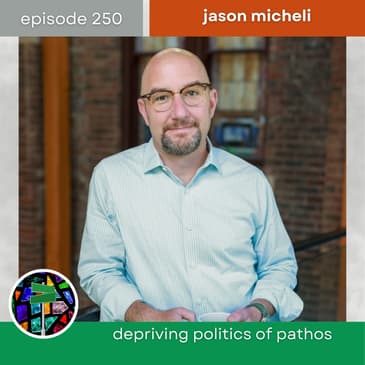

I chat with Jason Micheli, a United Methodist pastor, on the pitfalls of pathos in politics, emphasizing its potential to overshadow core Christian tenets. Drawing on Jason's article "Deprive Them of Their Pathos," we reflect on Karl Barth’s theological insights, arguing against conflating faith with political ideologies. Our conversation addresses the challenges of preaching in a politically charged climate and the need for churches to avoid becoming echo chambers. We highlight the importance of humility, grace, and intersectional engagement within the church, ultimately reinforcing our commitment to the transformative mission of the gospel amidst societal divisions.
Deprive Them Of Their Pathos by Jason Micheli
Crackers and Grape Juice Podcast
Join the Church and Main Email List
Facebook | Instagram | Threads | Twitter | Website | YouTube
00:00:00 --> 00:00:05 On this episode of Church in Maine, we look at draining politics of his pathos,
00:00:06 --> 00:00:10 and we also learn what pathos is. That's coming up.
00:00:10 --> 00:00:37 Music.
00:00:37 --> 00:00:41 Hello, and welcome to Church in Maine, a podcast for people interested in the
00:00:41 --> 00:00:44 intersection of faith, politics, and culture. I'm Dennis Sanders, your host.
00:00:45 --> 00:00:52 I'm recording this on September 18th, so that is a week and one day after the
00:00:52 --> 00:01:00 assassination of right-wing political influencer, Charlie Kirk, at an event in Utah.
00:01:01 --> 00:01:08 This was a shocking event. And sadly, this is coming in a string of political
00:01:08 --> 00:01:13 violent attacks that have taken place in our nation over the last few years.
00:01:15 --> 00:01:21 I mean, where to begin? There was here, where I'm living in Minnesota,
00:01:21 --> 00:01:30 the assassination of Melissa Hortman, who was the Speaker of the House in June,
00:01:30 --> 00:01:36 and the assassination attempt of Senator John Hoffman.
00:01:37 --> 00:01:42 There was the attempted assassination or taking out of,
00:01:44 --> 00:01:49 the governor of Pennsylvania, trying to burn down the governor's mansion just
00:01:49 --> 00:01:55 shortly after he was celebrating Passover with his family.
00:01:55 --> 00:02:02 Of course, there were two assassination attempts on President Trump when he
00:02:02 --> 00:02:06 was running for president last year.
00:02:07 --> 00:02:19 In 2022, there was an attempted assassination attempt with a Supreme Court justice.
00:02:19 --> 00:02:25 Of course, right now, Um, I mean, it just keeps going and going,
00:02:25 --> 00:02:30 and unfortunately it doesn't seem to end. Um.
00:02:33 --> 00:02:40 A week actually before this attack, I got to actually chat with a colleague, Jason Michele.
00:02:42 --> 00:02:48 And we got to talk about our political climate. And he actually wrote an article
00:02:48 --> 00:02:55 actually about five years ago that was entitled, Deprive Them of Their Pathos.
00:02:57 --> 00:03:01 And it really kind of relates back to his theological hero, Karl Barth,
00:03:01 --> 00:03:08 and how Barth kind of dealt with a similarly politically charged time.
00:03:10 --> 00:03:14 And so it was an interesting conversation, kind of us riffing on that.
00:03:15 --> 00:03:24 And I thought it was probably a good time to share that conversation and how
00:03:24 --> 00:03:30 we can really maybe try to turn down the temperature,
00:03:31 --> 00:03:33 though I don't know how we can.
00:03:34 --> 00:03:40 I would love to see if we can, but I hope that this conversation can help and maybe,
00:03:40 --> 00:03:47 maybe trying to bring down the temperature and maybe not make politics such
00:03:47 --> 00:03:51 the center thing in our lives.
00:03:52 --> 00:03:58 But Jason is the pastor of Annandale United Methodist Church in Annandale,
00:03:58 --> 00:04:00 Virginia, which is just outside of Washington, D.C.
00:04:01 --> 00:04:05 He is one of the hosts of the Crackers and Grape Juice podcast.
00:04:06 --> 00:04:11 He is the preacher in residence of the Iowa Preachers Project.
00:04:12 --> 00:04:17 As I said, we'll be discussing this article that he wrote that appears on his
00:04:17 --> 00:04:22 Tame Cynic blog and also on the Mockingbird website,
00:04:22 --> 00:04:27 and it is called Deprive Them of Their Pathos. I will include that in the show notes.
00:04:28 --> 00:04:34 As I said, it was written back in 2020, and it seems like that was in these
00:04:34 --> 00:04:40 days and age like a long time ago, but in light of the recent events,
00:04:40 --> 00:04:43 the article is still very prescient.
00:04:44 --> 00:04:49 So without further ado, here is my conversation with Jason Michele.
00:04:50 --> 00:05:09 Music.
00:05:10 --> 00:05:13 All right jason good to have you on the podcast it's
00:05:13 --> 00:05:17 good to see you again yeah um just
00:05:17 --> 00:05:21 kind of a quick thing is just kind of a quick introduction of who you are and
00:05:21 --> 00:05:30 um i know people may have seen you in other uh podcasts and other contexts who
00:05:30 --> 00:05:37 am i yeah who are you uh My name is Jason Michelli.
00:05:37 --> 00:05:42 I am a United Methodist pastor outside of D.C. in Northern Virginia.
00:05:43 --> 00:05:48 I have been a pastor since 2000.
00:05:48 --> 00:05:53 I've been in the Northern Virginia area for 20 years at two different churches.
00:05:53 --> 00:05:57 Um yeah i um
00:05:57 --> 00:06:00 and married to a lawyer in
00:06:00 --> 00:06:08 bethesda maryland uh we have two sons who uh are almost 23 and night and almost
00:06:08 --> 00:06:14 20 um one just graduated from william and mary another just graduated from the
00:06:14 --> 00:06:20 army basic training uh and so they are launched and out of the house um
00:06:20 --> 00:06:23 yeah i uh do
00:06:23 --> 00:06:26 a podcast called crackers and grape juice though uh we have
00:06:26 --> 00:06:29 been um on an unintended hiatus for
00:06:29 --> 00:06:33 a while um and i've
00:06:33 --> 00:06:38 written some stuff and have opinions on more stuff so that's who i am all right
00:06:38 --> 00:06:43 well the reason i wanted to um have you on the podcast is to talk about an article
00:06:43 --> 00:06:49 you wrote actually way back in 2020 um it's called deprive them of their pathos
00:06:49 --> 00:06:52 partisan politics, social media, and Karl Barth.
00:06:53 --> 00:06:59 And, you know, I always like to joke when something was written a few years
00:06:59 --> 00:07:02 ago that it feels like it was written a century ago.
00:07:04 --> 00:07:09 But it still actually rings true today, just
00:07:09 --> 00:07:12 because of the nature of our sad state
00:07:12 --> 00:07:19 of our politics and um when it was written you were kind of talking just about
00:07:19 --> 00:07:26 especially in the aftermath of our election which was at that time kind of at
00:07:26 --> 00:07:31 a crazy time in our um nation's history um,
00:07:32 --> 00:07:37 And here we are again at a crazy time in our nation's history.
00:07:38 --> 00:07:43 But kind of before we go into kind of talking a little bit more about our current
00:07:43 --> 00:07:50 situation, can you kind of give us a little bit of a rundown of what you were
00:07:50 --> 00:07:52 trying to get at in that article?
00:07:52 --> 00:08:02 And maybe the setup of what Karl Barth was trying to get at in his background.
00:08:02 --> 00:08:08 Yeah, I mean, you're kind of surprising me with something I wrote five years ago.
00:08:09 --> 00:08:20 But yeah, so I wrote this in response to a good book by Angela Hancock called
00:08:20 --> 00:08:21 Karl Barth's Emergency Homiletic.
00:08:23 --> 00:08:28 And so for folks who don't know, Karl Barth is probably the most significant
00:08:28 --> 00:08:30 theologian of the 20th century.
00:08:32 --> 00:08:40 I think it was Hans Urs von Balthasar said that Barth was the most significant
00:08:40 --> 00:08:41 theologian since Thomas Aquinas.
00:08:43 --> 00:08:49 And Barth was a Swiss theologian who taught for a while in Germany.
00:08:52 --> 00:08:59 He started out as a pastor and then realized the liberal theological education
00:08:59 --> 00:09:02 that he had been formed in in Germany.
00:09:03 --> 00:09:07 Didn't preach. And so he struggled as a pastor with how to,
00:09:10 --> 00:09:14 proclaim the gospel. And so that caused him to go back to Paul's letter to the Romans.
00:09:15 --> 00:09:24 And so Barth wrote a series of drafts or editions of commentary on Romans that kind of,
00:09:25 --> 00:09:30 provoked a decisive break with theological liberalism.
00:09:30 --> 00:09:35 And that launched his theology.
00:09:35 --> 00:09:37 So he didn't have a PhD.
00:09:38 --> 00:09:40 He was just a self-taught genius.
00:09:42 --> 00:09:54 So move forward. Barth is teaching theology in Germany at the advent of the Nazi movement.
00:09:57 --> 00:10:06 And Barth early on saw the dangers that Nazism posed, and he found it problematic, especially,
00:10:06 --> 00:10:12 that one of the early adopters of National Socialism was the professor of homiletics
00:10:12 --> 00:10:14 at the university where he taught.
00:10:14 --> 00:10:21 And Barth did not want future preachers to be formed by someone so compromised.
00:10:22 --> 00:10:31 And so Barth started teaching a series of uncredited lectures on homiletics.
00:10:31 --> 00:10:33 You can find them.
00:10:34 --> 00:10:39 They're collected in a little book called Homiletics that's available,
00:10:39 --> 00:10:44 made up of student notes from those lectures.
00:10:44 --> 00:10:50 But in those lectures, one of the things Barth talks about is encouraging these
00:10:50 --> 00:10:55 preachers to deprive politics of their pathos.
00:10:56 --> 00:11:04 This is the line. And Barth's understanding there, and I should also say that
00:11:04 --> 00:11:07 Barth was someone who was very politically engaged outside of the church,
00:11:08 --> 00:11:12 was a political activist.
00:11:14 --> 00:11:19 But Barth understood the danger of Nazism in particular and politics in general.
00:11:19 --> 00:11:34 They function as idols in that they demand from us and draw out of us an allegiance
00:11:34 --> 00:11:39 and a fervor that is appropriate for God alone.
00:11:39 --> 00:11:49 Um, and so, so that was, uh, yeah, so that was, um, that was a thread I was pulling five years ago.
00:11:49 --> 00:11:53 Um, and I think it's, it's, um, it's evergreen.
00:11:55 --> 00:11:59 Yeah. And where do you think you're seeing it? Where did you think you were
00:11:59 --> 00:12:02 seeing it then? And where are you seeing it now?
00:12:03 --> 00:12:07 Um, I think, um, yeah.
00:12:08 --> 00:12:13 To go back to this theme of theological liberalism, which is different than
00:12:13 --> 00:12:16 political liberalism, it should be said.
00:12:17 --> 00:12:27 You know, one of the ways – so, Christianity reacted to modernism in one of two ways.
00:12:27 --> 00:12:37 One way was to retreat into fundamentalism and to treat the Bible as you would
00:12:37 --> 00:12:42 in the other book and defend it with scientific rigor.
00:12:43 --> 00:12:53 So fundamentalism. And another way was to try to advocate the utility of Christianity
00:12:53 --> 00:12:59 based on its subjective helpfulness, you know?
00:13:00 --> 00:13:04 And so we, you know, I can't prove to you, Dennis, that Jesus was born of a
00:13:04 --> 00:13:06 virgin. We don't really know what to do with the resurrection.
00:13:08 --> 00:13:13 But, you know, Christianity makes emotional sense, and therefore it's useful.
00:13:13 --> 00:13:16 That was essentially liberalism.
00:13:17 --> 00:13:22 And I think we're in the midst of a third iteration of that,
00:13:23 --> 00:13:29 that we're not really sure what to do with the dogma of the faith.
00:13:31 --> 00:13:36 But Jesus is a helpful cipher for political engagement.
00:13:37 --> 00:13:41 And so I think there's a lot of Christians on both. And this is a bipartisan
00:13:41 --> 00:13:44 problem, right? Yeah, it is.
00:13:45 --> 00:13:51 It's not just that Christianity is psychologically useful, it's that Jesus is politically useful.
00:13:52 --> 00:14:01 And so Christianity becomes merely a vehicle for the politics that you had before you met Jesus.
00:14:02 --> 00:14:12 And I think, yeah, I think that is a problem on both sides of the political spectrum.
00:14:12 --> 00:14:22 And I think it's a level of intensity that Christians on both sides of the political
00:14:22 --> 00:14:25 spectrum demand from their fellow believers, and I think it's inappropriate.
00:14:27 --> 00:14:36 So what does that—how does then preaching—what does preaching look like in such
00:14:36 --> 00:14:39 a politically charged environment?
00:14:39 --> 00:14:45 And what did it look like to BART in such a charged environment?
00:14:46 --> 00:14:52 Because I'm actually in the midst of reading the emergency homiletic.
00:14:52 --> 00:14:58 And one of the things, there's a part where he says something to the effect
00:14:58 --> 00:15:04 of preaching as if, something to the effect of preaching as if.
00:15:06 --> 00:15:10 Things don't matter, or something to that effect.
00:15:12 --> 00:15:15 And I found that fascinating to hear that.
00:15:16 --> 00:15:22 And I know that if I preached that, I think some people's heads would explode.
00:15:24 --> 00:15:27 But it also seems very powerful to say that.
00:15:28 --> 00:15:35 And also that there is something very, like a very strong word of faith to say that.
00:15:35 --> 00:15:39 But what does that, I mean, you know,
00:15:39 --> 00:15:48 what does that look like in an environment where I think people are almost always looking for, or.
00:15:49 --> 00:15:54 At least some people, I should say, not everyone, some people are looking for
00:15:54 --> 00:15:59 basically affirmation of their own viewpoints in the pulpit.
00:16:00 --> 00:16:07 Yeah, I think, so the quote you're referring to, so Barth's students,
00:16:08 --> 00:16:13 you know, after Adolf Hitler was elected, you know, elected,
00:16:14 --> 00:16:18 remember, it's appropriate to, it's always important to remember that he was.
00:16:18 --> 00:16:22 Well, I think people forget that. yeah so
00:16:22 --> 00:16:24 that uh you know um he was
00:16:24 --> 00:16:27 democratically elected um and bart's students
00:16:27 --> 00:16:31 were like well you know you know professor bart
00:16:31 --> 00:16:34 like what are we what are we supposed to preach in light of of this election
00:16:34 --> 00:16:40 and and bart said preaches if nothing has happened um and that is not again
00:16:40 --> 00:16:50 bart was a political activist that was not um a council for a kind of quietism uh it was instead I,
00:16:51 --> 00:16:58 You should preach as though Jesus is Lord. And, you know, one of the things Bart said was, you know.
00:17:00 --> 00:17:06 Do something about, like, you know, don't make that little man in Berlin sound
00:17:06 --> 00:17:07 more important than he is.
00:17:09 --> 00:17:16 And so it's, yeah, it's from a position of faith.
00:17:16 --> 00:17:21 And it's also, for Barth, too, it was, you know, beyond politics,
00:17:21 --> 00:17:28 he was very leery of preachers spending too much time talking about sin,
00:17:28 --> 00:17:33 because it's very easy to make sin more interesting than salvation.
00:17:34 --> 00:17:40 And so, for Barth, you know, everything should be proclaimed from the perspective of resurrection.
00:17:40 --> 00:17:46 Direction um we only know what sin is um from you know from the hindsight of
00:17:46 --> 00:17:54 of of easter um and and and and it's just you know the only sin we know is overcome
00:17:54 --> 00:17:57 sin um and so we shouldn't,
00:17:58 --> 00:18:03 proclaim the gospel in such a way that suggests that dennis's salvation is in
00:18:03 --> 00:18:07 question or that the fate of the world is up in the air.
00:18:08 --> 00:18:16 And so, yeah, you know, with the Barman Declaration that Barth also wrote,
00:18:17 --> 00:18:19 you know, he talks about joyful obedience.
00:18:20 --> 00:18:25 And so, it's, yeah, so it's, we should be joyfully obedient in the world.
00:18:28 --> 00:18:33 And I don't get a sense of that from a whole lot of Christians.
00:18:33 --> 00:18:43 Um there's um and i get i get i get the alarm i get you know i get i get all all of it um but,
00:18:44 --> 00:18:50 uh when it comes to christians gospeling other people um we're called to a different
00:18:50 --> 00:18:57 kind of speech well yeah and i think that that brings up something i've been
00:18:57 --> 00:18:59 thinking about a lot lately is,
00:18:59 --> 00:19:04 if you look at, and it's also something you bring up in the article,
00:19:05 --> 00:19:11 social media and things like that, there's a lot of, as I like to call,
00:19:11 --> 00:19:18 flailing arms like Muppets about things.
00:19:21 --> 00:19:29 Always just kind of a lot of fear. And I kind of wonder, how do we,
00:19:30 --> 00:19:35 as Christians, talk about this or deal with this?
00:19:36 --> 00:19:48 And how do we talk about all of this and talk about the gospel in this time and not.
00:19:51 --> 00:19:58 And not really kind of give so much into the politics that make it into a god,
00:19:58 --> 00:20:04 because I feel sometimes that that's what we're doing, that it becomes that
00:20:04 --> 00:20:13 we've kind of made this into a kind of a god, and we're looking really for a savior.
00:20:15 --> 00:20:23 And I'm not talking about Jesus. And so, there's like this fear of this devil
00:20:23 --> 00:20:28 and we're looking for a savior and so how do we as as preachers,
00:20:29 --> 00:20:37 i don't know i don't want to say calm people but maybe to give people a sense of hope,
00:20:38 --> 00:20:51 or yeah yeah i mean um you mentioned social media i i don't i can't think of a better,
00:20:52 --> 00:20:54 example of what.
00:20:56 --> 00:20:58 The New Testament means by the principalities and powers.
00:20:59 --> 00:21:09 That it isn't just that our politics draw out of us an obedience that we owe to God alone.
00:21:10 --> 00:21:14 It's that we are preyed
00:21:14 --> 00:21:17 upon by powers outside of
00:21:17 --> 00:21:21 ourselves um that sort
00:21:21 --> 00:21:25 us into ever antagonistic tribes
00:21:25 --> 00:21:28 um you know like it
00:21:28 --> 00:21:34 i'm not you know social media like things like this this platform like are useful
00:21:34 --> 00:21:44 um but you know the algorithms um are determining how we see the world in one
00:21:44 --> 00:21:46 another um and and we should be,
00:21:47 --> 00:21:50 cognizant of that um you know
00:21:50 --> 00:21:54 you know that you
00:21:54 --> 00:22:03 know like the idea that so many people are addicted to uh you know a platform
00:22:03 --> 00:22:09 like tiktok that is literally you know run by an authoritarian foreign regime
00:22:09 --> 00:22:12 you know she just gave us pause and so i i think um.
00:22:14 --> 00:22:21 Part of the answer i think is christians should try to opt out of the um online
00:22:21 --> 00:22:30 industry of othering other christians um that you know i know i know from blogging
00:22:30 --> 00:22:33 and and podcasting that uh,
00:22:34 --> 00:22:36 there is a reward for participating in the
00:22:36 --> 00:22:39 cultural antagonisms um you know
00:22:39 --> 00:22:42 that if i want to write a post on
00:22:42 --> 00:22:46 like say christian nationalism which i'm not confident actually
00:22:46 --> 00:22:54 exists um like you know i'll get clickbait you know if i want to attack uh christians
00:22:54 --> 00:23:00 uh on the left or the right like uh it'll get views it'll get you know um but
00:23:00 --> 00:23:05 it's not helpful um and so i think um.
00:23:06 --> 00:23:10 You know paul talks about discerning the body in first
00:23:10 --> 00:23:13 cryptids um before you come to
00:23:13 --> 00:23:16 the table i think christians should
00:23:16 --> 00:23:24 uh just discern the body of their fellow believers and and kind of put the devices
00:23:24 --> 00:23:33 down um and kind of engage with their fellow believers as locally as possible um because uh,
00:23:35 --> 00:23:41 Yeah, and I think, you know, Stanley Harwell talks about how that's the way
00:23:41 --> 00:23:44 in which Christians should be engaged politically, too,
00:23:44 --> 00:23:47 at the most local level possible,
00:23:47 --> 00:24:00 because it's there that you're guaranteed to be most free of all the isms that
00:24:00 --> 00:24:02 could compromise our political engagement.
00:24:04 --> 00:24:10 Yeah, I'm actually just looking at your article right now, and you kind of talk
00:24:10 --> 00:24:16 about the Flight 93 moment and how, you know.
00:24:17 --> 00:24:24 Basically how both sides have really gotten into that whole Flight 93 kind of mentality.
00:24:24 --> 00:24:28 And, you know,
00:24:28 --> 00:24:35 people calling each other deplorable or telling themselves they're the coalition
00:24:35 --> 00:24:41 of the decent and othering each other and kind of how that really all,
00:24:41 --> 00:24:46 I think—and the thing is, is that I see that in the church as well.
00:24:46 --> 00:24:55 And I think that really infects us and I think doesn't help.
00:24:55 --> 00:25:04 And I think also about things like our baptismal covenant or things like our
00:25:04 --> 00:25:11 communion or things that tell us a different story and how it seems like those
00:25:11 --> 00:25:13 things are now clashing.
00:25:13 --> 00:25:17 And how, as pastors, we have to be aware of that.
00:25:17 --> 00:25:21 And at times, I think we aren't being aware of that.
00:25:21 --> 00:25:29 And how that's very similar to what I think Barth was dealing with is that he
00:25:29 --> 00:25:32 was seeing that kind of clashing.
00:25:34 --> 00:25:40 And how the religious leaders of his time were kind of blind to that.
00:25:41 --> 00:25:43 Yeah, I mean, it's...
00:25:45 --> 00:25:51 The reason why Barth didn't want a self-avowed Nazi teaching homiletics to future
00:25:51 --> 00:26:01 preachers is that he saw National Socialism in particular as idolatrous.
00:26:02 --> 00:26:11 You know, Barth was not similarly opposed to Soviet communism because it was atheistic.
00:26:11 --> 00:26:15 It didn't pose a unique Christian challenge.
00:26:15 --> 00:26:23 I do think it's obvious that there are parts of the MAGA movement that are similarly
00:26:23 --> 00:26:25 idolatrous, not that they're Nazis,
00:26:25 --> 00:26:37 but that the president is frequently portrayed in a messianic light.
00:26:37 --> 00:26:44 Yes. That is heresy. it
00:26:44 --> 00:26:48 is heresy um but uh
00:26:48 --> 00:26:55 you know uh but to paint all uh all of his voters with the same brush i think
00:26:55 --> 00:27:04 is is um a failure to again to discern the body right um that you you can't simply um,
00:27:06 --> 00:27:08 dismiss half of the country.
00:27:10 --> 00:27:16 With the same brush. Because I think most pastors, at least in the United Methodist
00:27:16 --> 00:27:22 Church, our clergy are overwhelmingly progressive, but our congregations are 60-40.
00:27:24 --> 00:27:31 United Methodists voted for Donald Trump almost in the same percentages as white evangelicals.
00:27:31 --> 00:27:34 And, you know,
00:27:34 --> 00:27:37 having a good number of those people in my congregation,
00:27:37 --> 00:27:51 I know that they can explain their vote in very rational and earnest ways.
00:27:53 --> 00:28:01 And that doesn't mean I have to agree with them, but I have to take their humanity seriously.
00:28:02 --> 00:28:06 And not reduce them to a caricature or a meme.
00:28:08 --> 00:28:16 And I think that's the mistake we make often, that we have...
00:28:19 --> 00:28:29 That we have certain values, not values, that there are certain commandments given to us.
00:28:31 --> 00:28:35 You know, that, so, you know, what am I thinking?
00:28:36 --> 00:28:40 You know, that, you know, that Christians have an obligation to the poor.
00:28:41 --> 00:28:46 You know, that's indisputable. Um, and the mistake I think we make then is that
00:28:46 --> 00:28:49 like, well, that, that, those commandments,
00:28:50 --> 00:28:56 um, that covenant obligation can only be realized in one, in only one way.
00:28:56 --> 00:29:02 You know, I think that's the mistake that we make, that we just assume that
00:29:02 --> 00:29:08 Christians with whom we disagree with politically don't actually care about that,
00:29:08 --> 00:29:13 rather than, well, maybe, you know, perhaps they think there is a better way
00:29:13 --> 00:29:19 for that Christian ethic to be pursued.
00:29:20 --> 00:29:29 Does that make sense? Yeah, it does. Yeah, I mean, I think having been around mainline Christians,
00:29:29 --> 00:29:40 there is a belief too often that there is this belief that there is this ethic
00:29:40 --> 00:29:44 or belief that comes from Down's, you know, as you said, care for the poor,
00:29:44 --> 00:29:50 and that the way that they believe it is done is the way, and that any other
00:29:50 --> 00:29:54 way is somehow not the way. And it's like, no.
00:29:57 --> 00:30:00 God did not say this is the only way to do it.
00:30:00 --> 00:30:05 No, there are many ways that that can be done, and your way is not the only
00:30:05 --> 00:30:06 way that that can be done.
00:30:07 --> 00:30:21 And I think there is a lot of room for ways for that to be done and ways for us to work that out.
00:30:21 --> 00:30:25 And I think the problem is that we get into this.
00:30:27 --> 00:30:36 This is the way it must be. And we then end up with this kind of clash, and then therefore,
00:30:37 --> 00:30:45 well, you're bad, and you're sinful, and that's not how it works.
00:30:45 --> 00:30:54 And I think that's… So therefore, we then look at if someone believes that charity
00:30:54 --> 00:30:57 is the way that you help someone with the poor,
00:30:57 --> 00:31:02 we look down on that, and it's like, no,
00:31:02 --> 00:31:09 if that's how they feel it, that's how they do it, then let them do that.
00:31:11 --> 00:31:14 God did not say, this is the way you must do it.
00:31:15 --> 00:31:20 It just says, remember the poor. That's the important part of it.
00:31:20 --> 00:31:23 But we get wrapped up in how it must be
00:31:23 --> 00:31:27 done and i think um you know
00:31:27 --> 00:31:31 it when we sort ourselves politically
00:31:31 --> 00:31:34 um it's to the detriment of our
00:31:34 --> 00:31:37 christian witness it is um you know
00:31:37 --> 00:31:40 because i think you know if if you are only
00:31:40 --> 00:31:43 listening to christians on the right um you
00:31:43 --> 00:31:47 know the message of jesus can disappear
00:31:47 --> 00:31:50 um uh but you
00:31:50 --> 00:31:54 know i've been to plenty of gatherings on
00:31:54 --> 00:31:57 the on the left where you know christians are welcome
00:31:57 --> 00:32:01 so long as christianity is reduced to the golden rule um and
00:32:01 --> 00:32:04 and both of those both of those are
00:32:04 --> 00:32:08 impoverished witnesses to to the gospel um like
00:32:08 --> 00:32:13 you need the high christology and you need the message of jesus um because yeah
00:32:13 --> 00:32:16 you i mean like you can't separate the personal work of jesus and that's what
00:32:16 --> 00:32:19 like um we do too often and so
00:32:19 --> 00:32:26 i i think um you know to get back to like where we started i you know it.
00:32:27 --> 00:32:31 Stanley Harawass insists via BART that, um,
00:32:31 --> 00:32:41 you know, the church is itself a politics, um, that we live in a culture where, um, we are, uh,
00:32:42 --> 00:32:47 tempted to talk about politics 24 seven and every venue of our life.
00:32:47 --> 00:32:55 Um, and so to go to a place on Sunday morning for an hour, two hours,
00:32:56 --> 00:32:59 um, um and refuse to talk about the
00:32:59 --> 00:33:02 thing that everyone wants us to talk about and instead uh
00:33:02 --> 00:33:05 talk about jesus that is itself a
00:33:05 --> 00:33:09 political statement um to come
00:33:09 --> 00:33:11 to the table uh and share the loaf and
00:33:11 --> 00:33:17 the cup with people um that we wouldn't choose to be friends with um who are
00:33:17 --> 00:33:24 not our political allies that is a particular kind of witness um and so yeah
00:33:24 --> 00:33:29 and it's a way that we deprive our politics of their pathos.
00:33:32 --> 00:33:40 I just, you know, it's not that things don't matter, it's that Jesus is Lord
00:33:40 --> 00:33:42 and the future is not up to us.
00:33:42 --> 00:33:45 And I get weary of,
00:33:48 --> 00:33:57 reductions of Christianity that either say outright or imply that we are that
00:33:57 --> 00:33:59 we are in charge of the movement begun by the dead Jesus.
00:34:01 --> 00:34:05 Like, I think too often that's, that's the message that mainline Christianity gives to the world.
00:34:07 --> 00:34:11 You know, that, that not only is the future not up to us, it's,
00:34:11 --> 00:34:14 it's, it's, it's secure in the resurrection.
00:34:15 --> 00:34:21 And so there is a calm that, that should come from that.
00:34:24 --> 00:34:28 Yeah, I don't want it to be just up to us, because if it's up to us, oh, Lord.
00:34:30 --> 00:34:34 Especially if it's up to me, Lord have mercy. Well, and I was thinking,
00:34:34 --> 00:34:41 too, that a big part of our...
00:34:43 --> 00:34:50 If you had to draw, what is the sin that is consistent in all of our politics?
00:34:52 --> 00:34:53 I think it's pride.
00:34:56 --> 00:35:02 And pride is a sin that God will not tolerate.
00:35:04 --> 00:35:16 And so until we repent of our pride, there is no deliverance from what ails us.
00:35:16 --> 00:35:21 God's not going to deliver us. Oh, like, you know, like God's going to make
00:35:21 --> 00:35:27 sure that like we stay stuck in this until we have repented.
00:35:29 --> 00:35:34 And so, yeah, whatever the answer is, it has to begin in humility,
00:35:34 --> 00:35:37 I think, and gentleness and patience.
00:35:39 --> 00:35:42 I think that that's something I've been thinking about a lot,
00:35:43 --> 00:35:49 is that there has been too little looking in the mirror, too little confession.
00:35:51 --> 00:35:57 There's been a lot of pointing fingers, but too little of what have we done wrong.
00:36:00 --> 00:36:04 One of the people that I like to actually listen to a lot is someone like David Brooks.
00:36:05 --> 00:36:08 Because he's one of the few people that
00:36:08 --> 00:36:11 is willing to actually look at
00:36:11 --> 00:36:14 things kind of from a systemic or from a whole viewpoint
00:36:14 --> 00:36:17 of where have we all kind
00:36:17 --> 00:36:20 of missed out on things whereas a
00:36:20 --> 00:36:23 lot of writers it's like well where have
00:36:23 --> 00:36:28 they done something wrong and we
00:36:28 --> 00:36:31 i mean yeah he uh well i
00:36:31 --> 00:36:35 mean that's the thing right like a lot of trump voters uh they
00:36:35 --> 00:36:38 resent that progressives looks down upon them
00:36:38 --> 00:36:40 and they're not wrong they are
00:36:40 --> 00:36:44 not wrong no no no no um like um
00:36:44 --> 00:36:47 you know like they are correct
00:36:47 --> 00:36:53 to feel as though a big chunk of the country looks down on them and and so that
00:36:53 --> 00:36:59 resentment is real and um david brooks is he had a piece a few weeks ago um
00:36:59 --> 00:37:06 about how deeply segregated the United States is,
00:37:07 --> 00:37:11 not according to race, but education. Education.
00:37:13 --> 00:37:20 And as a consequence of that, our schools are more segregated than they were in Jim Crow. And that's.
00:37:22 --> 00:37:28 That's alarming. And that should be the thing that we're talking about,
00:37:28 --> 00:37:32 that we don't know our neighbors anymore.
00:37:33 --> 00:37:39 No, and I still want to sometimes talk about and look at some of our churches
00:37:39 --> 00:37:43 and how economically segregated they are,
00:37:43 --> 00:37:50 because I'd be curious to see how segregated they truly are. It was...
00:37:52 --> 00:37:57 So my son, my youngest son, um kind
00:37:57 --> 00:37:59 of announced last winter that he wanted to join
00:37:59 --> 00:38:02 the army just kind of out of the blue um and we're
00:38:02 --> 00:38:06 like oh okay um and so he he
00:38:06 --> 00:38:11 left in may he graduated from basic training um the first week of august in
00:38:11 --> 00:38:16 south carolina and so we you know so we all went down for his graduation um
00:38:16 --> 00:38:25 and it was um it was moving and impressive um and it was uh.
00:38:27 --> 00:38:31 It was a different kind of community than I'm used to.
00:38:32 --> 00:38:36 Right. So it's at the beginning of family day, there was a ceremony where like,
00:38:36 --> 00:38:38 so there's like a thousand soldiers graduated.
00:38:39 --> 00:38:46 But like, you know, I think over 50, there was a naturalization service for about 50, 50 of them.
00:38:48 --> 00:38:51 And, and, and I, and I just, you know, so we're sitting there in,
00:38:53 --> 00:39:00 in these bleachers and, and you can look out at the soldiers and it's the most
00:39:00 --> 00:39:03 diverse group of people that I've ever seen really,
00:39:05 --> 00:39:09 and I could just get a sense sitting in the bleachers that we were probably
00:39:09 --> 00:39:15 the most affluent people there and so in terms of race in terms of economics
00:39:15 --> 00:39:18 and background and everything it was it was,
00:39:19 --> 00:39:25 a melting pot and church used to be like that.
00:39:27 --> 00:39:32 And it's not no and so that's.
00:39:34 --> 00:39:40 Yeah so it is problematic that a big chunk of the Christian church in the United
00:39:40 --> 00:39:46 States is one of the elite institutions that participates in this segregation.
00:39:48 --> 00:39:54 Yeah and I think that's also part of the sorting that's also part of the,
00:39:56 --> 00:39:59 pathos and all that and yeah,
00:40:01 --> 00:40:08 so yeah I mean I don't want to get too far afield but that was one of the things
00:40:08 --> 00:40:15 I noticed as the United Methodist Church went through its slow motion divorce over sexuality,
00:40:17 --> 00:40:23 was that I had I had a number of people leave my congregation and it was less
00:40:23 --> 00:40:28 about It was less about the issue itself and more about,
00:40:29 --> 00:40:36 well, I don't want my friends to see me as part of a church with this brand.
00:40:36 --> 00:40:48 It was about self-image and identity more so than about who are we including or excluding.
00:40:50 --> 00:40:51 Does that make sense? Mm-hmm.
00:40:54 --> 00:41:01 Yeah, so it's like, I want to have the NPR library toted, not the Fox News library toted.
00:41:02 --> 00:41:03 It was...
00:41:04 --> 00:41:08 Yeah, because I see that with the disciples, especially because we had a similar
00:41:08 --> 00:41:15 kind of vote about 10 years ago, and that kind of became the identity.
00:41:17 --> 00:41:25 And yeah, so I get that. And I don't really like that, because that's not what
00:41:25 --> 00:41:29 we're about, but it became kind of a brand identity.
00:41:30 --> 00:41:32 Yeah and it's i don't know what it's
00:41:32 --> 00:41:35 i just know as a pastor in the united methods church in
00:41:35 --> 00:41:38 northern virginia i've like almost all
00:41:38 --> 00:41:42 the gay people i've had in my congregation are republicans um so
00:41:42 --> 00:41:45 it's you know so it's like that's the one demographic where
00:41:45 --> 00:41:48 like the identity split doesn't work uh so it's
00:41:48 --> 00:41:51 it's been and that's the other
00:41:51 --> 00:41:55 thing too i think about is like i have been a pastor outside of dc for a long
00:41:55 --> 00:42:02 time um you know i've had um lots of people in my congregation are politically
00:42:02 --> 00:42:09 active i've had you know senators and things um in my and so it's it's like like,
00:42:09 --> 00:42:14 i'm a news junkie but i'm like i don't have a degree in political science you
00:42:14 --> 00:42:19 know i don't have any experience um working on the hill um like these people
00:42:19 --> 00:42:22 don't want to listen to me opine than the pulpit like they want,
00:42:23 --> 00:42:30 you know I have expertise in a particular like range and that's you know that's
00:42:30 --> 00:42:35 what they're paying me to deliver and so yeah.
00:42:37 --> 00:42:42 Preachers should I think be reticent to use the pulpit for things outside of
00:42:42 --> 00:42:48 what they were what they were trained to speak to.
00:42:51 --> 00:42:58 But that temptation is there, I think, because I think, especially in these
00:42:58 --> 00:43:06 times, there's this temptation that you have to say something about stuff.
00:43:07 --> 00:43:11 But I feel more and more that,
00:43:14 --> 00:43:14 No, I don't.
00:43:17 --> 00:43:22 Or I do,
00:43:22 --> 00:43:31 but in a way that makes it about the premency of Christ in a way that it's different now,
00:43:31 --> 00:43:38 that I don't feel like I don't have to be Jesus CNN or something.
00:43:40 --> 00:43:43 Um i used to be but i don't
00:43:43 --> 00:43:46 feel like that anymore because that's you know that's not
00:43:46 --> 00:43:49 my role that's not who i am that's that's i'm
00:43:49 --> 00:43:52 supposed to be a preacher of of the gospel
00:43:52 --> 00:44:00 um not a journalist um i do have a journalism degree but that's not what i'm
00:44:00 --> 00:44:06 doing that's not that's not my rule and yeah yeah and to go back to carl bart
00:44:06 --> 00:44:10 you know uh for him the emergency was.
00:44:11 --> 00:44:16 That um the nascent
00:44:16 --> 00:44:19 authoritarian regime in germany made
00:44:19 --> 00:44:22 it uh made it
00:44:22 --> 00:44:26 increasingly difficult for preachers to
00:44:26 --> 00:44:29 proclaim the lordship of jesus um and
00:44:29 --> 00:44:33 it was that that was the emergency that
00:44:33 --> 00:44:36 called for um the confessing church
00:44:36 --> 00:44:39 um it wasn't simply that hitler was bad
00:44:39 --> 00:44:48 um you know it um it was it was that it it was putting up obstacles uh for the
00:44:48 --> 00:44:52 preaching of the gospel um and so i think and i think that's the rubric we have
00:44:52 --> 00:44:57 to use still um because there's always going to be issues that we think are
00:44:57 --> 00:44:59 important there are always going to be events that,
00:45:00 --> 00:45:07 there is pressure to say a word about um but you know so long as we are free
00:45:07 --> 00:45:09 to preach the gospel nothing is an emergency.
00:45:13 --> 00:45:13 Yeah,
00:45:16 --> 00:45:19 since we've both been involved in the Iowoods Preachers Project,
00:45:20 --> 00:45:27 one of the people who's going to be in this second cohort,
00:45:28 --> 00:45:33 Josh Gritter, was a past guest.
00:45:35 --> 00:45:44 Last year, I had asked him, well, he was going to preach the day after or Sunday after the election.
00:45:45 --> 00:45:55 And he was going to be starting a series with his wife, who was in my cohort, on the Lord's prayer.
00:45:56 --> 00:46:02 And he said something that rang true to me and has stayed with me.
00:46:04 --> 00:46:09 That someone who's coming into his church, they've been divorced or they're
00:46:09 --> 00:46:10 dealing with something.
00:46:11 --> 00:46:20 They don't want to hear about the latest whatever dealing with Trump or whoever is in office.
00:46:21 --> 00:46:23 They need to hear the good news.
00:46:24 --> 00:46:30 And that has stuck with me. And I think that that still matters.
00:46:31 --> 00:46:36 And I think and there's a way to you know so that.
00:46:38 --> 00:46:42 Robert Jensen says the gospel can never be preached the same way twice.
00:46:43 --> 00:46:49 And that's because the gospel is a promise about the future that is only possible
00:46:49 --> 00:46:50 because Jesus is raised from the dead.
00:46:51 --> 00:46:56 And because it's a promise about the future, in order for it to be good news,
00:46:56 --> 00:46:59 it has to be responding to the present.
00:46:59 --> 00:47:05 Right um and so you know if you're if you're in exile in babylon the promise
00:47:05 --> 00:47:09 about the future is going to sound different than if you're dentists in america
00:47:09 --> 00:47:12 mired in partisan acrimony,
00:47:13 --> 00:47:20 and so you can deliver a promise that emerges out of the the muck and the mire
00:47:20 --> 00:47:25 that we're all in And that's different than exhortation.
00:47:27 --> 00:47:34 The problem with so much politically obsessed speech in the church is that it's all law.
00:47:35 --> 00:47:40 And we have red law and blue law, and we use it to beat each other to death
00:47:40 --> 00:47:42 with and to sort ourselves.
00:47:42 --> 00:47:52 And so, yeah, I think you could speak out of the moments that we're in, but it has to be gospel.
00:47:52 --> 00:47:53 It has to be promise.
00:47:54 --> 00:48:05 And in Josh's point, I think I'm not a lectionary preacher, but I do plan out far ahead.
00:48:05 --> 00:48:09 And so I think, you know, it's a good witness and it encourages trust,
00:48:09 --> 00:48:16 I think, with the congregation that you are preaching on the text that is scheduled
00:48:16 --> 00:48:24 for the day and you are not changing things up to react week in and week out
00:48:24 --> 00:48:26 to what's going on. Because it's hard to know.
00:48:26 --> 00:48:29 And that's the other point that Bart makes in these lectures,
00:48:29 --> 00:48:38 these homiletics lectures, is what's truly important is often only visible to us with hindsight.
00:48:40 --> 00:48:44 And so to, you know, it was a meme right in 2020.
00:48:44 --> 00:48:46 I don't know if it's still a thing on social media that like,
00:48:46 --> 00:48:51 if your pastor's not preaching about, you know, immigration this Sunday,
00:48:51 --> 00:48:52 you need to find yourself another church.
00:48:52 --> 00:49:01 Like, and I, you know, I respect the zeal that motivates a statement like that,
00:49:01 --> 00:49:05 but it's hard to know, you know, like, is that really the thing that needs to be said to Sunday?
00:49:05 --> 00:49:09 Maybe five years from now, I'll be, I probably should have said something about that.
00:49:09 --> 00:49:14 Like, but I, you know, I don't know. um and
00:49:14 --> 00:49:17 yeah and you know so i wrote
00:49:17 --> 00:49:20 this in 2020 and and now that we're five years
00:49:20 --> 00:49:22 removed from 2020 i think
00:49:22 --> 00:49:27 it's obvious that a lot of the political passion
00:49:27 --> 00:49:35 that was stirred up um that year was a consequence of us being scattered inside
00:49:35 --> 00:49:42 for months you know like we were like we were going crazy um and and so yeah
00:49:42 --> 00:49:44 i think you know there's always,
00:49:44 --> 00:49:52 other forces that are are motivating um events and speech and things and and um,
00:49:54 --> 00:49:58 yeah i think we just have to um have more patience.
00:50:02 --> 00:50:06 Well if people want to know more about and follow you where should they go,
00:50:09 --> 00:50:13 uh it's uh tamed cynic.org is
00:50:13 --> 00:50:16 uh the domain name for my sub stack um
00:50:16 --> 00:50:20 i stole it from reinhold niebuhr um which
00:50:20 --> 00:50:24 was the first leaves from the notebook of a tamed cynic was the first book uh
00:50:24 --> 00:50:30 that my pastor gave me when i became a christian when i was 17 so um that's
00:50:30 --> 00:50:38 that's the importance of it all right jason was good chatting with you i hope to chat with you,
00:50:41 --> 00:50:43 Yeah, yeah. Likewise.
00:50:44 --> 00:51:14 Music.
00:50:46 --> 00:50:46 We'll be back.
00:51:13 --> 00:51:19 So, what are your thoughts on the episode? Feel free to leave your thoughts
00:51:19 --> 00:51:23 by sending me an email at churchinmain at substack.com.
00:51:23 --> 00:51:28 As I said, I will include links to the article in the show notes,
00:51:28 --> 00:51:37 as well as links to the Tamed Cynic blog and the Crackers and Grape Juice podcast.
00:51:38 --> 00:51:42 If you want to learn more about this podcast, listen to past episodes or donate,
00:51:42 --> 00:51:44 visit churchandmaine.org.
00:51:44 --> 00:51:50 You can also visit churchandmaine.substack.com to read related articles.
00:51:50 --> 00:51:54 Subscribe to the podcast on your favorite podcast app, and please leave a review.
00:51:55 --> 00:51:57 That helps others find this podcast.
00:51:59 --> 00:52:05 Feel free to make a donation. I leave a link in the show notes that will help
00:52:05 --> 00:52:11 pay for the cost of this podcast to keep producing great content like this episode.
00:52:12 --> 00:52:19 Also, there is a link also if you would like to receive this episode and others
00:52:19 --> 00:52:21 like it in your email inbox.
00:52:24 --> 00:52:27 That is it for this episode of Church in Maine.
00:52:27 --> 00:52:32 As I'd like to say, thank you so much for listening. Take care, everyone.
00:52:32 --> 00:52:36 Godspeed, and I will see you very soon.
00:52:37 --> 00:53:05 Music.