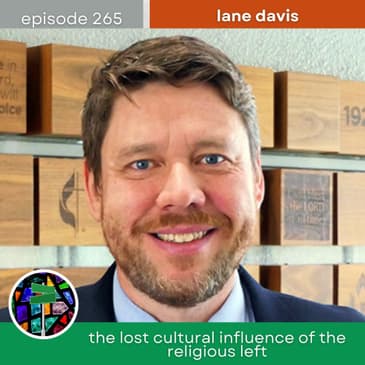

Lane Davis, an ordained minister and assistant professor of Church History, unpacks his insightful article, "How the Religious Left Ceded Power to the Religious Right." We explore Lane's journey from pastoral ministry to academia and discuss the historical decline of liberal Christianity's political influence. Lane reflects on pivotal moments, such as Pete Buttigieg’s candidacy, and critiques the assertion of a liberal Christianity resurgence under Biden. We analyze the historical dominance of mainline Protestantism, the rise of evangelical conservatism, and the existential crisis facing liberal churches today.
How the Religious Left Ceded Political Power to the Religious Right
Join the Church and Main Email List
Facebook | Instagram | Threads | Twitter | Website | YouTube
00:00:28 --> 00:00:31 Hello and welcome to Church in Maine, a podcast for people interested in the
00:00:31 --> 00:00:35 intersection of faith, politics, and culture. I'm Dennis Sanders, your host.
00:00:36 --> 00:00:41 My guest today is Lane Davis. He wrote an article for The Dispatch back in November
00:00:41 --> 00:00:45 entitled, How the Religious Left Ceded Power to the Religious Right.
00:00:46 --> 00:00:49 With such a provocative title, I had to find out more.
00:00:50 --> 00:00:55 So, Lane is my guest. Lane is an ordained minister in the United Methodist Church
00:00:55 --> 00:01:01 and is assistant professor of Church History at Christian Theological Seminary in Indianapolis.
00:01:01 --> 00:01:08 So, let's get to this conversation that I had with Lane Davis.
00:01:28 --> 00:01:32 Well, all right, Lane, it was good to have you on the podcast.
00:01:32 --> 00:01:35 I thought I would start off by knowing a little bit about you,
00:01:35 --> 00:01:40 kind of your faith background, and then also what you do at Christian Seminary.
00:01:41 --> 00:01:44 Yeah, thanks. It's great to be with you.
00:01:45 --> 00:01:52 Yeah, so I am United Methodist by upbringing, one of those cradle United Methodists.
00:01:53 --> 00:02:01 My dad was a United Methodist pastor, so I grew up in the church from a very,
00:02:01 --> 00:02:03 I mean, literally first days.
00:02:04 --> 00:02:07 Um uh we we serve churches in alabama
00:02:07 --> 00:02:10 that's where i'm from originally and um went to
00:02:10 --> 00:02:13 went to college there and then after graduating college i moved
00:02:13 --> 00:02:16 away live mostly in the southeast except for a little
00:02:16 --> 00:02:22 time in new england um so the southeast is is kind of home originally for me
00:02:22 --> 00:02:29 um and uh served a couple of churches in atlanta and uh church in in nashville
00:02:29 --> 00:02:34 and then um was also out in Texas when I was in grad school and worked in some churches,
00:02:35 --> 00:02:38 United Methodist Churches there as well.
00:02:38 --> 00:02:45 Made the shift into academics a few years ago and taught at a small school back
00:02:45 --> 00:02:50 in Alabama for a while called Huntington College and have been at Christian
00:02:50 --> 00:02:52 Theological Seminary in Indianapolis,
00:02:52 --> 00:02:58 Indiana for about a year and a half and teaching seminary students there and, um,
00:02:59 --> 00:03:01 uh, mostly working with our Methodist students, but I get to,
00:03:02 --> 00:03:03 I get to work with a lot of, uh,
00:03:04 --> 00:03:08 uh, an ecumenical variety of folks, which is a lot of fun.
00:03:08 --> 00:03:11 So I'm a church historian by, by training and trade.
00:03:12 --> 00:03:17 So, um, I focus mainly on, on kind of modern Methodism, uh, 20th century stuff.
00:03:18 --> 00:03:23 Uh, but, uh, you know, I ended up teaching classes on on um the the full the
00:03:23 --> 00:03:29 full 2000 year scope uh and um yeah it's a lot of fun so um.
00:03:30 --> 00:03:35 That's me. And kind of the reason you're on the podcast is that you wrote an
00:03:35 --> 00:03:42 article for the Sunday newsletter for The Dispatch, which focuses on faith.
00:03:43 --> 00:03:49 And it's basically how the religious left kind of ceded power to the religious
00:03:49 --> 00:03:57 right, which always is fascinating to me, especially about mainline Protestantism.
00:03:58 --> 00:04:04 And for people who haven't read it, can you kind of give a synopsis of what the article was about?
00:04:05 --> 00:04:10 Yeah, yeah. So I don't write about politics very much.
00:04:10 --> 00:04:13 I mean, I've been interested in politics ever since I was in high school and
00:04:13 --> 00:04:17 had a subscription to Rolling Stone. I think they radicalized me, right?
00:04:20 --> 00:04:25 But, you know, I just haven't written about it very much. I think as a lot of
00:04:25 --> 00:04:28 pastors, when I was pastoring, especially during the Trump years,
00:04:28 --> 00:04:32 you're kind of trained to, you know, walk carefully.
00:04:32 --> 00:04:36 And I think I've been doing that for a long time. So moving out of kind of everyday
00:04:36 --> 00:04:41 church work has offered me a little bit of an opportunity to start thinking
00:04:41 --> 00:04:42 through those issues again.
00:04:43 --> 00:04:47 And I was glad to get the opportunity to do that.
00:04:47 --> 00:04:52 I thought what might actually be helpful is to kind of walk through the genesis
00:04:52 --> 00:04:55 of the article. like how, how I came up with it.
00:04:55 --> 00:04:59 Cause it might explain a little bit about what the argument is.
00:04:59 --> 00:05:01 That was actually going to be my next, next question.
00:05:02 --> 00:05:04 Okay, perfect. I'm just going to, I'm just going to inverse this then.
00:05:05 --> 00:05:10 So, you know, most of what I write, I cannot remember where I originally had
00:05:10 --> 00:05:14 the idea, but this article is a very specific point I can remember.
00:05:15 --> 00:05:22 And it was during the, the primaries for the 2020 presidential election.
00:05:22 --> 00:05:23 I guess it would have been in the fall.
00:05:24 --> 00:05:31 And it was the week that Pete Buttigieg announced his candidacy for the Democratic nomination.
00:05:32 --> 00:05:35 And I was living in Dallas, Texas at the time.
00:05:36 --> 00:05:43 And I was in grad school. And that week, of course, he got all the media attention, right?
00:05:43 --> 00:05:46 And he was on the podcast I listened to.
00:05:47 --> 00:05:55 He was on NPR, like all the stuff that good liberal Dallas people listen to and partake of.
00:05:55 --> 00:05:58 Pete Buttigieg was like the main person.
00:05:58 --> 00:06:01 And um and there was there just seemed to be a lot of
00:06:01 --> 00:06:04 hope around his candidacy and i remember going to a um
00:06:04 --> 00:06:07 a shindig that my my graduate school
00:06:07 --> 00:06:10 cohort was having and of course there are a lot of people interested
00:06:10 --> 00:06:15 in religion and politics that were there and so so pete budajaj mayor pete was
00:06:15 --> 00:06:20 was kind of the the topic of conversation and one of the things that everybody
00:06:20 --> 00:06:28 was really excited about was how articulate he was about his faith.
00:06:29 --> 00:06:34 He was, or is, not a Presbyterian, an Episcopalian, right?
00:06:34 --> 00:06:40 He's an Episcopalian, and he could talk, you know, he just had this really clear
00:06:40 --> 00:06:45 and concise and authentic way of talking about his faith,
00:06:45 --> 00:06:51 in contrast to a lot of democratic politicians who seem very uncomfortable talking
00:06:51 --> 00:06:54 about faith in a lot of ways. So people were just very excited about it.
00:06:54 --> 00:06:57 And there were these comments that, you know, like, you know,
00:06:58 --> 00:07:05 maybe this is going to change the religious dynamic inside democratic politics or something.
00:07:05 --> 00:07:10 And, you know, I'm a little bit of a skeptic sometimes just by nature.
00:07:11 --> 00:07:15 And I'm always sort of, and I heard that and I thought, you know, that's right.
00:07:16 --> 00:07:20 Pete Buttigieg definitely seems very authentic in his faith.
00:07:20 --> 00:07:21 I have no doubt that that's true.
00:07:22 --> 00:07:27 I don't think that's going to make a bit of difference in the campaign.
00:07:27 --> 00:07:30 And I just doubt it will have that much of an impact.
00:07:30 --> 00:07:37 Number one, because the Episcopalian vote is not going to sway like a general election, right?
00:07:37 --> 00:07:39 There's just not enough Episcopalians to do that, number one.
00:07:40 --> 00:07:45 And number two, Episcopalians just really haven't historically had all that
00:07:45 --> 00:07:46 much political influence.
00:07:46 --> 00:07:49 I mean, they've had cultural influence because they're very wealthy,
00:07:49 --> 00:07:55 Um, but, but they've never had just like, you know, the, the, the.
00:07:56 --> 00:08:02 The, every, the plumber Joe and whatever in the, in the mid America just really
00:08:02 --> 00:08:06 doesn't care what the Episcopal church thinks. Right.
00:08:06 --> 00:08:11 And, and that is just kind of multiply that with mainline Protestantism.
00:08:11 --> 00:08:14 Um and and then the the
00:08:14 --> 00:08:17 so my article starts with um with a new york times
00:08:17 --> 00:08:20 article that appeared shortly after joe biden had won
00:08:20 --> 00:08:24 the presidency just a couple actually after his inauguration i think where it
00:08:24 --> 00:08:30 said uh in biden's presidency liberal christianity is ascending something like
00:08:30 --> 00:08:35 that and again my kind of the bell in the back of my head went off and i just
00:08:35 --> 00:08:39 went i'm very skeptical that this is going to happen.
00:08:40 --> 00:08:44 And I think that that turned out to be true. And so honestly,
00:08:44 --> 00:08:48 this article has been bubbling in my head for like five years now.
00:08:49 --> 00:08:52 And I'm just trying to think about the way to get into it.
00:08:52 --> 00:08:56 And basically, I just think that there is a history behind the whole thing,
00:08:56 --> 00:09:00 that there are reasons why this is the case.
00:09:00 --> 00:09:04 And so the article basically just tries to, number one, make the case that.
00:09:05 --> 00:09:13 Particularly liberal and progressive politics, progressive and liberal Christians
00:09:13 --> 00:09:20 have not been very influential or have wielded very much power in politics in
00:09:20 --> 00:09:22 recent decades going back a long time.
00:09:23 --> 00:09:26 I try to lay out what that is and compare it with the religious right.
00:09:27 --> 00:09:31 Now, I had to tell a friend of mine when I was telling him about the article
00:09:31 --> 00:09:33 that I write this out of love.
00:09:33 --> 00:09:41 I write this because I want there to be a more authentic sense of a liberal
00:09:41 --> 00:09:45 or progressive witness in our politics, and I just don't see it.
00:09:46 --> 00:09:49 So that's kind of what I was trying to do with the article, and we can go into
00:09:49 --> 00:09:51 details if that's helpful.
00:09:51 --> 00:09:58 Yeah, and I think in the article, you kind of tell an interesting history of
00:09:58 --> 00:10:02 what was kind of the role of,
00:10:02 --> 00:10:08 Mainline Protestantism, maybe up to, I would say,
00:10:08 --> 00:10:19 maybe the 1960s, when they really did have a lot of power in our culture and in politics. Yeah.
00:10:20 --> 00:10:26 And where what we would now call kind of American evangelicalism didn't have a whole lot of power.
00:10:27 --> 00:10:31 And something happened, and you describe this in the article,
00:10:32 --> 00:10:37 probably after the 1960s, that changed.
00:10:37 --> 00:10:44 Like the apex of midline Protestantism would be probably the civil rights movement.
00:10:44 --> 00:10:52 That that was the apex of that sense of power that could change things and make a difference.
00:10:53 --> 00:10:59 And then it all changed. And the two kind of different movements of American
00:10:59 --> 00:11:03 evangelicalism and mainline Protestantism kind of switched places.
00:11:03 --> 00:11:05 It was kind of like Freaky Friday in some way.
00:11:05 --> 00:11:12 They just changed. And so that today they're in very different places than where
00:11:12 --> 00:11:15 they once were. Could you kind of explain what started to happen?
00:11:16 --> 00:11:22 And some of the changes actually were happening before the 1960s,
00:11:22 --> 00:11:25 but there was something happening that brought about those changes.
00:11:26 --> 00:11:30 Yeah, yeah, that's exactly right. That's a really concise way to put it.
00:11:30 --> 00:11:36 So I think it's kind of surprising, I think, sometimes to folks when I'm teaching
00:11:36 --> 00:11:42 this, you know, to learn that, hey, the liberal Christian establishment used
00:11:42 --> 00:11:44 to have a lot of power and influence.
00:11:45 --> 00:11:50 I think, you know, really there were kind of two peaks to this.
00:11:50 --> 00:11:57 I think one was during the progressive movement and the passage of the 18th
00:11:57 --> 00:11:58 Amendment for prohibition.
00:11:58 --> 00:12:03 Um, that was, now that was a failed policy basically for a lot of reasons,
00:12:03 --> 00:12:10 but that would not have happened without 50, 60 years, um, uh,
00:12:10 --> 00:12:13 even going back before the civil war of, um,
00:12:14 --> 00:12:18 of Christians, mainline Christian churches, really pushing for that.
00:12:19 --> 00:12:22 And I mean, that would just be unthinkable, right, to happen something like
00:12:22 --> 00:12:24 that, to outlaw something like that today.
00:12:24 --> 00:12:29 So that was one of them. And that was really tied into the social gospel movement,
00:12:29 --> 00:12:33 people like Walter Rauschenbusch, Washington Gladden, and people like that.
00:12:34 --> 00:12:39 And it was all about social care, right? We care about specifically women.
00:12:40 --> 00:12:46 Women were really, really instrumental in that, saying alcohol consumption is
00:12:46 --> 00:12:48 out of control. This makes our lives miserable.
00:12:49 --> 00:12:52 And of course, divorce laws were also much stricter at that time.
00:12:52 --> 00:12:54 So it really was a public health crisis.
00:12:55 --> 00:13:01 And the mainline liberal church and the theological liberals stood up and did something about it.
00:13:01 --> 00:13:06 The next peak, I think you're absolutely right, was the civil rights movement.
00:13:06 --> 00:13:12 Um, and of course this, the, the locus of this is in the black church,
00:13:12 --> 00:13:19 uh, but they are pulling on those social gospel threads. So Martin Luther King Jr.
00:13:20 --> 00:13:25 Um, had attended, um, had done his doctoral work at, at Boston university,
00:13:25 --> 00:13:31 had been very, um, impacted by that particular movement, had read all of those social gospel folks.
00:13:31 --> 00:13:35 Um, and the message when he went down to Montgomery, Alabama and began,
00:13:35 --> 00:13:44 began preaching there and led the Montgomery Bus Boycott was a sort of re-engineered social gospel,
00:13:44 --> 00:13:52 but now calling on the teachings of Gandhi and other threads that had come in at that point.
00:13:52 --> 00:13:56 And that resulted 10 years later...
00:13:57 --> 00:14:01 In civil rights legislation, right? That, I mean, did it fix everything right away? Of course not.
00:14:02 --> 00:14:07 We're still, you know, dealing with a lot of the fallout of just the racial
00:14:07 --> 00:14:08 history of the United States.
00:14:08 --> 00:14:16 But I think we forget sometimes just what I take to be a providential miracle,
00:14:16 --> 00:14:17 that that kind of legislation could happen.
00:14:18 --> 00:14:21 In 10 years, you go from a bus boycott in Montgomery, Alabama,
00:14:22 --> 00:14:29 to national legislation that changed voting rights and civil rights for the country.
00:14:29 --> 00:14:33 It really is a miraculous story, right?
00:14:33 --> 00:14:40 So those are really two of the peak moments in which liberal theology and,
00:14:40 --> 00:14:44 you know, they didn't use the terminology back then, but I think we would sort
00:14:44 --> 00:14:49 of peg it as progressive Christian values had a real impact in American society.
00:14:50 --> 00:14:55 Now, during that time, there was an evangelical right that existed,
00:14:55 --> 00:14:58 but it had really kind of gone underground.
00:14:59 --> 00:15:03 I think historians point to various reasons why that is.
00:15:04 --> 00:15:10 The fundamentalists kind of lost the Scopes trial and the war with Darwin and
00:15:10 --> 00:15:13 all that sort of stuff. That kind of been an embarrassment.
00:15:14 --> 00:15:18 So they sort of went underground after that. And it was just seen things like
00:15:18 --> 00:15:24 dispensationalism, that kind of apocalyptic theology was just seen as very niche.
00:15:25 --> 00:15:30 And so that was all underground. But while that was happening, because.
00:15:32 --> 00:15:38 Evangelical conservative religious folks had been, just didn't have access to
00:15:38 --> 00:15:44 sort of the levers of power, like in the media or in government or in institutions, right?
00:15:44 --> 00:15:48 They just had to build their own. And there wasn't like a,
00:15:49 --> 00:15:54 planned to do this. It was, as I lay out an article, it was like pastors buying
00:15:54 --> 00:16:01 the early morning or late night radio or TV airwaves that nobody else wanted.
00:16:01 --> 00:16:08 And you would just broadcast your sermons on AM radio, right? Nobody wanted that.
00:16:09 --> 00:16:16 And it was handwritten newsletters. And I I remember seeing,
00:16:16 --> 00:16:22 I saw Jerry Falwell, the original Jerry Falwell, speak one time at a thing that I was at.
00:16:22 --> 00:16:28 And he talked about how in the early days of starting the church there in Virginia,
00:16:28 --> 00:16:33 Lynchburg, Virginia, where that was kind of the beginnings of the moral majority.
00:16:34 --> 00:16:37 When he started that church, it was a church plant. And he literally just went
00:16:37 --> 00:16:39 door to door in Lynchburg, Virginia, knocking on people's doors.
00:16:40 --> 00:16:43 He didn't have mass media. He didn't have any of that kind of stuff.
00:16:43 --> 00:16:45 And he built what we would today call a platform for that.
00:16:45 --> 00:16:51 And it just happened over decades and decades and decades. And you're absolutely right. In the.
00:16:53 --> 00:16:58 1960s and really in the 1970s is when I would say the scales started tipping.
00:16:59 --> 00:17:06 And I think there are a lot of reasons for that. Some of it was absolutely racial backlash, right?
00:17:06 --> 00:17:12 It was sort of a white resistance to the civil rights that had been pushed.
00:17:12 --> 00:17:16 But it was also a matter of just these religious conservatives had built all
00:17:16 --> 00:17:20 of this institutional infrastructure that started to kind of coalesce.
00:17:21 --> 00:17:25 And then you had movements like Falwell's Moral Majority, you had Dobson's focus
00:17:25 --> 00:17:27 on the family, you know, those are probably the best known.
00:17:28 --> 00:17:31 But then there's a ton of others that started during this time that have like
00:17:31 --> 00:17:35 these letters, acronyms that nobody knows what they are.
00:17:35 --> 00:17:40 And but they have just accumulated power. I mean, like I think of like the Heritage
00:17:40 --> 00:17:42 Foundation is a great example, right?
00:17:42 --> 00:17:47 I mean, they're kind of in the news right now for various not great reasons.
00:17:47 --> 00:17:50 And people know who they are now. But I mean, they were nothing for a long time.
00:17:50 --> 00:17:53 Most people would never have heard or know who they are.
00:17:53 --> 00:17:57 But just over time, they built up this kind of institutional base.
00:17:58 --> 00:18:05 While on the other side, liberal mainline Protestants relied on a sort of just
00:18:05 --> 00:18:08 a cultural cachet that just kind of melted away.
00:18:09 --> 00:18:12 And it's still, and I think it's really kind of at the point of almost a total
00:18:12 --> 00:18:16 collapse these days. So we'll see what happens.
00:18:17 --> 00:18:27 And at the same time, there also arose, and you talk about this in the article, that there was a...
00:18:28 --> 00:18:36 On kind of the religious right, there was always this comfort with a theology
00:18:36 --> 00:18:41 that believed or at least understood the necessity of wielding power.
00:18:41 --> 00:18:48 They knew that to get anything done, they had to have power.
00:18:48 --> 00:18:52 Whereas on the other side, on the religious left,
00:18:52 --> 00:18:57 there arose, and that came out of maybe from the social gospel,
00:18:58 --> 00:19:03 but definitely from liberation theology, but also from critical theory and some
00:19:03 --> 00:19:06 other things where power became suspect.
00:19:06 --> 00:19:13 And so people started, especially in mainline churches, to not trust power at all.
00:19:14 --> 00:19:19 Can you kind of go into a little bit more discussion about how that also fed
00:19:19 --> 00:19:20 into kind of where we're at?
00:19:21 --> 00:19:25 Yeah, absolutely. And I think this is a complex part of the story.
00:19:26 --> 00:19:29 And I have a lot more thinking to do on this as well.
00:19:30 --> 00:19:37 But the contours of it that I've kind of come down with is that while –.
00:19:38 --> 00:19:42 I do think it's a more complex story than to just say, you know,
00:19:42 --> 00:19:50 America inherited a Puritan past, and that sort of led to the religious culture we have.
00:19:50 --> 00:19:53 That's the story that was told in religious history for a long time.
00:19:53 --> 00:19:57 It's a lot more complicated than that, but there is something to that.
00:19:57 --> 00:20:01 I don't think you get a figure on the religious right today,
00:20:01 --> 00:20:10 like Douglas Wilson, for instance, who is a very right-wing theology, right?
00:20:11 --> 00:20:17 You don't get that without a particular reading of a Reformed tradition that
00:20:17 --> 00:20:18 goes all the way back to the Puritans.
00:20:18 --> 00:20:22 And I think his reading of history is off. I think it's wrong.
00:20:22 --> 00:20:31 But still, this sort of Puritan understanding in which church and state are
00:20:31 --> 00:20:35 interconnected, and in a lot of ways the church is the state,
00:20:35 --> 00:20:43 that kind of intellectual DNA is just kind of passed down among certain movements.
00:20:43 --> 00:20:46 And so it definitely breeds a
00:20:46 --> 00:20:53 comfort, I think, with particular forms of authority and eventually power.
00:20:54 --> 00:21:01 And again, on vice versa, with liberal Protestantism, it was not always the
00:21:01 --> 00:21:03 case that there was a discomfort with this.
00:21:03 --> 00:21:08 I mean, I think about somebody like Reinhold Niebuhr was very comfortable in
00:21:08 --> 00:21:14 the halls of power and was invited into them and probably kind of had an inflated
00:21:14 --> 00:21:18 sense of his worth in some of those places, but whatever.
00:21:18 --> 00:21:25 There was definitely a sense that he could influence things and he wanted to do that.
00:21:26 --> 00:21:28 And I think that there are a lot of reasons why it happened,
00:21:28 --> 00:21:32 but I do point to things like liberation theology,
00:21:32 --> 00:21:41 which of course in its preferential option for the poor is doing gospel work.
00:21:41 --> 00:21:51 But it also has a side of it in which I think pastors, especially.
00:21:52 --> 00:21:56 And denominational leaders and people like that are very uncomfortable,
00:21:56 --> 00:22:02 I think, in their own skin with being around mechanisms of power.
00:22:02 --> 00:22:08 And I've experienced that just anecdotally almost with people that I know and have worked with.
00:22:09 --> 00:22:14 It's almost kind of a suspicion. Like if you get to a certain level of authority
00:22:14 --> 00:22:18 in government or any institution, you've probably sold out, right?
00:22:18 --> 00:22:23 And that's probably the case for some people. I'm not saying that that's completely wrong.
00:22:24 --> 00:22:30 But I do think we need a more nuanced understanding and a better understanding
00:22:30 --> 00:22:36 of how influence has been wielded in more responsible ways in the past.
00:22:36 --> 00:22:42 Because I do think the Christian right has wielded their influence very irresponsibly in many, many ways.
00:22:43 --> 00:22:51 So yeah, I think that's some of the intellectual basis, I would say, for how we got here.
00:22:52 --> 00:22:56 And do you think that it sounds like for you that this also then,
00:22:57 --> 00:23:03 because of that suspicion of power, that it kind of then leads to not wanting to.
00:23:05 --> 00:23:12 Really build institutions to kind of help to, because, you know,
00:23:12 --> 00:23:19 the institutions that we have, have kind of weakened over the last 50, 60 years.
00:23:20 --> 00:23:28 And so we don't really have a generation that is out there shoring up those
00:23:28 --> 00:23:34 institutions because now everyone is suspicious of institutions.
00:23:34 --> 00:23:42 And and i and i will add i think that that's become so ingrained in our culture,
00:23:43 --> 00:23:50 i even notice it sometimes in myself um as a pastor and which is kind of silly
00:23:50 --> 00:24:00 it's sometimes because i'm a pastor of a congregation but but it becomes part of that saying that,
00:24:00 --> 00:24:03 well, you're supposed to be suspicious of power, but.
00:24:05 --> 00:24:13 That's not helpful to helping institutions run because you have to have power
00:24:13 --> 00:24:19 to have these institutions run with some sense of competence.
00:24:20 --> 00:24:33 So, I mean, how has that overall damaged institutions within the main line in that now we've,
00:24:34 --> 00:24:39 because we, I mean, we have now this culture that has become ingrained where,
00:24:40 --> 00:24:46 and I mean, are there still, are there even any people anymore that are institution builders?
00:24:48 --> 00:24:54 Yeah, that's a great question. I will say, first of all, I do think a little
00:24:54 --> 00:24:57 bit of suspicion is okay, right? You need a little bit.
00:24:57 --> 00:25:01 Part of the problem of the Christian religious right has been they've had no
00:25:01 --> 00:25:05 suspicion of power, so it's just like, bring it on.
00:25:06 --> 00:25:10 That's not healthy either, and that hasn't worked, right? So we need a better
00:25:10 --> 00:25:17 theology of institutional influence is what I think we can use a dose of.
00:25:17 --> 00:25:22 So anyway, to your question, though, about this, what I think happened,
00:25:23 --> 00:25:28 just from a historical perspective, is that the mainline churches specifically
00:25:28 --> 00:25:36 basically were just so comfortable with the institutions that had been built up in the 19th century,
00:25:36 --> 00:25:44 that they just, for whatever reason, didn't do the maintenance that probably needed to be done,
00:25:45 --> 00:25:53 didn't keep a very entrepreneurial mindset about most of it, right?
00:25:53 --> 00:25:59 I mean, I can use my own United Methodist church as an example.
00:25:59 --> 00:26:07 I remember when I was first starting out as a pastor, just getting into the
00:26:07 --> 00:26:09 ordination process and things like that.
00:26:10 --> 00:26:16 I was in Georgia at the time, and it was very difficult to start a new church.
00:26:17 --> 00:26:23 There was a whole model, and you had to raise just a significant sum of money,
00:26:24 --> 00:26:26 and there was just very little,
00:26:27 --> 00:26:31 and then there was just so much bureaucracy and paperwork that had to go into
00:26:31 --> 00:26:34 it that I think it was very discouraging at the time.
00:26:36 --> 00:26:40 It has gotten a lot easier. Um, I know because I started a church when I was
00:26:40 --> 00:26:42 down in Alabama for, for a little while.
00:26:42 --> 00:26:45 Um, so it's, and, but it's become easier out of desperation, right?
00:26:45 --> 00:26:50 Like we've just lost so many churches that it's like, okay, we need these,
00:26:50 --> 00:26:51 we need these new institutions to be built.
00:26:52 --> 00:26:57 Um, but what it's going to take honestly for a lot of churches and Methodists
00:26:57 --> 00:27:06 and others as well, it's renewing a culture of building.
00:27:06 --> 00:27:12 It's renewing a culture of entrepreneurship. It's renewing a culture of just
00:27:12 --> 00:27:14 trying new things and being risky.
00:27:14 --> 00:27:21 And I think we have to find new models. I don't love the just kind of church
00:27:21 --> 00:27:27 building models that just kind of ape consumer capitalism and all of that.
00:27:27 --> 00:27:33 We need models that are authentic to ourselves and to our communions and to
00:27:33 --> 00:27:35 our callings and to who we are.
00:27:38 --> 00:27:44 But the old models have not gotten us – the old models worked really well for
00:27:44 --> 00:27:46 a long time and then they didn't.
00:27:46 --> 00:27:50 And now we're in a very different world. So we got to rethink it.
00:27:50 --> 00:27:52 And I don't have all the answers.
00:27:52 --> 00:27:55 You know, I'm still thinking this through.
00:27:57 --> 00:28:04 One of the things kind of related to this about the not wanting or –.
00:28:07 --> 00:28:10 I think suspicion of power is correct. I think you're correct.
00:28:10 --> 00:28:13 I think we should be skeptical of power.
00:28:15 --> 00:28:21 But the suspicion of power is that you write that the result is a movement that
00:28:21 --> 00:28:24 conflates public protests,
00:28:24 --> 00:28:28 whether it's state houses or on social media, with the actual work of building
00:28:28 --> 00:28:33 durable coalitions and institutions that can shape policies over decades.
00:28:33 --> 00:28:43 And you also then kind of talk about the fact that something that has happened, you think,
00:28:43 --> 00:28:51 with mainline churches is that too often, especially more recently, is that….
00:28:54 --> 00:29:00 In some ways, they've done something that we have accused, and I think rightly.
00:29:02 --> 00:29:06 Evangelical Christianity of having done, which is pick a side.
00:29:07 --> 00:29:13 Whereas evangelical Christians have very much thrown their lot in with Republicans,
00:29:13 --> 00:29:19 mainline or progressive Christianity has thrown their lot in with the Democrats.
00:29:19 --> 00:29:26 And you write this, and I thought that you talk about rather than developing
00:29:26 --> 00:29:32 or adapting a prophetic critique of the policies of both political parties in
00:29:32 --> 00:29:37 a theological language that might have challenged and inspired Americans in
00:29:37 --> 00:29:38 states both red and blue,
00:29:39 --> 00:29:43 most progressive Christians align their goals so tightly with the progressive
00:29:43 --> 00:29:49 political platform that it becomes difficult to discern a difference between them.
00:29:49 --> 00:29:56 And you talk a little bit about what has happened about when President Obama
00:29:56 --> 00:30:00 bailed out Wall Street and his expansion of drone warfare.
00:30:02 --> 00:30:06 There was not much critique about that. There's been a lot of critique very
00:30:06 --> 00:30:12 much lately about what's been going on with blowing up boats near Venezuela.
00:30:13 --> 00:30:19 And again, I think that those critiques are correct,
00:30:19 --> 00:30:28 but there is something to that, that there hasn't been that type of a prophetic—the
00:30:28 --> 00:30:33 prophet has seemed to only been from one way.
00:30:35 --> 00:30:39 Can you kind of say a little bit more what, I mean, what has been kind of the,
00:30:39 --> 00:30:48 how has that kind of damaged the voice of the church when it only speaks to
00:30:48 --> 00:30:50 one side of the political spectrum?
00:30:52 --> 00:31:01 Yeah, I think it's incredibly damaging over time, particularly.
00:31:01 --> 00:31:09 I think there was a moment in history, specifically the 1980 presidential campaign,
00:31:09 --> 00:31:15 and there's this moment that a lot of political and religious historians look back to.
00:31:15 --> 00:31:19 And it's a moment that Ronald Reagan got up in front of a group of evangelical
00:31:19 --> 00:31:23 – they may have been Southern Baptists, I can't remember exactly what group it was.
00:31:24 --> 00:31:30 And he had this line where he says, he's talking to this evangelical group and
00:31:30 --> 00:31:36 he says, I know you can't endorse me because they were supposed to be politically neutral, right?
00:31:36 --> 00:31:40 He says, I know you can't endorse me, but I endorse you.
00:31:41 --> 00:31:47 And that was a game changer right there because the religious right had been
00:31:47 --> 00:31:49 kind of skeptical of Reagan. He had been a Democrat in California.
00:31:49 --> 00:31:53 He had expanded abortion access. He had done all these things that they were
00:31:53 --> 00:31:54 really uncomfortable with.
00:31:54 --> 00:32:01 But the moment he said, I'm going to embrace your agenda, how much he did, it's arguable.
00:32:02 --> 00:32:08 That was kind of a sea change. And it seems to me that since that point,
00:32:08 --> 00:32:17 it has been a developing sort of cascade of groups within denominations or whether
00:32:17 --> 00:32:19 it's the evangelical Christian right or whatever,
00:32:19 --> 00:32:27 more closely aligning themselves to particular political parties.
00:32:27 --> 00:32:37 And I think it's just morally outrageous the way certain Christian groups have
00:32:37 --> 00:32:39 aligned themselves with Donald Trump.
00:32:39 --> 00:32:45 So don't – like that's – it's awful. But there are also definitely cases in
00:32:45 --> 00:32:50 which liberal and progressive Christianity has not been the prophetic critique
00:32:50 --> 00:32:53 in the Clinton administration,
00:32:53 --> 00:32:59 in the Obama administration, in the Biden administration that it needed to be.
00:32:59 --> 00:33:02 And I think it probably loses some legitimacy, right?
00:33:02 --> 00:33:07 When people can just drive by a mainline church and just say,
00:33:07 --> 00:33:14 well, they just believe whatever policies the Democrats say or something like that, right? Yeah.
00:33:15 --> 00:33:23 Yeah, I think over time that is – you just lose a lot of trust with certain groups of people.
00:33:23 --> 00:33:29 And it's also just kind of, I think, internally damaging to morale.
00:33:30 --> 00:33:35 You know, there's some interesting statistics out from Ryan Burge,
00:33:35 --> 00:33:38 you know, the poobah of church data, right?
00:33:38 --> 00:33:42 It was really interesting to me that like, you know, United Methodist,
00:33:42 --> 00:33:44 we've gone through this kind of big split recently.
00:33:45 --> 00:33:52 But even after that happened, the majority of United Methodists are Republicans, right?
00:33:52 --> 00:33:57 While the vast majority of clergy and leaders are Democrats.
00:33:57 --> 00:34:02 So there's like this internal confusion about it as well.
00:34:03 --> 00:34:10 And I'm kind of a big tent person. I mean, I want the church to be as diverse
00:34:10 --> 00:34:13 as possible politically and otherwise, right?
00:34:13 --> 00:34:16 I want that to happen. but I also want us to be able to tell the truth.
00:34:17 --> 00:34:22 And while I don't think that liberal Christians necessarily would like,
00:34:22 --> 00:34:28 they wouldn't condone drone warfare or something like that, obviously, there is a tendency,
00:34:28 --> 00:34:33 I think, just maybe even internally, psychologically, when somebody on,
00:34:33 --> 00:34:37 you know, quote, your team does it, it's like, I'm just going to step back.
00:34:37 --> 00:34:40 I'm just not going to say anything about that, right?
00:34:41 --> 00:34:45 And in a moment, you do it once or twice, it's not a big deal.
00:34:45 --> 00:34:51 But over time, it definitely builds up distrust and just kind of an internal,
00:34:52 --> 00:34:59 loss of morale for the church. And I don't think that's helpful.
00:35:00 --> 00:35:07 Why do you think that is? Is it just that people don't want to rock the boat?
00:35:07 --> 00:35:17 Is it that we're so polarized that we don't want to—we're too much on someone's team,
00:35:18 --> 00:35:23 so we just don't want to do something that messes up our team,
00:35:23 --> 00:35:28 which also kind of seems to say something about discipleship, but, you know—,
00:35:29 --> 00:35:34 Yeah, it does. I think you put your thumb on it right there.
00:35:35 --> 00:35:40 Yeah. I mean, I know, and I can really only kind of speak personally, you know, from this.
00:35:40 --> 00:35:46 I mean, I was an associate pastor of a fairly large church outside of Nashville
00:35:46 --> 00:35:50 during Trump's presidency, first presidency. crazy.
00:35:51 --> 00:35:56 And I mean, it was like walking through a minefield sometimes.
00:35:56 --> 00:36:01 I mean, you had a big group of, I don't know, percentages, right?
00:36:01 --> 00:36:05 But a big group that were very much on board with anything that a Republican
00:36:05 --> 00:36:06 administration would do.
00:36:07 --> 00:36:13 You had groups who were very progressive in the church and you had a big middle, right?
00:36:13 --> 00:36:16 Who could go either way and all of that.
00:36:17 --> 00:36:25 And as a pastor, I know it was exhausting. It was exhausting and it was stressful.
00:36:28 --> 00:36:31 And then once COVID hit, there were a lot of retirements.
00:36:32 --> 00:36:35 A lot of people just said, I'm done. I'm done with this. There were a lot of
00:36:35 --> 00:36:40 people who dropped out of pastoring and there's a real issue with that right now.
00:36:41 --> 00:36:46 So part of it is just the culture that I think has been created in churches over time.
00:36:46 --> 00:36:51 I don't think it's anybody's fault. It's just sort of the way human beings are built in some ways.
00:36:52 --> 00:36:56 I do think that there is a discipleship aspect to that, right?
00:36:56 --> 00:37:04 It is disheartening to hear the stories of pastors who preach the Beatitudes
00:37:04 --> 00:37:08 and somebody comes up and is like, I don't want to listen to that liberal stuff.
00:37:09 --> 00:37:13 And I mean, that's really disheartening to, to hear.
00:37:13 --> 00:37:18 It just means that, boy, we have really, um, or, you know, some churches have
00:37:18 --> 00:37:23 really failed, not every church for sure, but some churches have really failed, um, to, to.
00:37:24 --> 00:37:29 Do the work of discipleship that is needed to be done.
00:37:29 --> 00:37:35 And this gets back to one of the core critiques that I think was underlying the article,
00:37:35 --> 00:37:42 which I didn't make quite as specific because it was written to a political
00:37:42 --> 00:37:44 audience more so than a religious one necessarily.
00:37:45 --> 00:37:50 But it's the fact that I do think that there is in liberal Christianity specifically
00:37:50 --> 00:37:54 somewhat of a little bit of a loss of identity.
00:37:55 --> 00:38:00 I think that liberal Christians are in many ways oftentimes searching for who
00:38:00 --> 00:38:07 they are supposed to be and are pulled between many different,
00:38:08 --> 00:38:13 streams of thought, whether it's political or whether it's academic intellectual
00:38:13 --> 00:38:16 or theological or whatever it is.
00:38:16 --> 00:38:20 Whereas conservative Christianity, evangelical religious right,
00:38:20 --> 00:38:22 love it or hate it, they've got an identity, right?
00:38:22 --> 00:38:27 I mean, they have a specific style, you know what that, you know it when you
00:38:27 --> 00:38:30 walk into one of their churches.
00:38:31 --> 00:38:35 And so I think there's something to that. That's kind of one of the areas that
00:38:35 --> 00:38:39 I want to personally do a little more reading and exploring on.
00:38:39 --> 00:38:46 But it's just that sense of sort of Christian identity within the liberal mainline
00:38:46 --> 00:38:50 church that, yeah, that needs some work.
00:38:52 --> 00:38:57 What do you think is the path forward for the mainline?
00:38:57 --> 00:39:05 And can they move forward in building institutions?
00:39:05 --> 00:39:12 And I mean, you kind of talk about things like, can they move beyond performative art?
00:39:13 --> 00:39:15 Right. and,
00:39:16 --> 00:39:27 Can they do something beyond that? And I know that it's meaningful,
00:39:27 --> 00:39:33 and I don't want to totally denounce it, but when they had the recent No Kings protests,
00:39:34 --> 00:39:35 it's important.
00:39:35 --> 00:39:40 I don't want to belittle it. I knew lots of friends that were part of it,
00:39:41 --> 00:39:44 and people took lots of pictures that they were there.
00:39:46 --> 00:39:53 And then I also wonder, okay, does this mean more? Is it more than just taking a picture?
00:39:54 --> 00:40:03 And so, can the church, will the church, can they do something and build political
00:40:03 --> 00:40:09 power that can, and institutions that can last beyond that?
00:40:09 --> 00:40:13 Do you see where that's happening, or can that happen?
00:40:13 --> 00:40:18 Yeah. Well, yeah. I mean, I'm with you first.
00:40:18 --> 00:40:24 I mean, I don't want to belittle protesting. There is a place for that. It is needed.
00:40:24 --> 00:40:30 And it historically has served the purposes of justice and progress.
00:40:30 --> 00:40:35 And I applaud the people who are willing to go out and oftentimes put their
00:40:35 --> 00:40:41 lives on the line to do that kind of stuff. Um, at the same time,
00:40:41 --> 00:40:44 it can't only be that, right?
00:40:45 --> 00:40:53 I mean, it is, I consider it to be a failure of the church, a moral failure
00:40:53 --> 00:40:59 of the church that 53% of Americans went to the, went to the voting booth in 2024.
00:40:59 --> 00:41:01 And we're like, yeah, sure. We'll do this again. Right.
00:41:01 --> 00:41:10 I mean, that's the church has a, should do some deep searching as to why that was the case.
00:41:10 --> 00:41:12 Right. So yeah.
00:41:14 --> 00:41:20 So what's the way forward? I do think that there do need to be groups of people
00:41:20 --> 00:41:25 who are interested in the nitty gritty work,
00:41:26 --> 00:41:35 not just a building, you know, the next megachurch, but building the next groups
00:41:35 --> 00:41:39 or the next movements, the next legal defense funds,
00:41:39 --> 00:41:44 the next, you know, whatever is the 21st century version of the mass mailing
00:41:44 --> 00:41:48 campaigns that, you know, earlier groups did that, that kind of thing.
00:41:49 --> 00:41:56 And it will be unglamorous work that likely will not get any recognition for a very long time.
00:41:56 --> 00:42:00 I think the mainline church is probably going to get smaller.
00:42:01 --> 00:42:06 I think it will have to rethink a lot of things.
00:42:07 --> 00:42:13 There will be more mergers probably before, certainly before my time is up.
00:42:17 --> 00:42:22 But at the same time, most people in the United States would have looked at
00:42:22 --> 00:42:28 a fundamentalism, a religious fundamentalism in the 1930s and gone.
00:42:28 --> 00:42:29 That's gone. That's done.
00:42:29 --> 00:42:32 They're done. That will never come back again.
00:42:33 --> 00:42:36 But it happened, right? It happened.
00:42:36 --> 00:42:42 I don't think, again, that we should just copy that by any means.
00:42:42 --> 00:42:48 Again, it's a matter of being true to the mission that God has given to the
00:42:48 --> 00:42:52 mainline denominations in the 21st century.
00:42:52 --> 00:42:56 But I think we do have to be more comfortable with just having less influence
00:42:56 --> 00:43:01 of being more local, you know.
00:43:03 --> 00:43:06 Mainline Protestantism is not the national religion anymore.
00:43:06 --> 00:43:09 It's just not, and it hasn't been for a long time.
00:43:09 --> 00:43:12 And that's okay. We really have to be okay with that.
00:43:13 --> 00:43:17 But it can really have an influence in my neighborhood.
00:43:17 --> 00:43:21 It can really have an influence at my school. It can still have an influence
00:43:21 --> 00:43:26 in the places that we go each and every day.
00:43:27 --> 00:43:30 And you don't have to organize a big protest to do it, right?
00:43:30 --> 00:43:32 It can happen in small ways.
00:43:33 --> 00:43:38 So I'm not great at thinking out through the specific institutional mechanisms
00:43:38 --> 00:43:42 that need to happen. I don't think it will be just one mastermind that kind
00:43:42 --> 00:43:44 of organizes the whole thing.
00:43:44 --> 00:43:48 I think it'll be a lot of little... If mainline Protestantism is able to turn
00:43:48 --> 00:43:51 things around, it'll be a lot of people doing faithful things,
00:43:52 --> 00:43:54 small faithful things over time.
00:43:56 --> 00:44:01 And it may be that like our current political culture, political and just kind
00:44:01 --> 00:44:04 of combat culture just collapses on itself.
00:44:04 --> 00:44:09 That probably will happen as well. And I hope the church is there to offer an alternative, right?
00:44:09 --> 00:44:15 And to be a safe haven during that time. So the church should probably prepare for that as well.
00:44:16 --> 00:44:22 Yeah, I think one of the things when I was just out of college in the 90s,
00:44:22 --> 00:44:30 I was working with the American Baptists, actually in D.C., on the Hill.
00:44:31 --> 00:44:38 And at the time, they had a Washington office, and it was not very glamorous.
00:44:38 --> 00:44:47 You know, they did a lot of things of having people write letters to their congresspeople
00:44:47 --> 00:44:52 and people met with people from both parties. Yeah.
00:44:54 --> 00:44:59 And none of it was very glamorous. And it was kind of quiet work.
00:44:59 --> 00:45:06 And there were lots of organizations that did that on the, and I don't know.
00:45:06 --> 00:45:10 I wonder if that's one of those things that can be done.
00:45:10 --> 00:45:15 And granted, that's at the DC level. I don't know, you know,
00:45:15 --> 00:45:18 there are other things that can happen at a local level too.
00:45:21 --> 00:45:26 But I think you're correct that it's a lot of little things that are going to happen.
00:45:28 --> 00:45:31 It's not a lot of big things.
00:45:32 --> 00:45:36 Yeah, absolutely. And I think some of it comes down, I mean,
00:45:36 --> 00:45:40 I'm in theological education, so I sort of think it's important.
00:45:40 --> 00:45:43 But so I think it's training pastors
00:45:43 --> 00:45:47 in how to
00:45:47 --> 00:45:55 be culturally fluent and how to build an authentic Christian identity in this
00:45:55 --> 00:46:04 age that doesn't have to just copy and paste whatever a particular political party's platform is.
00:46:04 --> 00:46:08 There are things that I agree with, obviously, on the Democratic Party platform.
00:46:08 --> 00:46:14 There are also a few things that I fundamentally disagree with and am in tension
00:46:14 --> 00:46:17 with my own denomination and with many of my colleagues over.
00:46:18 --> 00:46:25 Um, and I think that's okay. I, I, but I am trying to figure out what it means to be faithful, um,
00:46:26 --> 00:46:31 to, to, uh, to, to the way that I, I both read scripture, but also how I have,
00:46:31 --> 00:46:37 I read the great tradition of, of the church and, uh, how I'm in communion with, with, um,
00:46:38 --> 00:46:42 the great cloud of witnesses here and here on earth and in, in heaven.
00:46:42 --> 00:46:47 Yeah, I think that's a good final point. I think in some ways,
00:46:47 --> 00:46:51 both liberals and conservatives have forgotten how to live in tension.
00:46:53 --> 00:46:59 We've just kind of too much, as you've said, copy and paste the culture. And...
00:47:01 --> 00:47:04 That's never good that usually good
00:47:04 --> 00:47:07 yeah yeah and the church has to be a model
00:47:07 --> 00:47:11 for that because nobody else is going to do it right um
00:47:11 --> 00:47:13 our you know wall street's not going to
00:47:13 --> 00:47:20 do it for us um the government is certainly not going to do it for us um media
00:47:20 --> 00:47:26 is not going to do it for us right christians um have to be more comfortable
00:47:26 --> 00:47:32 and have to relearn and just be discipled in what it means to be authentically
00:47:32 --> 00:47:33 Christian in the 21st century.
00:47:34 --> 00:47:39 And it may mean, yeah, it may mean getting smaller over time right now.
00:47:41 --> 00:47:46 But, you know, Jesus never promised a megachurch.
00:47:46 --> 00:47:53 So that's, you know, his was pretty small. So there are ways forward that don't require that.
00:47:54 --> 00:48:00 Yeah. Well, if people would like to know more about you or read articles or
00:48:00 --> 00:48:01 things, where should they go?
00:48:02 --> 00:48:07 Yeah, great, great question. I'm in a little bit of a, I told you I was a skeptic,
00:48:07 --> 00:48:10 and I'm kind of a skeptic of social media these days as well.
00:48:10 --> 00:48:14 So I'm not on, I'm not just all over the internet necessarily.
00:48:14 --> 00:48:19 There is a Medium blog I kept for a while, but I haven't done a lot of writing on that.
00:48:19 --> 00:48:24 You could probably Google my name, Lane, L-A-N-E Davis, and you might find something.
00:48:24 --> 00:48:28 But I hope to do a little more, a little more writing that is,
00:48:28 --> 00:48:31 uh, more public facing, um, in the future.
00:48:32 --> 00:48:36 So, um, that's a, that's a good reminder. They should just contact you,
00:48:36 --> 00:48:38 Dennis, and you can, you know, everybody can, you can just send everything my way.
00:48:39 --> 00:48:43 That's, uh, you can be just a route conversation.
00:48:44 --> 00:48:47 No problem. We can do that. We can do that.
00:48:49 --> 00:48:54 All right. Well, Lane, thank you so much. This has been great and hope to have
00:48:54 --> 00:48:59 you back in the near future oh please do this is uh there's a lot of fun and
00:48:59 --> 00:49:04 um i appreciate you and and all your work all right take care.
00:49:35 --> 00:49:41 So I will put Lane's article that was in the Dispatch in the show notes.
00:49:41 --> 00:49:46 I'm also going to put a link to another article by Ryan Berge.
00:49:47 --> 00:49:53 He has a new book out called The Vanishing Church, which is kind of up the same
00:49:53 --> 00:49:54 alley that is talking about.
00:49:56 --> 00:50:02 The seeming demise of the mainline church. Both of these are important,
00:50:02 --> 00:50:07 obviously, to me because I'm a pastor in a mainline denomination.
00:50:08 --> 00:50:11 And like all mainline denominations, we're declining. And I think,
00:50:12 --> 00:50:20 I don't know, I worry about it because I think that we have a special place in American history.
00:50:20 --> 00:50:25 And I think that we are needed at this time, especially at this time.
00:50:25 --> 00:50:31 And I worry, you know, especially in the future, that we're not going to be around.
00:50:32 --> 00:50:36 And I think I remember Ryan Berge writing something
00:50:36 --> 00:50:43 about the church that he was a part of that has since closed and how it was
00:50:43 --> 00:50:49 important for him to see mainline churches out there because there might be
00:50:49 --> 00:50:53 a young woman out there that wants to go into the ministry.
00:50:54 --> 00:50:59 And this is not a i don't want to make this as a slight on all evangelicals,
00:51:00 --> 00:51:05 but sometimes women in ministry that's not always an option in evangelical churches,
00:51:06 --> 00:51:12 um and for myself i think this is mainline church is really the only place i
00:51:12 --> 00:51:19 can be fully who i am as an openly gay man and um again no slight on evangelicals
00:51:19 --> 00:51:21 but that's not always the case.
00:51:22 --> 00:51:26 So I feel like we need this part of Christianity,
00:51:26 --> 00:51:32 but I worry that both within and without, there are things happening both within
00:51:32 --> 00:51:37 and without that may not make this an option in a few decades.
00:51:37 --> 00:51:40 And I don't think that that's going to be good for the church,
00:51:40 --> 00:51:43 and I don't think that's going to be good, especially for American society.
00:51:44 --> 00:51:48 Those are my two cents um also just
00:51:48 --> 00:51:51 to let you know um obviously last week
00:51:51 --> 00:51:54 we did it i did an episode um with a
00:51:54 --> 00:51:58 lutheran pastor eric elkin about what's
00:51:58 --> 00:52:01 been going on here in minneapolis especially right in
00:52:01 --> 00:52:05 the aftermath of of um renee good's
00:52:05 --> 00:52:11 uh killing and so obviously this is still an ongoing situation it has not stopped
00:52:11 --> 00:52:17 in fact only a few blocks from where I live there was another shooting no one
00:52:17 --> 00:52:23 died this time but things are ratcheting up there's been more and more,
00:52:25 --> 00:52:27 um, activity happening, um,
00:52:28 --> 00:52:32 schools that are either not in session for a few days or going virtual.
00:52:32 --> 00:52:37 Um, so I'm going to work on trying to get other voices to talk about this because
00:52:37 --> 00:52:39 I think that this is an important issue.
00:52:39 --> 00:52:44 And obviously it's important to me because it's literally in my backyard.
00:52:44 --> 00:52:50 Um, so, uh, just to let you know, there might be other episodes kind of dealing
00:52:50 --> 00:52:54 with what's happening here in the Twin Cities in the very near future.
00:52:56 --> 00:53:01 If you want to know more about this podcast, listen to past episodes,
00:53:01 --> 00:53:09 or donate, you can always check out churchinmain.org, and then also check out
00:53:09 --> 00:53:12 churchinmain.substack.com to read related articles.
00:53:12 --> 00:53:16 I hope that you will consider subscribing to the podcast on your favorite podcast app,
00:53:16 --> 00:53:20 and if it's possible on whatever
00:53:20 --> 00:53:23 platform you listen to to leave a rating or
00:53:23 --> 00:53:26 review when you do that that actually helps others find
00:53:26 --> 00:53:32 the podcast um also just to let you know if you want to uh donate there is a
00:53:32 --> 00:53:36 link in the show notes and also there is a link available if you want to get
00:53:36 --> 00:53:46 the um the latest episode in your uh inbox so that is it for this episode of church in Maine.
00:53:46 --> 00:53:51 Thanks everyone for listening. I'm Dennis Sanders, your host. Take care.
00:53:51 --> 00:53:55 Godspeed. And I will see you very soon.