
What does it mean to "submit to governing authorities" — and does that command require Christians to accept whatever their government does without question?
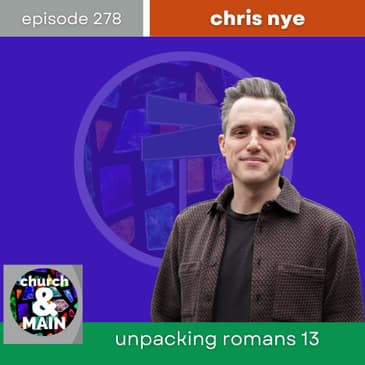
I sat down with Chris Nye, lead pastor of Imago Dei Community in Portland, Oregon, to take a closer look at one of the most frequently cited — and frequently misused — passages in political discourse: Romans 13:1. From immigration enforcement to protests in the streets, this text keeps resurfacing, often wielded as a call for unconditional obedience to whoever holds power.
Chris argues that reading Romans 13 in isolation misses the point entirely. Placed within the sweep of Paul's letter — and alongside 1 Peter — a richer picture emerges: one built on a higher law of God, a coming judgment, and a vision of the church as a holy nation that transcends any political order.
Shownotes:
Join the Church and Main Email List
Facebook | Instagram | Threads | Twitter | Website | YouTube
00:00:27 --> 00:00:36 Church and Maine, a podcast for people interested in the intersection of faith, politics, and culture.
00:00:36 --> 00:00:39 I'm Dennis Sanders, your host.
00:00:39 --> 00:00:46 So, I want to start today by reading some scripture because this is a religious podcast after all.
00:00:46 --> 00:00:51 So, here it goes. Let every person be subject to the governing authorities,
00:00:51 --> 00:00:56 for there is no authority except from God, and those authorities that exist
00:00:56 --> 00:01:01 have been instituted by God." So,
00:01:01 --> 00:01:03 that's Romans 13,
00:01:04 --> 00:01:10 1, where Paul writes to the church in Rome on how Christians are to live with
00:01:10 --> 00:01:11 governing authorities.
00:01:12 --> 00:01:17 Now, in some cases, this passage makes sense.
00:01:17 --> 00:01:22 Of course, you do want to respect the governing authorities.
00:01:24 --> 00:01:29 But what does this passage mean when the government is less than ideal?
00:01:31 --> 00:01:37 Even Paul was writing this to a church that was living in a very challenging environment.
00:01:38 --> 00:01:40 So why did he write it?
00:01:41 --> 00:01:47 During the ice surge here in the Twin Cities earlier this year,
00:01:47 --> 00:01:51 I actually remember hearing this passage shared on social media,
00:01:52 --> 00:01:58 basically saying that Minnesota and how Minnesotans should deal with federal agents.
00:02:00 --> 00:02:05 But in watching how immigrants and citizens alike were treated,
00:02:06 --> 00:02:14 especially the fact that two American citizens were killed by the U.S.
00:02:15 --> 00:02:22 Government, it just didn't make sense to just allow the government to do whatever it pleased.
00:02:23 --> 00:02:28 And this passage has been used to justify abuses by governments,
00:02:28 --> 00:02:31 telling people that they must respect the government.
00:02:32 --> 00:02:38 But what if the government is doing wrong? What if the government is sinful?
00:02:42 --> 00:02:47 About a month ago, I saw an Instagram reel by a pastor in Portland,
00:02:47 --> 00:02:51 and he took a good look at this passage,
00:02:51 --> 00:02:57 and how it's been misused, and I decided I wanted to talk to him about this
00:02:57 --> 00:03:00 passage and how to best understand it.
00:03:01 --> 00:03:05 So the person who made that reel is Chris Nye.
00:03:06 --> 00:03:09 He is the lead pastor of Imago Dei Community in Portland, Oregon,
00:03:10 --> 00:03:13 and his writing has appeared in the Washington Post, Christianity Today,
00:03:13 --> 00:03:15 and other publications.
00:03:15 --> 00:03:19 He is an author of three books, the latest being A Captive Mind,
00:03:20 --> 00:03:23 Christianity's Relationship to Ideologies.
00:03:23 --> 00:03:30 Chris is currently a doctoral student at Duke University Seminary and lives
00:03:30 --> 00:03:34 in Portland with his wife, Allie, and two kids.
00:03:35 --> 00:03:43 With all of that out of the way, join me as I discuss Romans 13 with Chris Nye.
00:04:04 --> 00:04:10 Well, Chris, thank you for joining me today. And I wanted to start off by knowing
00:04:10 --> 00:04:14 a little bit about you, kind of your spiritual background and history.
00:04:15 --> 00:04:18 Yeah, for sure. Thanks so much, Dennis, for having me on.
00:04:19 --> 00:04:25 And I am born and raised in Portland, Oregon, and I was not raised in a Christian home.
00:04:25 --> 00:04:31 I was raised in Catholic education. And so some of my first moments of knowing
00:04:31 --> 00:04:36 the cross, for example, was in Catholic architecture and then in catechesis,
00:04:36 --> 00:04:38 just in Catholic education.
00:04:38 --> 00:04:42 I never had any ill will towards religion.
00:04:43 --> 00:04:49 My family was mostly secular, but my mom actually started to come to faith,
00:04:49 --> 00:04:52 come back to her faith that she was raised in, that she had kind of walked away from.
00:04:53 --> 00:04:58 But a big part of my story growing up in Portland is Portland is a very unchurched
00:04:58 --> 00:04:59 city. There's not a lot of churches.
00:05:00 --> 00:05:06 And so when she was invited to church, as she was coming back to her faith in the 90s,
00:05:07 --> 00:05:11 It was about 25 minutes south in the suburbs to like an evangelical megachurch
00:05:11 --> 00:05:12 that she ended up kind of bringing us out to.
00:05:13 --> 00:05:15 And that was where I first really heard the gospel.
00:05:15 --> 00:05:21 And that was for all the ways that maybe those words evangelical megachurch
00:05:21 --> 00:05:22 may have a lot of baggage.
00:05:22 --> 00:05:29 This community was a really blessed community that taught me the gospel,
00:05:29 --> 00:05:33 showed me the gospel, preached the gospel, lived the gospel,
00:05:33 --> 00:05:35 and then ultimately commissioned me in the gospel.
00:05:35 --> 00:05:42 It was the first place that I was really sent as a Bible study leader and an intern and a pastor.
00:05:43 --> 00:05:46 And so a really just healthy place with wonderful people.
00:05:48 --> 00:05:54 That season afterwards, I met my wife, and we've been married for 15 years.
00:05:54 --> 00:05:56 We have two kids, a six- and a two-year-old.
00:05:56 --> 00:05:59 And we've been mostly in the Portland area serving in ministry.
00:05:59 --> 00:06:03 My wife is in the medical field and serves in hospitals.
00:06:03 --> 00:06:08 Um and uh other than that we've been in the we went to the bay area for about
00:06:08 --> 00:06:12 six years but have returned to portland in the last few years i lead a church
00:06:12 --> 00:06:13 called imago de community,
00:06:14 --> 00:06:19 and um we are right in the central east side of portland and so we're an urban
00:06:19 --> 00:06:27 church uh in a in a pretty um beautiful city and environment with a lot of socioeconomic
00:06:27 --> 00:06:31 diversity you've got kind of the high-rise condos with homeless encampments
00:06:31 --> 00:06:32 and everything in between.
00:06:33 --> 00:06:37 And our church is about 25 years old, a non-denominational community,
00:06:37 --> 00:06:43 and we exist, we say, to take the whole gospel to the whole person to the whole world.
00:06:43 --> 00:06:45 And so that's what I get up to every
00:06:45 --> 00:06:48 day and get to serve this beautiful congregation of folks in Portland.
00:06:50 --> 00:06:55 So, one of the reasons and the main reason I wanted to have you on the podcast,
00:06:55 --> 00:06:58 and that's kind of shifted and changed,
00:06:58 --> 00:07:09 but it's something I saw you do on Instagram Reels, and it was to talk about Romans 13. Yeah.
00:07:09 --> 00:07:13 And specifically, I believe it's verses 1 and 2.
00:07:13 --> 00:07:19 And those kind of – it's interesting that that passage seems to wax and wane.
00:07:19 --> 00:07:26 There were periods a few years ago where that was talked about by especially
00:07:26 --> 00:07:31 people in the administration, Trump administration, the first Trump administration.
00:07:32 --> 00:07:34 And now it's kind of come back.
00:07:35 --> 00:07:41 And you kind of had an interesting take on what that verse means.
00:07:42 --> 00:07:45 And I think in a way that is not so...
00:07:47 --> 00:07:51 I don't know if I want to say literal, but not just taking it in some ways,
00:07:52 --> 00:07:53 literally taking it out of context.
00:07:54 --> 00:07:58 Can you kind of explain a little bit about the genesis of that video?
00:08:00 --> 00:08:08 Yes. Well, we were talking before we hit record here with you in Minneapolis, myself in Portland.
00:08:08 --> 00:08:15 I think these texts are on our people's minds if they know their Bibles because
00:08:15 --> 00:08:22 they have been, like you said, lifted out of context, maybe thrown across the political aisle.
00:08:23 --> 00:08:27 And this isn't the first time to have it happen, but this verse,
00:08:27 --> 00:08:30 and I've got it open right here, Romans 13.1,
00:08:30 --> 00:08:35 my translation says, let everyone be subject to governing authorities,
00:08:35 --> 00:08:39 for there is no authority except that which God has established.
00:08:40 --> 00:08:44 The authorities that exist have been established by God.
00:08:45 --> 00:08:48 And And consequently, it goes on in verse 2, whoever rebels against the authority
00:08:48 --> 00:08:51 is rebelling against what God has instituted.
00:08:51 --> 00:08:56 Now, that maybe has been heard in a context like St.
00:08:56 --> 00:09:04 Paul or Minneapolis and Portland as any sign of protest, any sign of resistance
00:09:04 --> 00:09:09 to the government, any sign of disobedience.
00:09:09 --> 00:09:13 You know they'll quote this verse and they'll say well look at consequently
00:09:13 --> 00:09:19 if you rebel against the authorities you rebel against god himself and it's
00:09:19 --> 00:09:22 always used in a way that is um.
00:09:23 --> 00:09:29 That I believe is trying to subjugate a group of people, you know,
00:09:29 --> 00:09:33 and this is true in American history with a lot of Bible verses.
00:09:33 --> 00:09:38 This is just the one that I think has struck, I'll speak from the Portland context.
00:09:39 --> 00:09:41 We are a more progressive city.
00:09:41 --> 00:09:45 Now our state is more politically diverse. People don't often understand,
00:09:45 --> 00:09:50 like we have population hubs that really drive our blue stateness,
00:09:50 --> 00:09:55 but we really have a lot of conservative folks around.
00:09:55 --> 00:09:59 But in that environment, I think with the federal government being in a more
00:09:59 --> 00:10:03 conservative season, looking at progressive cities and kind of wielding this
00:10:03 --> 00:10:08 verse as a way to say, yeah, this is what the Bible says, and obedience to the
00:10:08 --> 00:10:10 authorities means obedience to God.
00:10:10 --> 00:10:18 So the genesis of that video was twofold. One, my people, I know they were wrestling
00:10:18 --> 00:10:22 with that text because they were posting about it or they were kind of posting
00:10:22 --> 00:10:25 things about it or talking to me about it.
00:10:25 --> 00:10:29 The second reason, though, is kind of providential. I don't know if I even mentioned
00:10:29 --> 00:10:36 this in the reel that I posted, but we were teaching through 1 Peter.
00:10:36 --> 00:10:43 And that's the other passage that people often quote is actually 1 Peter 3 that
00:10:43 --> 00:10:45 says, submit yourselves to all governing authorities.
00:10:46 --> 00:10:52 And so you have this dual apostolic command to be submissive to governing authorities.
00:10:53 --> 00:10:57 I just so happen, and I say just so happen tongue in cheek, I think in God's providence.
00:10:58 --> 00:11:02 First Peter chapter, end of chapter two, beginning of chapter three,
00:11:02 --> 00:11:06 where you see these submission passages come up.
00:11:07 --> 00:11:12 That was my teaching text the day after Alex Peretti was shot in your city.
00:11:12 --> 00:11:17 And I really, you know,
00:11:17 --> 00:11:26 another passion of mine as a preacher is to never or rarely shift the teaching
00:11:26 --> 00:11:28 text based off of current events.
00:11:28 --> 00:11:35 However, sometimes God providentially places you in a teaching text that your
00:11:35 --> 00:11:40 people are ready to hear with a different ear because of current events or because
00:11:40 --> 00:11:42 of something that's happened in their cities.
00:11:42 --> 00:11:45 Just like because of something, something could happen in somebody's life.
00:11:45 --> 00:11:48 You know, you could do a sermon on suffering and two days before somebody got
00:11:48 --> 00:11:51 a diagnosis for with breast cancer or something like that.
00:11:51 --> 00:11:54 Well with this i felt a responsibility to
00:11:54 --> 00:11:57 actually lean really heavily into this um
00:11:57 --> 00:12:01 because i think the question my people were asking was does
00:12:01 --> 00:12:07 this mean what i think it means does this mean when i see somebody shot uh in
00:12:07 --> 00:12:15 a city street by a federal agent uh does this mean i i can't resist that the
00:12:15 --> 00:12:19 does this mean that i i have to stay back so that was kind of the genesis of it.
00:12:21 --> 00:12:24 It seems that i don't know i'm always
00:12:24 --> 00:12:27 wondering if there's a bit of a well there
00:12:27 --> 00:12:31 is a bit of a selective nature when people bring
00:12:31 --> 00:12:37 that verse up to say you have to submit because obviously governments don't
00:12:37 --> 00:12:44 always stay the same they change yeah in a democracy so would they say the same
00:12:44 --> 00:12:47 thing if it were a different government,
00:12:48 --> 00:12:50 and I'm pretty sure they wouldn't.
00:12:50 --> 00:12:54 And so it feels like they're kind of putting...
00:12:57 --> 00:13:05 A religious kind of skirt or kind of cover over their own partisan viewpoints.
00:13:07 --> 00:13:17 Yes. And I think, like I said, being in Portland, where the general political
00:13:17 --> 00:13:18 climate is more progressive.
00:13:19 --> 00:13:25 This is something a certain, I don't know what you think about this.
00:13:25 --> 00:13:30 I think politics come a lot more from temperament than we think in the sense of like,
00:13:30 --> 00:13:38 maybe the more people who are more in the temperate state or emotional kind
00:13:38 --> 00:13:41 of psychological state of strength, for example,
00:13:41 --> 00:13:47 they tend to be more conservative because those politicians exert that temperament,
00:13:47 --> 00:13:52 strength and law and order and control and things like that.
00:13:53 --> 00:13:54 They're drawn to that. They're drawn to that.
00:13:54 --> 00:14:00 And so this text, I have noticed, it does maybe depend on the side that has power.
00:14:00 --> 00:14:04 However, this is one of those texts that has the temperament of strength.
00:14:04 --> 00:14:09 And so it's kind of saying, well, submit yourselves to these governing authorities
00:14:09 --> 00:14:10 because the governing authorities are strong.
00:14:11 --> 00:14:14 But kind of what I started to bring up in that reel
00:14:14 --> 00:14:17 was the first thing we should notice about this
00:14:17 --> 00:14:20 is that that these were both sent
00:14:20 --> 00:14:23 by um you know
00:14:23 --> 00:14:30 paul the apostle and peter the apostle who would suffer greatly under persecution
00:14:30 --> 00:14:36 of rulership because they did not do what the rulers asked them to do all the
00:14:36 --> 00:14:42 time you know they they so so the very authorship should give us a window into going, okay.
00:14:43 --> 00:14:47 They didn't take this as woodenly as we're preaching it.
00:14:51 --> 00:14:57 And why do you think that people actually don't expect that people should take it so woodenly?
00:14:57 --> 00:15:05 Because, you know, again, if we're thinking about this, and not everyone knows,
00:15:05 --> 00:15:10 but some people know that what were kind of the fates of both Peter and Paul,
00:15:10 --> 00:15:13 that this...
00:15:14 --> 00:15:19 By the hands of the state, that this is not, you know, that you have to kind
00:15:19 --> 00:15:24 of take this, not with a grain of salt, but at least understanding what is being
00:15:24 --> 00:15:27 said here, and not just to kind of take it so rigidly.
00:15:28 --> 00:15:35 Yeah, I think people really are drawn to clear scriptures, because there's so
00:15:35 --> 00:15:37 many scriptures that are hard to understand.
00:15:37 --> 00:15:40 The parables of Jesus, for example.
00:15:42 --> 00:15:47 Even I would say many of the teachings of Jesus, I've been reflecting recently
00:15:47 --> 00:15:55 how I think the dominant response of his disciples was not acceptance of his teaching.
00:15:55 --> 00:15:59 I think the dominant response was honestly confusion. I don't even think it
00:15:59 --> 00:16:02 was outright rejection. I don't think it was outright acceptance.
00:16:02 --> 00:16:07 The dominant response of his disciples was confusion. So when we get to verses
00:16:07 --> 00:16:11 like this one, and I'll read it again, let everyone be subject to governing
00:16:11 --> 00:16:15 authorities for there is no authority except that which God has established.
00:16:15 --> 00:16:21 Paul has some verses that have this ringing clarity that people are drawn to
00:16:21 --> 00:16:25 because it says, okay, I can do that, or I can believe that.
00:16:26 --> 00:16:30 There's moments in Jesus' teaching that are like that, that we don't want to
00:16:30 --> 00:16:33 hear, but you cannot serve God and money.
00:16:33 --> 00:16:36 You'll either hate one or despise one and love the other.
00:16:37 --> 00:16:41 Those are these moments of biblical clarity that we're kind of longing for because,
00:16:42 --> 00:16:43 many of the texts are very confusing.
00:16:44 --> 00:16:50 I think what I was trying to emphasize in the reel that I posted was reading
00:16:50 --> 00:16:52 this by the authorship, which I just mentioned,
00:16:53 --> 00:16:58 but then reading it also in the sweeping context of Romans and 1 Peter,
00:16:59 --> 00:17:00 which is actually pretty similar.
00:17:00 --> 00:17:03 And I don't know if you want me to go into that. I'm happy to. Yeah. Yeah.
00:17:05 --> 00:17:13 So with Romans, and we'll take Romans and 1 Peter 2 because I think they actually
00:17:13 --> 00:17:19 both, it's interesting, map on to this contextual note that I was trying to bring out.
00:17:20 --> 00:17:26 The first contextual note from both 1 Peter and Romans is that these are letters.
00:17:26 --> 00:17:31 And we cannot emphasize enough that Paul did not have chapters.
00:17:31 --> 00:17:34 Paul did not have verses. Paul did not have pages.
00:17:35 --> 00:17:40 Paul had a scroll. He meant this to be read in one sweeping reading,
00:17:40 --> 00:17:45 which Phoebe, who was the letter carrier that we read about in Romans 15 and 16,
00:17:46 --> 00:17:50 this woman would have brought this from Paul's, wherever he wrote this,
00:17:50 --> 00:17:56 which is debated, into this community of Rome, and she would have read it out loud in one reading.
00:17:56 --> 00:18:00 And they probably then would have read it again. And then she probably would
00:18:00 --> 00:18:04 have even extrapolated on it, or you might say preached on it.
00:18:04 --> 00:18:06 You know, exposit the passage, you know.
00:18:07 --> 00:18:11 And so this woman, imagine this woman reading, and I once heard the scholar
00:18:11 --> 00:18:16 Scott McKnight say that he believes the document of Romans was first read to
00:18:16 --> 00:18:18 about 60 people in a crammed house.
00:18:19 --> 00:18:25 Isn't that amazing to think about the majesty of this book, like the utter power
00:18:25 --> 00:18:27 of Romans? Think about Romans 8.
00:18:27 --> 00:18:34 I mean, think about Romans 1, the Romans 5 like these are some of the greatest
00:18:34 --> 00:18:39 religious texts in all of history let alone the best biblical text um to be
00:18:39 --> 00:18:43 read to a small group of people who would have heard it in one sitting okay
00:18:43 --> 00:18:47 same with first Peter now first Peter was a cyclical letter that was going to the,
00:18:48 --> 00:18:52 Asiatic diasporate but like this would have been a letter it's much shorter
00:18:52 --> 00:18:56 definitely would have been read in one fell swoop okay now why do I bring that
00:18:56 --> 00:19:01 up I I try to balance the historical critical stuff with a more typological argument,
00:19:01 --> 00:19:05 but I would say with the historical critical stuff, that matters in the sense
00:19:05 --> 00:19:07 of saying, we need to read this all together.
00:19:09 --> 00:19:12 Now the more maybe typological reading,
00:19:13 --> 00:19:17 meaning like more of a patristic reading of these texts would be the other note
00:19:17 --> 00:19:20 I would give, which is not just the context of the whole letter,
00:19:20 --> 00:19:24 but to understand the theological context of
00:19:24 --> 00:19:31 saying these are both Peter and Paul are Jews and they are appealing to a either
00:19:31 --> 00:19:38 Jewish conversion group or a Gentile conversion group and trying to thread them
00:19:38 --> 00:19:40 into the story of God with this rich theology.
00:19:41 --> 00:19:46 Which when you think about it, goes way back to the way that the people of Israel
00:19:46 --> 00:19:50 have related with government, that the way the people of Israel have struggled
00:19:50 --> 00:19:54 with power and becoming powerful and being in exile.
00:19:54 --> 00:19:59 And you have to take all of that theological context into consideration when
00:19:59 --> 00:20:00 you're reading this work.
00:20:00 --> 00:20:04 These are Jewish converts teaching about the way of Jesus Christ.
00:20:05 --> 00:20:11 And so within Romans 13 and in 1 Peter 2 and 3, there are two important things
00:20:11 --> 00:20:13 with both of those, kind of the more historical and the more theological.
00:20:13 --> 00:20:21 The more historical is looking at the higher law of God that's written within
00:20:21 --> 00:20:23 this text, the higher law of God.
00:20:23 --> 00:20:26 The two things are the higher law of God and the higher judgment of God.
00:20:26 --> 00:20:31 The higher law of God is a little bit more historical, but it's also theological.
00:20:32 --> 00:20:36 In Romans 13, for example, you've got this phrase that I've now read two or
00:20:36 --> 00:20:39 three times, let everyone be subject to governing authorities.
00:20:40 --> 00:20:45 The very chapter before is Romans 12, which is a hinge point in Romans, right?
00:20:45 --> 00:20:49 He goes through all this theology through 11 chapters. And then in 12 verse
00:20:49 --> 00:20:54 1, he's got that famous line of saying, you know, do not be conformed to the
00:20:54 --> 00:20:58 pattern of this world, but be transformed by the renewal of your mind.
00:20:59 --> 00:21:03 And then for, gosh, I'm looking at the text right now, 21 verses,
00:21:03 --> 00:21:09 he's going through some of the great moral teaching of the way of Jesus Christ,
00:21:09 --> 00:21:11 which is rooted in Leviticus.
00:21:12 --> 00:21:18 Things like, I'll just read a few of them. Your love must be without hypocrisy to hate what is evil.
00:21:18 --> 00:21:22 This is Romans 12, 9. And to cling to what is good.
00:21:22 --> 00:21:26 Be devoted in honor and love with one another. He starts to kind of practice
00:21:26 --> 00:21:30 hospitality, bless those who persecute you, bless and do not curse.
00:21:31 --> 00:21:34 Sounds very Sermon on the Mount, doesn't it? Sounds very Leviticus,
00:21:34 --> 00:21:38 you shall love your neighbor as yourself, to love the Lord your God with all
00:21:38 --> 00:21:41 your heart, soul, mind, and strength, some Deuteronomy 6 kind of stuff.
00:21:42 --> 00:21:47 He's appealing to this. That is the standard by which our mind is renewed and
00:21:47 --> 00:21:50 we offer our bodies as sacrifices to God.
00:21:50 --> 00:21:53 The higher law of God 1 Peter does
00:21:53 --> 00:21:56 the exact same thing when he walks through becoming a
00:21:56 --> 00:21:58 holy priesthood and a holy nation that's
00:21:58 --> 00:22:01 in 1 Peter 1 and 2 I say all the time
00:22:01 --> 00:22:05 a great argument against the absurdity of Christian nationalism is to simply
00:22:05 --> 00:22:10 say God already has a holy nation it's called his church he has made that holy
00:22:10 --> 00:22:17 nation his church and he doesn't need a political entity because he is the political
00:22:17 --> 00:22:20 entity in the kingdom and he's working his way through the church.
00:22:20 --> 00:22:23 Now, how will those citizens of that kingdom operate?
00:22:23 --> 00:22:26 They will always operate on the higher law of God.
00:22:27 --> 00:22:33 And so when the lower law of the world, the governing authority that only has
00:22:33 --> 00:22:34 its authority because of God is,
00:22:35 --> 00:22:40 When that authority does not operate under the higher law of God,
00:22:41 --> 00:22:47 the Christian has every right and reason to resist and to remove themselves
00:22:47 --> 00:22:51 from practices of such government or to actively,
00:22:51 --> 00:22:53 non-violently, I would add.
00:22:54 --> 00:22:59 Resist the governments of evil through the ways of love.
00:23:00 --> 00:23:03 Love must be without hypocrisy, hate to what is evil, cling to what is good,
00:23:03 --> 00:23:07 be devoted to one another, never be lacking in zeal, be joyful in hope,
00:23:07 --> 00:23:09 patient in affliction, faithful in prayer.
00:23:10 --> 00:23:13 These are all things Christians can do in any political climate,
00:23:13 --> 00:23:17 including the Roman climate that Paul was preaching to.
00:23:17 --> 00:23:21 And so we today need to think about the higher law of God.
00:23:21 --> 00:23:27 So when we see the cruelty with which any government would be acting,
00:23:27 --> 00:23:32 we will not, as citizens of the kingdom, because we're primary citizens of the
00:23:32 --> 00:23:34 kingdom, secondary citizens of America,
00:23:34 --> 00:23:41 we will resist and not participate in anything that offends God's higher law
00:23:41 --> 00:23:44 that's operating through his holy nation, which is the church.
00:23:44 --> 00:23:52 And so there will be many times in multiple nations where Christians will have to navigate that.
00:23:52 --> 00:23:56 The second thing, though, is why do we do that? Because some people would say,
00:23:56 --> 00:23:57 well, isn't that just rolling over?
00:23:57 --> 00:24:03 Isn't that just, you know, yeah, is that some kind of like, you know,
00:24:03 --> 00:24:08 liberal soft way of kind of showing that the way of Jesus is just about kind
00:24:08 --> 00:24:10 of non-violently, you know, resisting?
00:24:11 --> 00:24:14 Well, the second piece is very, very important.
00:24:14 --> 00:24:18 This is the more theological, eschatological reading, which is the higher judgment
00:24:18 --> 00:24:23 of God, which Paul says that later in chapter 13.
00:24:24 --> 00:24:30 He talks about the day being near. This is chapter 13 after he says, submit to governments.
00:24:30 --> 00:24:34 So I just did the previous context. Now, if you kept reading and did 13 verse
00:24:34 --> 00:24:39 11, he says, and do this understanding the present time.
00:24:39 --> 00:24:44 The hour has already come because our salvation is nearer than we think.
00:24:44 --> 00:24:49 So let us put aside deeds of darkness and put on the armor of light because
00:24:49 --> 00:24:54 he warns us, Jesus Christ is coming again to judge the living and the dead the
00:24:54 --> 00:24:55 way that we confess in the creeds.
00:24:56 --> 00:25:00 So one of the reasons the Christian operates under the higher law,
00:25:01 --> 00:25:05 submits themselves to the higher law, is because we believe there's a higher judgment coming.
00:25:05 --> 00:25:11 We do not have to be the arbiters of justice in the world.
00:25:12 --> 00:25:16 We believe that one day God will come to judge the living and the dead.
00:25:16 --> 00:25:22 1 Peter is full of references to the second coming of Christ for people to put
00:25:22 --> 00:25:25 their hope in the fact that Jesus will return again.
00:25:25 --> 00:25:29 I think speaking from an evangelical non-denominational context,
00:25:29 --> 00:25:33 something my people I think struggle with is a healthy relationship with the
00:25:33 --> 00:25:36 confession that Jesus Christ will come to judge the living and the dead.
00:25:36 --> 00:25:38 There's been a lot of wreckage on that theology.
00:25:39 --> 00:25:44 I didn't grow up in it, but my people feel that. I grew up in the more Catholic space.
00:25:45 --> 00:25:47 And I think we are...
00:25:48 --> 00:25:54 Right now, in our political moment, I think people need to hear that Jesus Christ
00:25:54 --> 00:25:57 will come to judge the living and the dead, and that we wait for that.
00:25:57 --> 00:26:01 The church has always called it a blessed hope. Why have we called it a blessed hope?
00:26:01 --> 00:26:07 Because it's truly good news to have a higher authority come into the lower
00:26:07 --> 00:26:08 subjugated authorities.
00:26:09 --> 00:26:15 You know, the rulers, it says, do not have any authority other than what God has given them.
00:26:15 --> 00:26:23 And so I think there's a beautiful invitation for the Christian to live in the way of love,
00:26:23 --> 00:26:31 resisting any time the government participates with disobedience to the higher law of God,
00:26:32 --> 00:26:34 trusting that God will come and judge.
00:26:34 --> 00:26:37 And here's the big kicker. He's not going to judge based off the Constitution.
00:26:38 --> 00:26:43 He's not going to judge based off of the Bill of Rights, as great as those documents have served us.
00:26:44 --> 00:26:49 How will Jesus Christ judge the living and the dead? Through his law, through his higher law.
00:26:49 --> 00:26:52 And so he won't come in and say who's on the right side of history.
00:26:52 --> 00:26:56 He won't come in and say who's on the right side of the political aisle.
00:26:56 --> 00:27:00 He won't say who's interpreted the Constitution correctly.
00:27:00 --> 00:27:05 You know, Jesus Christ comes to judge based off of his law. And here's the other
00:27:05 --> 00:27:08 very important piece, also based off of his mercy.
00:27:09 --> 00:27:14 He judges with perfect justice of mercy and judgment.
00:27:14 --> 00:27:21 And he is able, the only one able and trustworthy to hold proper judgment over the world.
00:27:21 --> 00:27:26 And so the Christian does not posture themselves as being on the right side of even eschatology.
00:27:26 --> 00:27:29 That's, I think, the dangerous thing Christians do is they say,
00:27:29 --> 00:27:33 well, we will be the frozen chosen. and we will be the ones who are able to
00:27:33 --> 00:27:35 be in the throne room of God.
00:27:36 --> 00:27:41 I actually think the Christian posture is not positioning ourselves under the
00:27:41 --> 00:27:45 judgment of God and saying, God, I've done the right things.
00:27:45 --> 00:27:51 I really think the Christian comes under God's loving judgment and says the
00:27:51 --> 00:27:54 sinner's prayer, Jesus Christ, Son of God, have mercy on me, a sinner.
00:27:54 --> 00:28:00 And that prayer is salvation because it is the access to the merciful judgment
00:28:00 --> 00:28:05 of God, that God will have mercy on those who plead for mercy.
00:28:05 --> 00:28:08 He always has. He always will. We shouldn't expect anything else.
00:28:10 --> 00:28:23 So would you argue like Roman 13 is those two verses especially are how Christians should act,
00:28:23 --> 00:28:28 not in kind of a way that dismisses a government,
00:28:28 --> 00:28:34 but also not in a way that is unquestioning of a government?
00:28:34 --> 00:28:36 Yeah, that's really good.
00:28:36 --> 00:28:43 Yeah, because I think that's a really helpful distinction. I haven't thought about that exactly.
00:28:44 --> 00:28:49 I think you're right. I think when we say submit, by the way,
00:28:49 --> 00:28:52 this is an important maybe Greek note.
00:28:53 --> 00:28:56 The word is hupotasio, which means to place yourself under.
00:28:57 --> 00:29:00 So um and submission is a
00:29:00 --> 00:29:03 it's actually like the life of the gospel like it's
00:29:03 --> 00:29:08 just we submit ourselves unto christ he is our lord because of that we actually
00:29:08 --> 00:29:15 paul will say in ephesians 5 21 submit uh yourselves to one another out of reverence
00:29:15 --> 00:29:19 for christ before he gets into the marriage passage the passage is that the
00:29:19 --> 00:29:22 whole community of christians is actually to submit to one another.
00:29:23 --> 00:29:27 Like you and I are in Christian community and I'm constantly supposed to be
00:29:27 --> 00:29:30 placing my life under your life to say, how can I serve you?
00:29:30 --> 00:29:33 And so the entire posture of the Christian is submission.
00:29:34 --> 00:29:38 Now I say, I think your distinction is really important because you're not.
00:29:40 --> 00:29:47 The life of service is not a life of, I agree with you, and then I'll submit
00:29:47 --> 00:29:51 my life to you, or we're in alignment, and then I'll serve you.
00:29:51 --> 00:29:59 My goodness, the life of Jesus Christ would really repudiate that in about a second, right?
00:29:59 --> 00:30:08 Who did Jesus give a morsel of bread to and give him a holy kiss before he was betrayed?
00:30:08 --> 00:30:13 He gave it to Judas. Who did Jesus Christ wash the feet of?
00:30:14 --> 00:30:16 He washed the feet of Peter, the disciple who would betray him,
00:30:17 --> 00:30:19 not just John, the beloved disciple who would stay with him.
00:30:19 --> 00:30:28 And so for us, we actually are allowed to live in submission to governing authorities
00:30:28 --> 00:30:32 and understand that we do not agree.
00:30:32 --> 00:30:37 Let me give you an extreme example that might actually help us a little bit.
00:30:38 --> 00:30:43 Our brothers and sisters in the global church have a lot to speak to us about
00:30:43 --> 00:30:45 what it means to submit to governments.
00:30:46 --> 00:30:50 And particularly, I've been deeply influenced by the house church movement in
00:30:50 --> 00:30:54 China and a leader by the name of Wang Yi.
00:30:54 --> 00:31:01 He wrote a treatise that has turned into a book called Faithful Disobedience. And I love that term.
00:31:02 --> 00:31:05 What is faithful disobedience like? Well,
00:31:05 --> 00:31:10 again, this is an extreme climate where the Christian citizens of the Chinese
00:31:10 --> 00:31:18 Republic do not have the rights that many Americans have, nor do they agree
00:31:18 --> 00:31:19 that that's the best way to govern.
00:31:20 --> 00:31:25 I mean, there's a line by another Chinese leader named Jin Chiangming who says,
00:31:26 --> 00:31:30 we of course want the freedom of the Chinese churches.
00:31:30 --> 00:31:33 He's like, of course we want the freedom of the Chinese churches.
00:31:33 --> 00:31:35 But he makes an amazing distinction.
00:31:35 --> 00:31:39 He says, the freedom, though, must come through the way of the cross.
00:31:40 --> 00:31:49 Meaning, his point is, we are not going to politicize and power struggle our way to freedom.
00:31:49 --> 00:31:52 In other words, they're not interested in gaining political power.
00:31:52 --> 00:31:56 Because the whole thing about the empire is you resist it. Well,
00:31:56 --> 00:32:00 you resist it to what end? Some people want to resist it to the end of becoming
00:32:00 --> 00:32:05 in power, but then you just become the very empire that you've been resisting.
00:32:05 --> 00:32:13 And you end up just playing the same political game. You become the empire you were once resisting.
00:32:13 --> 00:32:17 And the Chinese church says, we're not going to become the new governing authorities
00:32:17 --> 00:32:20 of China because we already have a governing authority.
00:32:20 --> 00:32:24 His name is Jesus Christ. He's enthroned forever, and his kingdom will outlast
00:32:24 --> 00:32:30 any kingdom. So the way the Chinese church desires freedom for the house church
00:32:30 --> 00:32:32 movement is faithful disobedience.
00:32:33 --> 00:32:38 And what that means is they are going to continue to be theologically rich and bold.
00:32:38 --> 00:32:44 They have a robust, even Augustinian vision of what the church is within politics.
00:32:45 --> 00:32:50 They will not compromise their vision of the church, and that will mean that
00:32:50 --> 00:32:54 Intense persecution. Wang Yi has been in prison for the last eight years.
00:32:54 --> 00:33:02 And back in January, a recent run of persecution also imprisoned more elders
00:33:02 --> 00:33:05 from the early reign covenant church, which is in China. Yeah.
00:33:07 --> 00:33:12 These Christians are very aware of what submission to local governments looks
00:33:12 --> 00:33:15 like in the extreme. Because here's what you'd say.
00:33:16 --> 00:33:21 Are the Chinese churches resisting the government? They are. How are they doing that?
00:33:21 --> 00:33:27 Through submitting to the government, through suffering and persecution by way of the cross.
00:33:27 --> 00:33:33 Now, this is something I think American Christians almost have no category for.
00:33:33 --> 00:33:38 And I would say most American Christians not only have no category for it.
00:33:38 --> 00:33:41 I mean, if I'm frank, I don't know if we have the stomach for it.
00:33:42 --> 00:33:46 I don't know if we have the courage to lay our life down for the sake of the gospel.
00:33:47 --> 00:33:53 And so we have all these conversations on the political level of fascism and
00:33:53 --> 00:33:56 totalitarianism. And depending on who's in power.
00:33:56 --> 00:34:00 The progressives right now are saying that Trump is this totalitarian leader.
00:34:00 --> 00:34:03 But you know what the conservatives were saying just a little bit ago.
00:34:03 --> 00:34:09 They were calling Kamala Harris a fascist and that this new global order was
00:34:09 --> 00:34:12 going to be totalitarian.
00:34:12 --> 00:34:16 Okay, but lost in that conversation in the church because we're so busy arguing
00:34:16 --> 00:34:22 on the political ideological level is the question, well, is the church prepared to live under this?
00:34:23 --> 00:34:27 Let's just grant you that the totalitarian government is coming,
00:34:27 --> 00:34:28 whether it's left or right.
00:34:28 --> 00:34:35 The church is not asking, do we have the ability to live within a totalitarian?
00:34:35 --> 00:34:40 Do we have the theological strength the way our brothers and sisters in China do?
00:34:40 --> 00:34:46 Because they're speaking a prophetic word over the shores of America to us to
00:34:46 --> 00:34:49 say, would we say the same thing?
00:34:49 --> 00:34:55 Which is, like I said, what Jin Chiang Ming says, we want freedom in this country.
00:34:55 --> 00:34:59 We want the freedom of the Chinese church, but we refuse to achieve freedom
00:34:59 --> 00:35:01 through political lever pulling.
00:35:02 --> 00:35:06 We're going to get freedom, but the freedom we're going to get is going to be
00:35:06 --> 00:35:06 through the way of the cross.
00:35:07 --> 00:35:09 And through the way of the cross is through submitting to local governments
00:35:09 --> 00:35:11 to the end of our life, to the end of our life.
00:35:11 --> 00:35:18 And we'll let the way of the sword meet the way of the cross and watch who wins in the new creation.
00:35:19 --> 00:35:21 You know, watch the victory. It may mean we lose our lives. I mean,
00:35:21 --> 00:35:25 that level of boldness, and this is happening across the world.
00:35:25 --> 00:35:30 The church in Iran has faced this, the church in the Sudan, the church in Saudi
00:35:30 --> 00:35:32 Arabia, the church in the Democratic Republic of Congo.
00:35:32 --> 00:35:36 You could go on and on about the ways that the global church is witnessing this.
00:35:36 --> 00:35:40 Guess what? It's the same way the historical church has witnessed this.
00:35:40 --> 00:35:45 But we sit in this privileged kind of democratic society where we have this
00:35:45 --> 00:35:52 inability to imagine that God could work in any other way other than through
00:35:52 --> 00:35:53 pulling the political levers.
00:35:53 --> 00:35:57 Like we think the only way God is going to work is if we make a Christian nation
00:35:57 --> 00:36:03 or the only way we can make God's will could be done is if a progressive politician
00:36:03 --> 00:36:09 comes in and ends up disseminating the Sermon on the Mount through our political means.
00:36:09 --> 00:36:15 Lost in all of this is that the higher law of God can be obeyed.
00:36:16 --> 00:36:20 In Nazi Germany, in communist China, and here in America.
00:36:21 --> 00:36:27 Here's the sad reality of the state of my heart and the state of the hearts of our people.
00:36:27 --> 00:36:29 We don't want to do that.
00:36:30 --> 00:36:36 I mean, we want to vote and have the person we voted for figure this out.
00:36:37 --> 00:36:42 But we don't want to take in the person who's wounded on the side of the road
00:36:42 --> 00:36:43 and overdosing on fentanyl.
00:36:44 --> 00:36:50 We don't want to lend our clothing and our finances to other people.
00:36:50 --> 00:36:54 We don't want to get struck on the cheek and turn the other cheek.
00:36:54 --> 00:36:57 We don't want to feel the blessing of persecution.
00:36:58 --> 00:37:02 These are all the things Jesus kicks the door wide open to that the historic
00:37:02 --> 00:37:04 and global church has done.
00:37:05 --> 00:37:10 We are no strangers to it, But Americans are. Americans are strangers to this activity.
00:37:11 --> 00:37:18 And I'll say that even preaching this, you upset, you kind of upset everybody.
00:37:20 --> 00:37:27 It reminds me, I was in China when I was in seminary in the late 90s,
00:37:27 --> 00:37:35 and a part of China that we went to was near Burma, and we visited different
00:37:35 --> 00:37:36 churches in that area. Yeah.
00:37:38 --> 00:37:43 What I'm reminded of is that we had to visit these churches,
00:37:43 --> 00:37:50 and this was kind of away from maybe about an hour from the big city of Kunming,
00:37:51 --> 00:37:56 is we had to do it with government minders with us. Yeah.
00:37:59 --> 00:38:03 And I've always been mindful of that, that these people, and these people wanted to worship.
00:38:04 --> 00:38:09 And it was fascinating to see how they worshipped in this society where they
00:38:09 --> 00:38:11 didn't have religious freedom.
00:38:12 --> 00:38:22 The government could just swoop in and do it and be bold in the face of their government.
00:38:22 --> 00:38:27 And it wasn't necessarily a, like they were, you know,
00:38:28 --> 00:38:32 it was kind of that interesting kind of maybe like velvet glove,
00:38:32 --> 00:38:38 but y'all knew that the government was there and yet they still had that witness.
00:38:38 --> 00:38:41 And so, I've always been mindful of that.
00:38:42 --> 00:38:47 And when you talk about the fact that Americans don't understand that, I think you're correct.
00:38:48 --> 00:38:57 We don't. We don't know what that looks like to be able to worship freely.
00:38:57 --> 00:39:01 And it wasn't in a way that they were, quote-unquote.
00:39:03 --> 00:39:07 I think it was faithful disobedience, that they were faithful,
00:39:08 --> 00:39:13 but just by doing what they were doing, they could be a threat to the government.
00:39:15 --> 00:39:23 And that is the kind of imagination only the gospel of Jesus Christ can grant,
00:39:23 --> 00:39:35 which is how can suffering and persecution end up bringing about life?
00:39:35 --> 00:39:39 How can death bring out life? That is essentially what we're asking.
00:39:39 --> 00:39:45 And only in cross and resurrection, and I would even argue not just cross and
00:39:45 --> 00:39:48 resurrection, cross, Holy Saturday,
00:39:49 --> 00:39:59 Resurrection Sunday, and Ascension Day, this theological story is what gives us the courage to...
00:40:01 --> 00:40:06 To, to, to believe it, that, and the communion of the saints who we're all mentioning,
00:40:06 --> 00:40:09 you know, we're mentioning Christians in Burma or mentioning Christians in China
00:40:09 --> 00:40:14 or Christians across history who have endured incredible violence.
00:40:14 --> 00:40:20 And we know that the, the very blood of these martyrs, um, has been the seeds
00:40:20 --> 00:40:22 of the church. It has been what gives life.
00:40:22 --> 00:40:27 And, and it is to me, one of the greatest testimonies that Jesus Christ is up
00:40:27 --> 00:40:30 from the grave and he's not dead and that we're not, you know,
00:40:30 --> 00:40:35 you know, my friend Jason Michelli, who would say the church does not carry
00:40:35 --> 00:40:37 on the movement of a dead Jesus.
00:40:37 --> 00:40:43 You know, the church exists under a living Lord who speaks, who acts,
00:40:43 --> 00:40:48 who works, who animates through his Holy Spirit, the life of the church.
00:40:48 --> 00:40:54 And for me, one of the great apologetics of our day is the global church.
00:40:54 --> 00:40:59 You know, if I want to tell people that cross and resurrection are not just
00:40:59 --> 00:41:03 stories that inspire us to live a better life.
00:41:03 --> 00:41:08 They're actual animating theological power from our creator.
00:41:09 --> 00:41:13 Jesus is actually up from the grave. He's actually alive. He's actually doing
00:41:13 --> 00:41:14 stuff. And what is he doing?
00:41:15 --> 00:41:22 He's doing tremendous works of courage and power across our world and um and
00:41:22 --> 00:41:28 that you know um that big book by tom holland dominion is is a is a masterpiece
00:41:28 --> 00:41:34 because it tells kind of the story of the way that christianity defeated rome and um.
00:41:35 --> 00:41:43 I've reflected, I've been to Rome one time and the Mamertine prison is across from the Colosseum,
00:41:43 --> 00:41:49 which is a prison that has been kind of made a tourist attraction to say this
00:41:49 --> 00:41:53 is potentially where Paul ended, his life ended in this prison.
00:41:53 --> 00:41:58 Now that's highly contested. However, put yourself in that position.
00:41:58 --> 00:42:03 Now, the Mamertine prison has this dungeon where you can see what Paul would have been under.
00:42:03 --> 00:42:04 And you could just Google Mamertine
00:42:04 --> 00:42:07 prison and there's a little altar down there and a beautiful shrine.
00:42:08 --> 00:42:11 But you can walk out of the Mamertine prison and see the Colosseum.
00:42:11 --> 00:42:14 So you can kind of see, all right, this is Rome.
00:42:15 --> 00:42:19 Like, this is the powers of Rome. And you could kind of think,
00:42:19 --> 00:42:24 you know, I was struck when I was there thinking about this man chained,
00:42:24 --> 00:42:29 you know, to a wall. And let's put Paul there just for the sake of this illustration.
00:42:30 --> 00:42:37 And let's put Caesar and the powers of Caesar and the mayoral governing state
00:42:37 --> 00:42:43 nation office and Colosseum power, you know, feeding Christians to the lions, right?
00:42:45 --> 00:42:50 If I'm a guard guarding that cell with Paul chained to it, and he's writing
00:42:50 --> 00:42:56 2 Timothy, his last letter, which at the very end he says, the word of God is not bound.
00:42:56 --> 00:42:59 Remember my chains, but the word of God is not bound.
00:43:00 --> 00:43:08 If I'm that Roman guard, I'm going, okay, but you are bound, dude.
00:43:08 --> 00:43:11 And your life is ticking away. I mean,
00:43:12 --> 00:43:18 there is no world in which you would imagine that that man chained to that stall,
00:43:18 --> 00:43:24 dying of suffocation and hunger, is going to defeat that coliseum across the
00:43:24 --> 00:43:27 street. Like, this is insane.
00:43:27 --> 00:43:35 And yet, what Tom Holland does in that book is prove pretty dramatically that it did.
00:43:35 --> 00:43:41 You know, the word that he was speaking through his mouth and his letters that
00:43:41 --> 00:43:46 Christ has risen from the grave would ultimately not just outlast in the way
00:43:46 --> 00:43:48 that it would like carry on,
00:43:49 --> 00:43:56 like beyond the lifespan of Rome, but actually by its very mechanisms of death
00:43:56 --> 00:44:01 into resurrection would actually just defeat Christ.
00:44:02 --> 00:44:06 Rome. And that was seen in Augustine's lifetime.
00:44:06 --> 00:44:13 He was watching the sacking of Rome and going, whoa, is this over?
00:44:13 --> 00:44:16 Is this over? And if this is over, what does this mean for the gospel?
00:44:17 --> 00:44:18 And that's where City of God's birthed.
00:44:19 --> 00:44:24 So I think for us too, in America, there is a lot of talk not just about totalitarianism.
00:44:24 --> 00:44:27 There's a lot of talk about the end of the American empire or the end of the
00:44:27 --> 00:44:30 American story or the end of the American experiment or whatever.
00:44:30 --> 00:44:36 And Christians should have a humble posture to that. I don't think we should wish that to happen.
00:44:36 --> 00:44:40 However, don't you think we should have a kind of like, well,
00:44:40 --> 00:44:46 of course, I mean, we just have that Daniel prophecy of the statue and the various
00:44:46 --> 00:44:48 levels in Daniel's prophecy.
00:44:48 --> 00:44:53 And it's like, if he was talking about Assyrians and Persians and Romans and Greeks.
00:44:55 --> 00:44:59 We should not be surprised that down the line of history, America would just
00:44:59 --> 00:45:04 be another empire that That flexes its muscle, but ultimately could not withstand
00:45:04 --> 00:45:09 the strength of the gospel's power of bringing life from death.
00:45:11 --> 00:45:16 It's funny. My church follows the Revised Common Lectionary,
00:45:16 --> 00:45:20 and this coming weekend I'm getting ready to preach Lazarus,
00:45:21 --> 00:45:22 the blessing of Lazarus.
00:45:23 --> 00:45:29 And it's interesting. we don't
00:45:29 --> 00:45:32 you talked about earlier life coming
00:45:32 --> 00:45:43 from death and i think we are not here in america good at facing that or or
00:45:43 --> 00:45:50 understanding how god in in christ works and Christ works through weakness.
00:45:52 --> 00:45:55 But that weakness has the power to raise the dead.
00:45:56 --> 00:46:00 But I don't think we see that. I think we think that it has to come through.
00:46:02 --> 00:46:09 Power. And here, it's not always necessarily military power, but political power.
00:46:11 --> 00:46:17 And it's not to say that those things aren't necessary in a functioning society,
00:46:18 --> 00:46:20 but it isn't the only way.
00:46:20 --> 00:46:24 And for Christians, it at least shouldn't be the primary way.
00:46:25 --> 00:46:30 And I'm just also reminded by some things I've heard, some readings I've had
00:46:30 --> 00:46:37 read from Martin Luther King about the importance of the suffering Christ and
00:46:37 --> 00:46:40 how good comes out of the suffering,
00:46:41 --> 00:46:45 and that I think that in some ways we've forgotten.
00:46:46 --> 00:46:51 And so we kind of look, going back to what we originally talked about,
00:46:51 --> 00:46:55 the text in Romans, as thinking, well, that's the way that things work,
00:46:55 --> 00:46:59 And it's like, no, not really.
00:47:00 --> 00:47:08 It's hard because our democracy gives us, and this is why invoking Martin Luther King Jr.
00:47:08 --> 00:47:12 Is very wise in this conversation, because our democracy, I would put it maybe
00:47:12 --> 00:47:19 a little provocatively, our democracy gives us the illusion that we have control and power.
00:47:19 --> 00:47:25 It gives us this illusion where, well, if we get the voting bloc and the voting
00:47:25 --> 00:47:31 bloc gets the Senate and the House and the presidency, then,
00:47:31 --> 00:47:33 you know, justice will occur.
00:47:34 --> 00:47:36 And I think, you know.
00:47:38 --> 00:47:45 King like Bonhoeffer, right? Bonhoeffer had also, he was not imprisoned for
00:47:45 --> 00:47:46 his theological beliefs.
00:47:46 --> 00:47:53 He was imprisoned because he was incorporated in an espionage community that
00:47:53 --> 00:47:57 was part of his family, and he was imprisoned for political action.
00:47:59 --> 00:48:02 Now he had rich theological underpinnings as
00:48:02 --> 00:48:05 did martin luther king jr and i think what they both
00:48:05 --> 00:48:10 did was they had the theological imagination this
00:48:10 --> 00:48:16 might be more clear in bonhoeffer um and i just am more familiar with bonhoeffer
00:48:16 --> 00:48:23 but um the theological imagination that um though he committed to these things
00:48:23 --> 00:48:27 and he did not commit he was a very conflicted person bonhoeffer,
00:48:28 --> 00:48:32 He was, this is missed in a lot of the Bonhoeffer lore.
00:48:32 --> 00:48:35 He was not some bold, let's go kill Hitler.
00:48:36 --> 00:48:39 I mean, he was deeply conflicted, deeply conflicted.
00:48:40 --> 00:48:43 And I think there's something really Christian about that. You know,
00:48:43 --> 00:48:51 that's saying, to your point, we have this role to play in politics, but ultimately,
00:48:52 --> 00:48:56 the way of discipleship unto Jesus Christ,
00:48:56 --> 00:49:00 where we're crucifying the flesh, we're living out the Sermon on the Mount,
00:49:00 --> 00:49:07 that life has more, or I should say that dying, that's what that life,
00:49:07 --> 00:49:09 that life of discipleship, which is death,
00:49:09 --> 00:49:14 has more life in it than the animating features of political power.
00:49:15 --> 00:49:18 And in some ways, both of them.
00:49:20 --> 00:49:25 You know, who were killed, like, let's not forget that they were executed, both, you know,
00:49:26 --> 00:49:32 King assassinated and Bonhoeffer hung in the gallows of a concentration camp
00:49:32 --> 00:49:37 a mere two or three weeks before the troops of the Allied troops would have
00:49:37 --> 00:49:38 freed that concentration camp.
00:49:39 --> 00:49:41 And you look at them and you go.
00:49:42 --> 00:49:48 Did their political action, what gave more life to the world,
00:49:48 --> 00:49:51 their political action or their dying, their death?
00:49:51 --> 00:49:56 And that is a question that Christians should humbly kind of contemplate to
00:49:56 --> 00:50:00 say, does the way of the cross really produce life and power?
00:50:00 --> 00:50:03 And why are we still talking about Martin Luther King Jr.? And why are we still
00:50:03 --> 00:50:08 talking about Dietrich Bonhoeffer? And why do I believe centuries from now,
00:50:08 --> 00:50:13 we will be talking more about Wang Yi than about the People's Republic of China?
00:50:14 --> 00:50:21 Because I believe that death is life, that the way of the cross is what produces resurrection.
00:50:21 --> 00:50:32 And as much as our governments are producing power and honestly soliciting us and captivating us,
00:50:33 --> 00:50:39 you know, they're taking our freedom because we think by political ideology
00:50:39 --> 00:50:43 and political activity will produce the life of the world.
00:50:43 --> 00:50:46 And I think there is life of the world to happen through political activity,
00:50:46 --> 00:50:50 but we have to have a larger imagination.
00:50:50 --> 00:50:56 And I think that the best examples are the people that work at that kind of
00:50:56 --> 00:50:59 political ends. I don't know if you're familiar with the civil rights leader,
00:50:59 --> 00:51:02 John Perkins. We just lost him.
00:51:02 --> 00:51:12 And I find him still, I think his life still speaking richly and deeply.
00:51:12 --> 00:51:18 And, you know, his whole conversion experience happened when he was imprisoned
00:51:18 --> 00:51:25 and beaten by white men outside Jackson, Mississippi.
00:51:25 --> 00:51:29 And his conversion story, you know, he was a Christian at the time,
00:51:29 --> 00:51:32 but he says he was reconverted in this prison cell after having been beaten
00:51:32 --> 00:51:39 when he realized that he hated the white people as much as the white people hated him, if not more.
00:51:39 --> 00:51:47 And his confession in his storytelling is he says he realizes he says I was a bigot and.
00:51:48 --> 00:51:59 I just am struck by how few, speaking as a white guy, how few white people have ever said that phrase.
00:52:00 --> 00:52:05 That is a gospel level humility that only,
00:52:06 --> 00:52:11 again, comes through cross and resurrection and the belief that when I confess
00:52:11 --> 00:52:18 my sin with my mouth, God can use that for a redemption that I have yet to understand.
00:52:19 --> 00:52:24 And Bonhoeffer was the same way. I mean, Bonhoeffer was wracked with tons of
00:52:24 --> 00:52:27 guilt and confliction about what would I do?
00:52:28 --> 00:52:30 You know, he had to sign a document. Like if I'm in the room with Hitler,
00:52:31 --> 00:52:33 I'll kill him. And he was a nonviolent pastor.
00:52:34 --> 00:52:38 You know, I mean, there is a humility, I guess, that way I'm saying that like
00:52:38 --> 00:52:45 God uses that humble place in our heart to unleash a good.
00:52:45 --> 00:52:50 We maybe think he could not unleash because we think we need the power,
00:52:51 --> 00:52:53 we need the pride, or we need the rights.
00:52:53 --> 00:52:58 We need our rights. And it's like, man, these folks I'm mentioning laid down
00:52:58 --> 00:53:04 their rights and laid down their lives for the sake of the gospel. And it was of great risk.
00:53:05 --> 00:53:09 And John Perkins was very fortunate to live till 95.
00:53:09 --> 00:53:13 He had many moments in his life where it was not looking like that.
00:53:13 --> 00:53:17 Death threats and all kinds of trouble and persecution and, um,
00:53:17 --> 00:53:19 a remarkable long life for that man.
00:53:24 --> 00:53:29 I have just a few more questions before we wrap up, but why do you think,
00:53:29 --> 00:53:39 especially here in America, we do, I think, in some ways, why do you think we don't trust the gospel?
00:53:41 --> 00:53:51 Because it seems like we feel like we have to trust the powers that be for whatever,
00:53:51 --> 00:53:54 but not in the power of the gospel.
00:53:58 --> 00:54:05 I mean, I'll just speak from my personal experience as one who regularly doesn't trust the gospel.
00:54:06 --> 00:54:13 I think I pretty much operate every day as if I control a large part of my life.
00:54:15 --> 00:54:21 And only in seasons of suffering that God has brought into my life has that been shattered.
00:54:23 --> 00:54:27 So there is a false sense of control, which is pride.
00:54:29 --> 00:54:34 And then I think there is, in America particularly,
00:54:35 --> 00:54:44 an anti-gospel of what life, happiness, contentment really looks like.
00:54:44 --> 00:54:49 And that happiness and contentment comes through manipulating circumstances
00:54:49 --> 00:54:51 that benefit us in avoiding suffering.
00:54:53 --> 00:55:00 And an avoidance of suffering and manipulating circumstances in our life keeps us really busy.
00:55:00 --> 00:55:04 I mean, I have two children. I don't want them to go through anything bad.
00:55:04 --> 00:55:08 I spend a lot of my life manipulating circumstances to make them feel good and
00:55:08 --> 00:55:11 have them have a good life. And that's not a bad thing at all.
00:55:13 --> 00:55:16 However, Jesus tells us in this life, you will have trouble,
00:55:16 --> 00:55:19 but take heart, I have overcome the world.
00:55:19 --> 00:55:24 You know, that's a remarkable verse that Christians, like we talk about the
00:55:24 --> 00:55:28 promises of God, you know, he'll never leave you or forsake you.
00:55:28 --> 00:55:31 You want to know one of his promises? In this world, you will have trouble, you know?
00:55:31 --> 00:55:37 And I think the avoidance of suffering and then, yeah, I think the way of the
00:55:37 --> 00:55:46 cross is the antithesis of the American dream, right?
00:55:46 --> 00:55:49 And so, I don't know,
00:55:50 --> 00:55:55 especially as someone who was not raised in a Christian environment necessarily,
00:55:55 --> 00:56:01 I think I was more formed by, yeah, American cultural ideals.
00:56:02 --> 00:56:07 And I even think about beyond what I'm talking about with power and pride and
00:56:07 --> 00:56:11 control is just a sense of identification, you know, that comes through.
00:56:12 --> 00:56:19 Presenting yourself and who you are and, you know, making your identity known and all that stuff,
00:56:19 --> 00:56:25 as opposed to I've been very influenced by Catholic thought in this way of like,
00:56:25 --> 00:56:30 of being a created being and have like our body being made by God.
00:56:30 --> 00:56:33 There's a really rich Catholic theology of the body. And like,
00:56:33 --> 00:56:39 I think it starts with just being a creature, just being a created being and
00:56:39 --> 00:56:43 how that places you in a position of dependency, humility,
00:56:44 --> 00:56:47 curiosity, because you're like now more curious about, okay, why did God make me?
00:56:47 --> 00:56:50 And how did God make me? And those kinds of things.
00:56:50 --> 00:56:57 And Americans are thinking that we get to create who we are.
00:56:59 --> 00:57:01 And so there's just a lot...
00:57:02 --> 00:57:07 And this is where I'll just flatly say, I've told my church this a lot,
00:57:07 --> 00:57:11 you do not live in a Christian nation. You don't live in a Christian country.
00:57:12 --> 00:57:13 I mean, you just don't.
00:57:14 --> 00:57:19 Because we don't live in a Christian world in that sense, in that theological sense.
00:57:19 --> 00:57:24 We live in a world where in the kingdom of God is breaking in to a world that
00:57:24 --> 00:57:29 Paul and Jesus would say is run by the prince of the power of the air.
00:57:31 --> 00:57:40 You know, this is Satan has a lot of Satan, sin and death have a lot of tyranny on this world.
00:57:40 --> 00:57:44 And so that's what repentance, the journey of repentance is.
00:57:44 --> 00:57:50 But it's a great question, one that I want to take with me and reflect on,
00:57:50 --> 00:57:52 too, is just, yeah, why do we not trust the gospel?
00:57:54 --> 00:57:56 And it makes me think about preaching, too.
00:57:57 --> 00:58:02 Your Lazarus text is beautiful because I just feel—don't you feel like this as a preacher?
00:58:04 --> 00:58:08 You're writing all these words down and trying to figure out how to say this,
00:58:08 --> 00:58:13 but at the end of the day, the preaching task is the Lazarus task.
00:58:13 --> 00:58:17 Like you're asking through this word that dead people would be,
00:58:17 --> 00:58:20 would come to life, myself included.
00:58:20 --> 00:58:24 And that's where you throw these prayers up as we preach every week, right?
00:58:24 --> 00:58:32 Where we just go, I am asking God alone to do this because I can't raise the dead.
00:58:33 --> 00:58:39 I can't bring people out of American ideological captivity. I mean,
00:58:39 --> 00:58:45 goodness, that we're wrapped up like Lazarus and stuck in the grave for days. We smell.
00:58:46 --> 00:58:49 Who can bring us out of this? Only Christ.
00:58:50 --> 00:58:55 And so that's, I think, maybe that's where that text is really speaking to me
00:58:55 --> 00:58:57 right now as you're thinking about it is...
00:58:59 --> 00:59:07 The beauty of the gospel, though, is that more hinges on God's activity than ours, right?
00:59:08 --> 00:59:16 And so my inability to trust the gospel is the problem that God has come to address.
00:59:16 --> 00:59:21 However, the way he will address it is through Lazarus come out,
00:59:21 --> 00:59:24 like his word calling upon our life.
00:59:24 --> 00:59:30 And so I think that is what, as I leave and contemplate that question,
00:59:30 --> 00:59:32 why do I not trust the gospel,
00:59:32 --> 00:59:38 is honestly this beautiful prerequisite into understanding what the gospel is,
00:59:38 --> 00:59:42 which is like it's not based on my ability to trust it every day,
00:59:43 --> 00:59:46 but it's on God's faithfulness to enact it upon my life.
00:59:46 --> 00:59:55 And as we walk through christian discipleship it is the slow submission to that process of god's word.
00:59:56 --> 00:59:59 Renewing and transforming and overtaking us
00:59:59 --> 01:00:02 um so that the love of christ you know paul says that famous verse the love
01:00:02 --> 01:00:06 of christ compels us the better translation is found in a few translations that
01:00:06 --> 01:00:12 say the love of christ controls us i i which i really it's stronger isn't it
01:00:12 --> 01:00:16 isn't that That's compel makes it sound like it's like inviting,
01:00:16 --> 01:00:20 but control makes it sound like it's owning us.
01:00:20 --> 01:00:25 And in many ways, that's what saints, the great ones, the great ones of the
01:00:25 --> 01:00:27 faith are the ones who are just controlled by the love of Christ.
01:00:30 --> 01:00:36 Now you have something that I have to think about over the next few days. This is good.
01:00:37 --> 01:00:40 This is the blessing of community, Dennis. It is.
01:00:40 --> 01:00:45 If people want to know more about you or kind of read up maybe past articles
01:00:45 --> 01:00:47 or things, where should they go?
01:00:49 --> 01:00:53 Well, I preach regularly at Imago Dei Community, which is spelled like the Latin,
01:00:54 --> 01:00:57 based off the word image of God.
01:00:57 --> 01:01:00 And so we're we've got podcasts and a website if
01:01:00 --> 01:01:02 you just put imago de community portland in there you'll you'll get
01:01:02 --> 01:01:07 that um i write a sub stack uh along with
01:01:07 --> 01:01:12 that that um i i am i'm trying to be regular at but i put a few of these kinds
01:01:12 --> 01:01:18 of thoughts out there and the sub stack is just c nye so just my name chris
01:01:18 --> 01:01:24 but just the letter c nye.substack.com and it's called cut for time And it's
01:01:24 --> 01:01:27 basically I'm always trying to preach shorter.
01:01:27 --> 01:01:32 So I just take things that don't fit in the sermons and try to put those out in the inbox.
01:01:33 --> 01:01:40 And so my sub stack is there. And then I am not on any social media, really.
01:01:40 --> 01:01:44 But the Instagram that you mentioned is my one portal out.
01:01:44 --> 01:01:49 However, during the time of Lent, I've decided to just lay low on that one.
01:01:49 --> 01:01:52 But you can look me up on Instagram, just my name, Chris Nye.
01:01:54 --> 01:01:59 All right. Chris, this was great. I hope to have you back on sometime soon to talk more.
01:01:59 --> 01:02:02 I love talking with you, so I'm down. Let's do it again. Okay, cool.
01:02:02 --> 01:02:07 I love good theological discussion, so this was great.
01:02:07 --> 01:02:09 Great. Thank you. Thank you.
01:02:40 --> 01:02:47 So, as usual, if you have questions or comments, and I would love to hear those
01:02:47 --> 01:02:53 questions or comments, feel free to send me an email at churchinmaine.substack.com.
01:02:53 --> 01:02:59 I'll include a link to Chris's website where you can learn more about him.
01:03:00 --> 01:03:04 Also, if you want to learn more about the podcast, listen to past episodes,
01:03:04 --> 01:03:06 check us out at churchinmaine.org.
01:03:06 --> 01:03:12 You can also visit churchandmain.subsec.com to read related articles.
01:03:12 --> 01:03:19 I have one up there now that is about how God walks with small churches.
01:03:20 --> 01:03:24 Please consider subscribing to the podcast on your favorite podcast app and
01:03:24 --> 01:03:25 leave a rating or review.
01:03:25 --> 01:03:28 When you do that, that actually helps others find the podcast.
01:03:29 --> 01:03:35 There is a link if you want to make a donation, and so So, if you want to do
01:03:35 --> 01:03:37 that, please consider doing it.
01:03:38 --> 01:03:40 I would be very thankful if you did that.
01:03:42 --> 01:03:47 That is it for this episode of Church in Maine. I'm Dennis Sanders, your host.
01:03:47 --> 01:03:51 As I always like to say, thank you so much for listening. It really does mean a lot.
01:03:51 --> 01:03:55 Take care, everyone. Godspeed, and I'll see you next time.