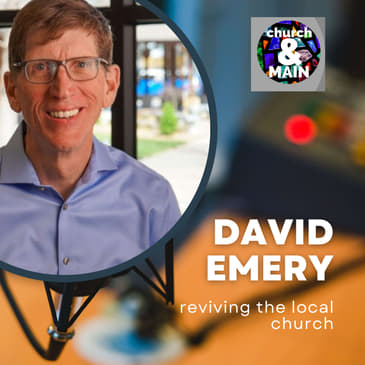
Amidst a climate of political upheaval and social unrest, the church's mission has never been more critical. In today's conversation with Pastor David Emery, we confront the tough questions of unity and division, exploring how the church can become a beacon of hope and understanding in a world marked by stark lines in the sand. He shares his commitment to fostering spaces for constructive dialogue and learning, setting a table where all are welcome, and where love transcends politics. It's a poignant reminder of the powerful role faith communities play in healing divides and exemplifying the teachings of Jesus in everyday life.
Harvard Avenue Christian Church website
Growing Mainline Churches with Paul Moore (Episode 164)
A Church Grows Again With Dawn Darwin Weaks (Episode 136)
Make a Donation: https://donorbox.org/support-church-and-main
Twitter: https://twitter.com/churchandmain
Facebook: https://www.facebook.com/churchandmain
Website: https://churchandmain.org/
YouTube: https://youtube.com/playlist?list=PL4CzMELfEV0oUYfbjdhdjqgrT3w8fHglj
[00:00:00] .
[00:00:30] Hello everyone and welcome to Church and Main, the podcast at the intersection of faith
[00:00:42] and modern life.
[00:00:44] Happy spring.
[00:00:45] I'm actually recording this on the first day of spring here in Minnesota but of course
[00:00:50] that means that there will be snow.
[00:00:53] We're actually supposed to be getting snow later this weekend on this coming weekend.
[00:00:59] So of course we are going to get a spring snow storm.
[00:01:05] But anyway I'm Dennis Sanders your host.
[00:01:09] Church and Main is a podcast that is always looking for God in the midst of the issues
[00:01:14] that are affecting the church but also the wider society.
[00:01:19] Learn more about the podcast or listen to past episodes and even if you want donate by
[00:01:26] checking us out at church and main.org or at church and main.substac.com and especially
[00:01:34] on the substac site you will see some articles that I've written.
[00:01:39] I hope that wherever you listen you will consider subscribing to the podcast and your favorite
[00:01:43] podcast app and I hope that you will consider leaving a review.
[00:01:48] That helps others find the podcast.
[00:01:51] So this podcast for pretty much as long as it has been around and unfortunately I've
[00:01:57] had several names but this is the permanent name.
[00:02:01] It's not changing.
[00:02:02] Don't worry.
[00:02:04] This podcast for the longest time since it's been here has been one that focuses on
[00:02:08] for the most part what's going on in the mainline Protestant church because I am a mainline
[00:02:14] Protestant pastor.
[00:02:16] Now it doesn't mean that I don't care or have no interest in what's going on in the
[00:02:22] evangelical church world.
[00:02:24] I actually claim that as part of my heritage along with the black church but I've also been
[00:02:30] part of the mainline church for over 30 years now and it's basically my spiritual home.
[00:02:38] I care a lot about this tradition and I worry about its continued decline especially
[00:02:44] in my own denomination to Christian church disciples of Christ.
[00:02:50] I want to see this tradition survive and my reasoning for that is personal because it's
[00:02:55] really the only place where I as a gay man can fully participate in the whole life of
[00:03:01] the church.
[00:03:03] This is also the place where my husband who is a music director can be at a congregation
[00:03:09] and not worrying about being drunk out because he's gay.
[00:03:14] Because of that I want to see this tradition survive.
[00:03:19] I want it to steer away of some dangerous ditches that it might find itself in.
[00:03:28] I'm always going to look out by pastors and congregations that are not just trying
[00:03:34] to manage decline but are actually doing something different, providing a different way of
[00:03:44] being church and trying to uphold the tradition.
[00:03:49] I've interviewed a number of people, number of these people in the past on this podcast
[00:03:56] and today you're going to hear one more and that person is David Emory.
[00:04:03] David is the lead pastor of Harvard Avenue Christian Church disciples of Christ in Tulso
[00:04:08] , Oklahoma.
[00:04:09] He has served there since 2020.
[00:04:12] Probably not the best time to start at a new church but that is when he started.
[00:04:18] He has a reputation for growing churches for reaching new people and transforming lives
[00:04:24] and he's done that in pretty much every church he has served throughout his ministry.
[00:04:29] He has served in congregations in Arkansas, Texas and Kentucky.
[00:04:36] If you wanted to ask a trivia question about what his favorite scripture passage is, by
[00:04:41] the way mine is Romans 5.8, he would tell you basically whatever I'm preaching on this
[00:04:47] week.
[00:04:48] He is an avid runner and a multiple marathoner and he enjoys spending time with his wife,
[00:04:56] Lisa and their children and grandchildren.
[00:05:00] And I really enjoyed chatting with David and as he said off mic, we are newfound friends.
[00:05:08] So let's hear this conversation with David Emory here on church and Maine.
[00:05:26] Well, thank you Dave for showing up and I'm looking forward to this interview.
[00:05:55] Thank you for inviting me to be a part of this Dennis.
[00:05:58] I'm really looking forward to talking with you too.
[00:06:00] Yeah, cool.
[00:06:01] So I think starting out and I kind of want to talk about knowing a little bit about where
[00:06:07] your pastor at your church in Tulsa and kind of how you got there from if you were journey
[00:06:14] to getting into that church.
[00:06:16] So I grew up Dennis in the Dowsfield Worth area and got my call to ministry when I was in
[00:06:22] high school and went to Texas Christian University in an off the Vanderbilt from my masters.
[00:06:29] And I spent the last 17 years in Louisville Kentucky at Middletown Christian church.
[00:06:35] And after 17 years, I got a call to come here to Harvard Avenue Christian church in Tulsa,
[00:06:40] Oklahoma.
[00:06:41] And I started in March of 2020 so it's exactly.
[00:06:47] Yeah, I moved as our conversation today.
[00:06:51] The last years we go today, we moved to Tulsa, Oklahoma.
[00:06:57] And when we moved here, it was at the beginning of the pandemic.
[00:07:03] The church had had a really good 10 year run.
[00:07:06] Mark Briley had a very successful ministry here.
[00:07:10] It was very well loved and appreciated.
[00:07:12] It was a young pastor.
[00:07:14] And he moved back to his hometown in Columbia, Missouri where we became the pastor of Broadway
[00:07:18] Christian church.
[00:07:20] And then about a year and a half before coming here, I began to discern that maybe God was
[00:07:26] calling me to a new journey to something new.
[00:07:30] And got a call to come here and they reached out to me and we started.
[00:07:36] And it's been a really, it was a difficult beginning but it's been a great four years.
[00:07:42] It was not what I expected when I got here obviously because I walked into a building
[00:07:48] when there was no one in the room.
[00:07:51] And so 2020 as you know, was kind of a tumultuous year for a lot of things in the world,
[00:07:55] the election and all the things happening in our culture.
[00:07:59] And so I was getting to know a new town, new place.
[00:08:02] It was really difficult for my wife because we left behind family and friends and moved
[00:08:06] here.
[00:08:08] But it's been a good, it's been a good four years.
[00:08:11] And actually the pandemic, it was tragic and terrible in so many respects.
[00:08:17] However, in the end it kind of ended up working in our favor because the church was in a place
[00:08:24] was in a place when it needed to make some changes and they called me.
[00:08:29] They helped the church enter a new season, a new decade of ministry and to lead with vision
[00:08:33] and helping clear about their values and direction and what was next for the church
[00:08:38] to discern the future.
[00:08:40] And so that's something that's been a part of my skill set in the places that I've served.
[00:08:44] And so the pandemic allowed us to just after, you know, six, eight months, nine months
[00:08:51] a year into this thing allowed us to come back and let go of some things that we needed
[00:08:56] to let go of.
[00:08:57] That we probably would have had a hard time letting go of.
[00:09:01] And some of the things that we let go and some of the changes we made, it wasn't easy,
[00:09:06] but it's produced some really good healthy growth for us.
[00:09:11] So that's how I got here.
[00:09:13] What was the sort of little thing that you had to learn to let go?
[00:09:16] Those are things that can be really hard for churches to do.
[00:09:21] Yeah, so the temptation, the temptation was the church was, it's the healthy congregation.
[00:09:26] It's been relatively conflict free and fairly good-sized congregation.
[00:09:34] However, the congregation had been more of a programmatic church activity oriented
[00:09:44] I really committed to serving the community, but we were moving more to a transformational model.
[00:09:51] That's the term I would use, a discipleship model, to being very intentional about how we're growing and developing people.
[00:09:58] And so that meant not being a church is trying to do 100 things, but doing a few things really well.
[00:10:05] And probably the two biggest changes we made was we changed the service times and compressed them.
[00:10:13] They used to have a nine o'clock worship time, modern service followed by a Sunday school hour
[00:10:22] and followed with the traditional worship.
[00:10:24] And as Sunday school had been sort of the heart of the church for a long time.
[00:10:28] But after the pandemic, we brought the two services together, 930 and 11 in order to be able to welcome more young families
[00:10:35] because young families don't want to come at 11 but they don't want to come at 9.
[00:10:39] So if the church is going to welcome young families to the church, nine thiries are really good time to do that.
[00:10:45] At the same time, we let go of our traditional Sunday school program
[00:10:49] because we have six or seven classrooms and we had some classes after the pandemic
[00:10:56] that were just exhausted from leading and didn't have the will or desire to continue.
[00:11:02] And so we moved to a very intentional life group model.
[00:11:07] And we still have some two really strong older adult Sunday school classes that still meet.
[00:11:15] That are heart and life of the soul church, but now we've gone from having six classes.
[00:11:21] And now we have 19 life groups plus these two classes.
[00:11:26] And those 19 life groups have over 200 people involved in them.
[00:11:31] And then we got another 100 or more people involved in the two Sundays.
[00:11:35] So we've got a worship, but we've got probably 75% of our average worship attendance involved in some sort of small group or class.
[00:11:46] And it's really been life giving. They had tried for years, Dennis to create traditional Sunday school class for young families.
[00:11:54] And it was really hard for me to grasp the idea that young families were going to be here every week.
[00:11:59] And if you're trying to build a class for people to be able to just doesn't work.
[00:12:03] And so we went to this every other week model now we've got three small groups with seven to 10 young couples or young adults.
[00:12:15] Our young families it from 30 to 40 in three groups that meet at different times and a lot at different times in whatever works for them.
[00:12:24] So that's that was the biggest change. The biggest change one of the biggest changes for the church and some of it was the transition from from a different very beloved pastor to another pastor with a different style of preaching and leadership and emphasis.
[00:12:43] And so with the life group is basically a small group. Yes.
[00:12:48] And what made you kind of think that that was kind of the way to go? Was it because it was more flexible for younger families?
[00:12:55] Because because we knew there was more flexibility involved in it.
[00:12:59] And it was going to be because I knew that the church was going to was going we have a really great music program.
[00:13:05] And I knew that the church would grow and that we would be adding people.
[00:13:10] And the problem was the traditional Sunday school program is they can be very mostly or fairly unwelcoming to new people because what happens is if it's if it's at 10 o'clock.
[00:13:21] People arrive late and they leave early.
[00:13:26] And then new people show up on time.
[00:13:30] And they're the first people in the room and then these people have had relationships going on for 15 or 20 years and it's hard to fit in when you walk into a Sunday school room and you have pictures of people in the wall who are part of the class you immediately go.
[00:13:43] I don't think that works for me and it's been a wonderful part of the heritage and most of those most of those people who were in those classes have now filtered into groups.
[00:13:54] But what it does is it creates a it creates a greater level of community.
[00:14:00] Greater opportunity for inclusivity more flexibility for people in order to work schedule.
[00:14:07] This is the first time my wife and I'm in 30 plus years of ministry have been able to be in a group together and we meet with our group.
[00:14:15] Every every other week and we become very close to this group of about 13 or 14 people.
[00:14:20] But by the way my wife I started a group with with 14 people.
[00:14:26] We then led that group for eight weeks and then everybody went off and started new life groups.
[00:14:33] Not on that that we trained.
[00:14:35] And then we started another group and we split that group in hand.
[00:14:40] And then we started to work on the way that these groups have kind of taken off and have moved forward.
[00:14:47] We've also sort of let go.
[00:14:50] We don't really have a traditional committee system anymore.
[00:14:54] We want people involved in greeting serving in the community and not busying people with busy church activities.
[00:15:04] Young families, people don't want to be involved in just meeting for committees say.
[00:15:08] We focused on the things that are really important to us and how what we do.
[00:15:13] And so we're not just occupying people's energy with busy work committee work.
[00:15:21] When do I think I remember hearing from maybe from another podcast that you were on was about kind of how you deal with staffing.
[00:15:33] And when is it how does the staffing kind of flow with your mission and vision.
[00:15:40] And what happens when there are people who aren't kind of they may have been there for a long time, but they may not be where you the church should be heading or at least where the vision is.
[00:15:52] How have you kind of dealt with all of that?
[00:15:55] And what made you kind of come to some of those conclusions about how you deal with staffing.
[00:16:01] One of the things that say about Harvard, Harvard has been really fortunate to have great people serve the last decade.
[00:16:08] Mark had recruited a really great team and the church is really good to its staff.
[00:16:15] They really it's a great place to serve and that culture makes it easier to recruit recruit people to the staff.
[00:16:23] What we did was we you know with a new leader, new leadership style.
[00:16:30] And I walked into a really good highly functioning team, but over the four years.
[00:16:37] The staff has begun to transition and people have been called to other places of ministry and are doing very well in those places.
[00:16:45] But what happened was we went to a visioning process. We worked with an outside for two outside firms to do two things.
[00:16:53] The first thing we worked with was a firm to help us get clear about vision about direction.
[00:16:59] Where are we? What stage are we in our life cycling? What are we going to be doing over the next 36 months as a church to reach people in our community and to exercise the use of the gifts that God has given us for ministry in this community.
[00:17:14] So we got really, really clear about that part of that process also meant taking a look at our staffing and how we were staffing.
[00:17:24] So that we got a clarity the one of the things that that observed when I first got here was there was a lot of overlapping rows and a lack of clarity about some of the roles of different people played.
[00:17:34] And so now as we begin to develop a mission for where we were going into the future, we needed to put together a staffing structure and align our staff to the vision, values and direction of the church.
[00:17:45] So what often happens the reason churches can't go momentum is because first of all when they do a set aside determined vision, values, direction and strategy, they just keep doing the same stuff they were doing before and it's an add on.
[00:18:00] When you do that, you have to realign your mission, your values, your organization. I you spend your energy resources and your staffing.
[00:18:10] So the thing that this group did was was they helped us put together a staffing a staffing plan that that help it's our target stack staffing plan for how we're going to move to the next level in terms of how we're going to effectively do mission or community with the resources that God has done.
[00:18:29] And so we put that together and it's been tremendous because it's given us clarity and a greater sense of unity and a greater sense of direction.
[00:18:39] And so we've had some people who have gone on to other things and.
[00:18:47] And so it's been it's been it's been it's been at times painful because people love the people that they love on their on their team and and someone say gosh it's been a big change of staff over.
[00:19:02] Since you became the pastor, but however it's been over a four year period that we've had had that change grateful for all the people that have served here.
[00:19:12] And we're now I think for really functioning well because everybody has a clear sense of purpose and direction for what we're doing.
[00:19:21] Is that is that what you're looking for? Is that helpful? It is exactly thank you. Yeah, yeah.
[00:19:26] So one of the things in the reasons I wanted to talk to you is I think overall looking at especially mainline Protestantism these days, especially post COVID.
[00:19:38] Yeah, you have a lot of congregations that for lack of better word or struggling.
[00:19:47] Some have closed and some are still trying to kind of figure things out. And I think a very changed environment.
[00:19:56] And I think one of the things is to and I'm fascinated in is finding out those churches that are seeming to do things and seeming to show vibrancy.
[00:20:08] And to figure out what's happening kind of what's going on within mainline Protestantism.
[00:20:16] We're both in the same denomination, the Christian church, the Christ which to be blunt has has shown a lot of steep decline over the last few decades.
[00:20:28] And Vinicia, I was thinking about this. So I was ordained in 1987 and when I look around at the church that we now serve that you and I served together, it doesn't look anything like the church that I was ordained to serve in 1987 in terms of leadership, size of congregations or the work that we're doing.
[00:20:53] Some of that's good. Some of it's not good, but the church has dramatically changed as you know it as you know it is.
[00:21:05] Yeah, very it's a lot of change.
[00:21:10] What do you think is brought on that change? And like you said, some of it can be good, but some of it hasn't been.
[00:21:18] I think, you know, I wouldn't I would not be presumptuous. I don't want to be presumptuous to speak for the whole church.
[00:21:29] I have some opinions and some viewpoints on that.
[00:21:32] What I think it is a lot to do with the we have this great, we have this great theology in the Christian church to the Sipa of Christ.
[00:21:45] There's an openness to it and appreciation for diversity, a thought and opinion and giving the people the ability to read the read scripture into interpreter on their own.
[00:22:00] That is rich and vibrant. It's and you can't find that everywhere. And we in the disciples consider that to be a strength, not a lot of ability.
[00:22:11] And the problem is well, and I think it's very attractive. We've been attracting people to Harvard for that reason.
[00:22:20] The people who are choosing Harvard are choosing it because of a couple things reason one is because, because we value theological humility or theological diversity.
[00:22:30] And the second is because of radical hospitality and welcome to all those are really powerful things and engaging in people looking for that in a faith community.
[00:22:42] And we think that one of the issues is that we have put that theology in a structural coffin and buried it.
[00:22:51] I'm trying to use a positive language because we have the structure, we love the structure.
[00:22:57] We love our way of doing church. We love our personal preferences more than we love more than we love the good news of Jesus Christ that I described in our way of being church.
[00:23:10] And so our inability and our lack of flexibility in terms of how we organize ourselves has has brought about the decline holding on to all ways of doing church of forgetting what the essence of us are.
[00:23:26] And I think also, I think part of the decline also is that we have forgotten that we are a church that values diversity.
[00:23:34] And I think I'm concerned about, first of all let me say, we are a church that practices radical hospitality for everyone.
[00:23:43] And that's true of our church and the true of the last church I serve. However, I am concerned that our churches, the disciples have lost their sense of theological humility that it's a hard place to be if you're more theologically conservative or you have a more evangelical orientation.
[00:24:04] And if you don't line up behind the social positions of some in our church, it's just an uncomfortable place to be.
[00:24:17] And so I think as we, I just think personal viewpoint is that I think we've lost our sense of appreciation for diversity of thought and opinion.
[00:24:29] And that we, we have fallen into the same trap as what we see happening in the evangelical church and going this way.
[00:24:38] And we've forgotten that the disciples, the son of our strength is being a purple church that Ronald Reagan and LBJ were both members of our members of our church.
[00:24:48] It doesn't mean that we don't stand for anything. It just that means that, that we want to be a church that's four people that, that welcomes people.
[00:24:58] But it's really easy in the world we live in to become a church is defined by what we're against and not what we're for.
[00:25:04] So I think that there's a, I do think it's structural. I do think some of it is, is theological and humility, lack of humility.
[00:25:15] And, and then I also think that we've just sort of given up on the local church and, and that a lot of our work is that is that it's a leadership issue.
[00:25:30] Oh, I forgot to mention this. I'm, I'm thinking out loud here. I forgot to mention this one is that I think it were very suspicious.
[00:25:38] Of other ways of leading the church outside our theological tradition.
[00:25:43] And so I think we have a lot we can learn from other faith traditions that may not see the world the way that we always do.
[00:25:49] And I think that, that that is, that that is has done harm to us.
[00:25:54] I think there's some things that we can learn from others and we've been very inwardly focused.
[00:26:01] Yeah, because I think that that is a thing going on throughout much of our society today is that a lot of our institutions were built as big tent institutions or to borrow kind of a phrase from.
[00:26:16] I think the the Piscopelians are broad church. Yeah.
[00:26:19] And we don't have that anymore. It seems like we have really opted for siloing ourselves so that everyone thinks the same.
[00:26:30] And obviously that's going throughout all of our institutions throughout society. It's so it's not just the church.
[00:26:38] But you know, that brings a kind of a and there are a few questions that all this brings up.
[00:26:43] But you know about theological humility is why do you think that it's so important for mainline Protestantism?
[00:26:50] And especially for the disciples of Christ.
[00:26:55] That's that's your great question. Let me add one little thing I would say in terms of practicing humility.
[00:27:02] I also realize that the context you're serving in is different from the context I'm serving in and the context have some dear friends that are serving in a church in San Diego and California.
[00:27:14] And they're all different context.
[00:27:17] And so I would not be presumptuous to assume that the way that I see things and the way that I do ministry is going to work in different context.
[00:27:27] I think you have to understand your community and how you work there but I do think that there is a vital place for a church that wants to truly welcome all people.
[00:27:36] And by all I mean all people not just those who agree the way that we agree because a lot of times when we say all are welcome what we really when we say all means all what that really means is.
[00:27:49] All who think the way that we think and it's disingenuous.
[00:27:54] So why do I think the question is why do I think the theological humility is important because it's so lacking in our culture.
[00:28:02] We are in a very polarized and divisive device of time.
[00:28:11] And we're facing what may be one of the more hate filled toxic elections elections seasons election seasons in the history history of our country where everything is being this is going to be an election that's going to end democracy.
[00:28:27] It's about saving Christianity in the American way of life you know you got these two polls.
[00:28:34] And I'm afraid and concerned that the church itself is falling into that same trap when you look at the ministry of Jesus when he talks about love.
[00:28:46] Love of your enemies what good does it do to love those that love you back.
[00:28:53] That whole the whole sermon in the map and the way you look at Jesus the way you love people he loved unconditionally.
[00:29:01] And I think that what the world sorely needs is humility and I think that theological humility really is the heart of who we are disciples.
[00:29:15] And I just believe that the church has a powerful role to play not just for justice and for you know, justice but also embodying the teaching of Jesus which is ultimately about humility.
[00:29:33] And that we can learn something from people who feel differently from us.
[00:29:38] I know this that there's a bad way to make an enemy and there's a good way to make an enemy the bad way to make an enemy is hate exclusion injustice hostility but the good way to make an enemy is to love the way that Jesus love.
[00:29:56] And the bad way of making an enemy there's no hope with that enemy ever ever becoming something someone different to you.
[00:30:05] But the hope the other way is loving the way that Jesus love gives us the capacity to not only change our heart but change the heart of another person.
[00:30:14] And I think that the church could not play a more important role in our world today than being a place where people come together from widely different backgrounds and learn to talk to one another and learn to love one another.
[00:30:29] And I just think that brings glory to God and embodies the teaching of Jesus to be a place of real conversations not so easy.
[00:30:40] But I'm super passionate about that.
[00:30:45] Yeah, you know, it's interesting kind of going just for a moment to the political realm.
[00:30:52] And actually even yesterday I shared this on a comment page on a website which probably was dangerous of trying to listen to people that we don't agree with.
[00:31:07] And in this case was Trump supporters.
[00:31:11] And so many people are immediately or like, well, this is pointless and this is stupid.
[00:31:18] And just no one wanted to listen, no one wanted to there was just no sense of humility and it wasn't you know I wasn't saying that you have to agree with them or that you have to give up what you believe.
[00:31:34] But it was just to have some to be willing to kind of listen to what someone is saying and maybe try to connect with them in a way.
[00:31:45] And it's just fascinating how that is not just in the political realm, that's one place but we just don't want to listen to one another anymore and that there is a fear really a fear of the other that they are that they are dangerous or they're stupid or what have you.
[00:32:03] And we don't think that it almost feels like a dehumanization and that we don't see someone as a child of God.
[00:32:16] Right.
[00:32:17] And I especially see that among Christians on these days and it's not just the people we would think would look at things that way but throughout the political spectrum.
[00:32:31] It's a sense that we dehumanize each other.
[00:32:35] We had a in my former congregation, we had a welcome statement and I can't remember exactly but it was something like no time Christian church welcomes all people.
[00:32:47] I think they still use it.
[00:32:50] And by welcoming all people we mean Republicans and Democrats regardless of your political orientation, your sexual orientation, race, economic level, all this sort of thing.
[00:33:01] And it was really a beautiful statement.
[00:33:07] And we had a member of the congregation who just and had some progressive, some progressive colleagues who were really frustrated by the social media posting of this particular individual who did not share their theological or political point of view.
[00:33:27] Not to reveal anybody's point of view here.
[00:33:30] But and they would get some comes to come to staff meeting and I would hear them talking about this particular individual.
[00:33:36] You know, I can't believe he thinks that way. How can you think that way? How does it he feels comfortable here at the church and this sort of conversation went on a few times but we shared on social media our welcome statement.
[00:33:48] I went to the staff meeting the next week and I said, hey, do you remember so and so we've been talking about.
[00:33:54] I said, I noticed that he shared our welcome statement. So obviously he thinks it means him too.
[00:34:02] It means him too.
[00:34:06] And so I just, I just think that the way to kill the church is to push out people who have different political views than we do.
[00:34:20] I'm not saying it means we condone things condone everything but there's a reason why people believe the things that they believe and some of it's because they feel marginalized themselves.
[00:34:31] And listening, listening doesn't mean that we agree.
[00:34:35] Listening means that we are we're loving and we're trying to be good human good humans.
[00:34:42] Some people will never be convinced some people will never never be on board but Jesus says love them anyway.
[00:34:50] Doesn't matter whether they were to love them anyway with without any expectation of return.
[00:34:55] Boy, it's really challenging isn't it?
[00:34:57] It is.
[00:34:58] There was a and maybe you have remember this several years ago before General Assembly for the denomination when Sharon Watkins was general minister and president.
[00:35:12] And this was basically dealing on issues regarding sexuality.
[00:35:19] She talked about the and she used the language of the the communion table and about the importance of trying to stay at the table.
[00:35:31] And it was a beautiful I think and challenging word that she brought.
[00:35:38] But it was interesting how people responded to it.
[00:35:42] Because they wanted to have people stay at the table as long as they agreed with them if they didn't have the same viewpoint especially on sexuality issues they weren't they couldn't be at the table.
[00:35:59] And I kind of thought I don't think it works that way.
[00:36:04] But that's kind of where we are at and I'm concerned.
[00:36:13] Go ahead.
[00:36:14] I'm concerned we are fencing off our table again.
[00:36:18] Oh yes.
[00:36:20] I'm concerned we fenced off our table again.
[00:36:23] And we are pushing out we are pushing out people who want to be a part of an inclusive church but are can't agree with everything that we believe.
[00:36:36] And I think that's that's sad to me and it's unfortunate.
[00:36:43] I don't think it reflects the DNA of who we are as disciples.
[00:36:47] I think it betrays our core value.
[00:36:51] Why do you think that though that they want to fence off the table?
[00:36:55] Can't answer that for them.
[00:36:57] I don't know why they do that.
[00:36:59] I don't know why someone would want to do that but I do know that it happens and I'm trying not to do it too so let me confess something here.
[00:37:06] Okay.
[00:37:07] So we're in our best information class.
[00:37:10] We do it every month.
[00:37:11] Newcomers come and we sit and we talk about our core values.
[00:37:14] And I went on about theological humility and how important it is.
[00:37:18] I talked about our inclusion and radical hospitality, all these core values.
[00:37:23] And we went through this whole thing.
[00:37:25] And then this woman says in the group she says, oh I just love this.
[00:37:29] This is such a wonderful church and she said she said you know I really admire and listen to you and still give money.
[00:37:35] And I said, yeah I know Charles Stanley different theology from mine.
[00:37:42] And I immediately caught myself look at the pride in that.
[00:37:54] And I had to bat and I confessed it to my staff member later on.
[00:37:58] And I was talking about theological humility and then I just pushed somebody I can put in a disagree with.
[00:38:03] And so many ways about this treatment about women in the LGBT community.
[00:38:08] And just push them to the side and just reflect is such a lack of humility and didn't didn't think I should ask why do you like Charles so much instead of saying.
[00:38:19] Yeah, different theology trying to push him away.
[00:38:22] It's really hard to do that it's it's it's hard to resist it.
[00:38:27] Particularly for me.
[00:38:29] No, I can agree that with that there it's easy to be kind of part of the group and where we all agree because I think that's human nature.
[00:38:43] And that's hard to fight against and I really think it's only in Christ that we can kind of bridge that but that's hard.
[00:38:55] The church has to be a safe place for people who are gay and lesbian.
[00:39:02] And so who have been hurt and wounded by the church.
[00:39:06] And so we have to make sure that it is in the language and the way that we talk and speak around the table.
[00:39:14] And so I don't want to I don't want to dismiss that is being a reality that it has been a safe place for people.
[00:39:21] And you know the church is the church that I serve here is inclusive and the church I left was.
[00:39:31] And that hasn't always been easy.
[00:39:35] Not so much here but decisions that we made in the church I serve it was difficult transition at times.
[00:39:46] But I saw the church become more inclusive and sought welcoming more young adults of the church and it continues to do so.
[00:39:53] But it doesn't mean we have to push away others.
[00:39:58] So one of the things also that I've been fascinated about over the last few years is and I see this encountered over and over again.
[00:40:10] And in leadership sometimes maybe even among pastors or people is almost not an interest in the local church.
[00:40:23] In the scene the church has a gathered community.
[00:40:28] And I guess I'm trying to figure out for you why does the local church matter and why should it I mean why should it matter because I feel like sometimes we don't the way that sometimes we operate is as if it doesn't.
[00:40:47] That I don't know how they think that people think the church works but that it doesn't need a local gathered community of people.
[00:40:58] And so I guess I'm asking the question to you why do you think that local churches matter and that we should make those churches matter.
[00:41:08] Let me ask you a question back first. Do you think that certainly is that that is I mean what makes you think that that there are folks who feel the local church does not matter and what does matter from that point of view for some.
[00:41:26] What gives you reason to think that to be true.
[00:41:30] I think how I've seen whether it's middle judicatories or larger bodies and how they invest or try to help to resource local congregations or don't resource them.
[00:41:47] And how some people when they talk about church it seems like it's more important to have the right positions on certain issues more than it is people gathering on a Sunday morning or whenever they gather together.
[00:42:09] So it's still things that I kind of pick up so it's not something that that's stated. It's not something that you know people say.
[00:42:18] But it's in the action sometimes that I see that I make makes me wonder.
[00:42:23] I see that too and it really does represent the death of our church.
[00:42:29] If if the church just becomes a speaking body speaking to social issues in our culture, there's no reason to have a gathered community.
[00:42:39] And as long as there are endowments and resources to live on, there'll be a handful of people able to do that work and feel good about the work to do.
[00:42:48] And I know that it brings some value. But ultimately without the local community, there is no church.
[00:42:57] Without the gathered community, without a worshiping body and a local place, there is no church.
[00:43:04] The Christian Church to Cyprus Christ is a congregationally based church.
[00:43:10] And to move away from that is to move away from the heart of the church.
[00:43:13] And so Christianity essentially is a communal faith.
[00:43:19] Jesus called disciples to live in community with him, they were gathered community.
[00:43:24] And we in a world that's isolated with depression and anxiety and fear.
[00:43:32] People need each other more than ever.
[00:43:36] And so this is an opportunity for the church to create real community for people.
[00:43:40] And so will else in the world can people of different ages gather together and a community together except in the church?
[00:43:50] I think that will else can you see an intergenerational gathering of people or people with different ideas in one space together?
[00:44:02] It's not happy because people are living in tribes.
[00:44:06] And so the church itself, the body of Christ is the Holy Spirit God's presence and goodness and glory lives in the gathered people.
[00:44:16] We can't hear from God if we're hearing from God only in and of ourselves.
[00:44:22] We hear from God in the midst of community.
[00:44:26] And so for me, I think one of the challenges that occurred during the pandemic is that all I heard from our church leadership.
[00:44:35] All I heard and I don't want to be too harsh about this.
[00:44:38] All I heard from our church leadership was over the social stuff that was happening in our culture and our very little words given to an encouragement given to pastors who were trying to lead congregations.
[00:44:52] Because it's not just the people who are in our communities over there, over there, over there that need God's love and concern.
[00:44:58] It's also the people in our congregation we've got families trying to raise their kids.
[00:45:02] Kids that are struggling with the social media, depression, anxiety, fear, they're trying to put their kids through school.
[00:45:11] They're trying to raise their families or individuals or widows who are living on their own.
[00:45:18] And the gospel is not just for people out there, but it's for people who live here.
[00:45:24] It's for our community.
[00:45:25] And when we do life together and so I see such great beauty where people gather together around the table, the Lord and share a meal together.
[00:45:37] And I don't know how you do that without gathering.
[00:45:40] Let me give you an example.
[00:45:42] So I shared with you before that, share you an example.
[00:45:45] This is my latest example of this.
[00:45:47] So we have a guest information class and it's the same class as we burned to earlier.
[00:45:51] And we had some older people and some younger people in this class.
[00:45:58] And there was an older woman in her 80s.
[00:46:02] It was at the class who lost her husband three years ago and she's just started attending our church.
[00:46:09] And after the class is over, we walk around I give them a tour of the building.
[00:46:13] And my favorite part of the tour is we go to the youth space.
[00:46:16] And so we have a pretty vibrant and active youth ministry.
[00:46:19] And we got like 25 junior high boys and they're just like, you know, it's lucky somebody's not bleeding or whatever.
[00:46:26] Very, very active.
[00:46:28] So we're walking around and I'm introducing these just to the folks.
[00:46:34] And so Miss Gloria is about to leave and go out of the parking lot.
[00:46:39] And I said, Gloria, I'd rather you not walk to your car by yourself.
[00:46:43] I said she was at the other end of the parking lot.
[00:46:46] It's dark.
[00:46:47] And I said, when will you boys be glad to walk with Miss escort Miss Gloria to her car?
[00:46:53] This six grade boy walks over just like you're going into wedding.
[00:46:57] Pitches arm through her arm like this, like this and escorts her out of the building.
[00:47:03] And another boy got on the other arm and they start walking in 10 junior high boys with arm and arm walk you out to her car.
[00:47:12] And you should have seen the look on Gloria's face.
[00:47:15] She was like, it's probably the first time she'd been touched all day by another person.
[00:47:21] But probably the first time in weeks she'd been embraced by middle school boy.
[00:47:27] And I walked out thinking that's the gospel right there.
[00:47:31] That's what it means to be in Christian community and those boys,
[00:47:35] you know, I'm sure they maybe they have grandparents that are close to them.
[00:47:39] I said, what a beautiful thing.
[00:47:41] And so one of the things that we're doing here is we're really trying to vote on what it means to build an intergenerational community.
[00:47:50] And it changes, you know, because use of it.
[00:47:54] Another example youth have been siled off here and there one of the strengths of disciples that we have to offer smaller congregations is this intergenerational thing.
[00:48:03] And so we want to mimic what larger churches are doing and it's a mistake is to find a way to make, you know, instead of having a youth choir, have a youth in the choir.
[00:48:15] Instead of having a youth Sunday have youth participate in worship.
[00:48:19] Instead of having the elders, you know, take communion or a meal to whatever our homebound, let the others and the youths go do that.
[00:48:29] Let families do that.
[00:48:31] So I do think that that people are searching for belonging, people are searching for connection.
[00:48:39] And I think the church has something counter culture to offer that right now.
[00:48:46] That's a best example I can think of right now.
[00:48:49] I think it's a wonderful example.
[00:48:52] And a great example of kind of what I think, you know, going back to thinking about some of the early church and how it was different from the church of the society of the Roman Empire.
[00:49:07] And that just reminds me of that.
[00:49:10] Of what it's value.
[00:49:14] So again, there's something that I heard you saying in another podcast that is that especially in my churches sometimes we're good at managing decline.
[00:49:27] And of course we are going through decline.
[00:49:31] And in some cases you have to try to deal with that, manage that.
[00:49:36] But what do you think can change that mentality that we just don't become so comfortable with being smaller and not necessarily growing for the sake of growth but that we're not just simply managing our decline.
[00:49:53] Well, one thing I've got a little pet peeve about something.
[00:49:58] I see all these social media posts about people posting about how hard it is to be a pastor.
[00:50:04] And I go to these workshops and things where talks about pastors leaving the ministry and because of frustration with the work and all that kind of stuff.
[00:50:14] And I realize my situation is different from other people and I have opportunities other people don't have here at Harvard resources that understand how.
[00:50:22] But I think that we got to stop thinking that our job is worse than anybody else's job.
[00:50:27] You know, I think that we do a lot of complaining and a lot of whining. We just need to stop it.
[00:50:34] And because.
[00:50:36] And I don't want to dismiss somebody else's experience.
[00:50:41] But the reality is there's a lot of people in the world that have things pretty hard to we got not nurses anybody want to be a school super intended right now.
[00:50:49] Anybody want to be a chief of police right now.
[00:50:51] Anybody want to be you know, you know an emergency room physician or you know a social worker or who what about a CNA paid you know $15 an hour to care for a person's physical needs.
[00:51:05] So I think that that I would like to see us have a little more empathy for other people and a little more let's get up and do something you know.
[00:51:20] And in fine ways to encourage each other we don't have any worse than anybody else there's there's a great resignation happening everywhere so it's not just ministers.
[00:51:32] So I do I do think that we are more interested in we are we just sort of given up on the idea that we can grow congregations and that we can that code.
[00:51:45] We just kind of accepted decline.
[00:51:48] And I don't think we have to because I think we have something that people want.
[00:51:53] And I think that that a lot of regional work.
[00:51:59] I mean in some ways and church work in some ways that we're doing more hospice work than we're doing we're doing we're doing Kingdom work.
[00:52:10] And so if we're going to if the church is going to die let's go out in a big bang let's do something worth dying for.
[00:52:19] You know let's let's die for the right reasons because we're trying to reach our community connect let's be brave let's be bold.
[00:52:29] Let's let's live on let's live on purpose instead of dying without purpose.
[00:52:36] And in a church without purpose is a dying church.
[00:52:42] And so I think the key to revitalization of any congregation is is is casting a clear vision for your congregation about what God wants to do and you're midst and in your community.
[00:52:55] And and believing that the gospel the good news of Jesus love for all people is is is the hope that the world needs that our lives are better because Christ is a part of our lives.
[00:53:08] There's more to the churches than just being a nonprofit.
[00:53:14] So I don't know if I answered your question for not.
[00:53:17] I think you did I think you did but that that leaves me to that a related question because you've talked a lot about people leaving ministry and there's a lot of people that left ministry and I'm always kind of scratching my head of why and and like you I understand it can be challenging to be a pastor.
[00:53:35] But I'm curious because you know you've been in the ministry now for quite some time.
[00:53:44] Why do what keeps you going what keeps you remaining as a pastor and what has been helpful for you?
[00:53:52] I can tell you there have been times that I've wanted to walk out.
[00:53:57] There have been times when I've dreamed about doing other things and maybe the only reason I didn't was I have no other discernible skills.
[00:54:06] I said, you know, I remember my dad my parents need one of them.
[00:54:12] I'm the first person in my family to earn a college degree.
[00:54:15] My parents didn't graduate from high school. They were wonderful.
[00:54:19] My dad passed away. My mom's still living wonderful.
[00:54:22] They were both faith filled people. My dad was a milkman drove a commercial milk route his entire life died early because he broke his body.
[00:54:31] But you know, I said over and over again that man, I just wish it could be a milkman like my dad just get up and you know my dad had a great ministry driver.
[00:54:41] I didn't have to deal with all this stuff. I got to deal with you know that's sort of me a lot of times I want to do it, but you know
[00:54:51] I have just hung in there year after year after year because I love I love the work and I love seeing people's lives changed and transformed by the good news of Jesus.
[00:55:07] And I believe in it. And it's a part of my core thing and I think it's I think part of it.
[00:55:15] My longevity has something to do with physical health and well being in that in my 40s, I start I made some decisions about my physical health.
[00:55:25] I was an overweight person in my 40s and began a physical discipline of exercise and running that changed the direction of life has given me energy and vitality later in my life.
[00:55:38] And then I think continuing to practice spiritual practices and reaching out and having good friends and ministry that support and love me.
[00:55:46] And that I can call and talk to. I've got some great friends and ministry doing doing ministry that we do live together that have been so encouraging and helpful to me.
[00:55:56] And I don't I can't speak to anybody else's experience, but I'm so happy that I have stuck this out over the years and at the end of you know I'm 62.
[00:56:10] And I think I got a good you know maybe I got a good seven years, maybe 10 years of good ministry left.
[00:56:20] And I kind of see it as a marathon 26.2.
[00:56:26] And I want to finish well.
[00:56:29] But I do think it has to do with physically health physical health, spiritual health surrounding yourself by good people and if you're going to do the work, do the hard work.
[00:56:44] And if you're in a place that people don't want to do the work with you, go someplace else.
[00:56:49] It does no good to beat your head, you know, beat your head up against the wall.
[00:56:54] Uh, uh, in some place that where people don't want to do anything just let them die and move on but there are a lot of churches out there that are looking for somebody that want to do something that want to lead them somewhere.
[00:57:06] It's not easy work, but boy when stuff begins to turn around it is really gratifying and exciting.
[00:57:12] And you know seeing that little boy walk with that older woman out there, I can, I can that's worth it right?
[00:57:21] It is.
[00:57:24] So, you know, we've talked about kind of theological humility and learning from people who we may not always see with eye to eye.
[00:57:35] So I'm kind of curious from coming from a mainline standpoint.
[00:57:43] But things do you think we can learn from, you know, our more conservative sisters and brothers?
[00:57:51] Is there anything that is worthwhile?
[00:57:54] I mean, we know there are things that aren't but what is worthwhile that we can learn and and vice versa.
[00:58:01] What can they learn from us?
[00:58:03] Okay.
[00:58:04] It cannot add one more thought to what I just said.
[00:58:07] Go right ahead.
[00:58:08] Keep along, keep along to our ministry is continuing to reinvent yourself and not just repeating yourself over and over again.
[00:58:16] So you got to continue to reinvent yourself over and over again.
[00:58:21] Disseute the needs of your situation and not just keep repeating yourself and sometimes you need to hang in where you are and become the new pastor the church is looking for.
[00:58:33] Or you need to move to a new situation could be and you get a discern the difference between the two.
[00:58:40] Okay, so your question is repeat the question again I couldn't get that out of my head.
[00:58:46] So repeat it one more time.
[00:58:48] Give me hand.
[00:58:49] What can we learn from those who are different from us especially theologically?
[00:58:53] Yeah, well, one of the things that I think that we got to do is we do need to make friends with people who are different from us.
[00:59:01] And we'll find that maybe they're not as different from us as we are.
[00:59:04] I think there are other pastors and I'm really I have connections with people of all theological stripes and types here in Tulsa.
[00:59:11] And I benefit a lot from those relationships.
[00:59:14] And I think that I think that one of the things that we can learn from there's some leadership stuff that we can learn on how to lead.
[00:59:26] How to be better leaders.
[00:59:29] And some, you know, I learned a whole lot.
[00:59:36] Now this is going to get me chilled probably.
[00:59:39] I learned learned a whole lot in the early days about leadership from the Willow Creek Community Church.
[00:59:47] Now we know how that situation turned out with sexual misconduct and all that.
[00:59:52] But I learned a lot from working with them about how to build community.
[00:59:57] How to, you know, about my role as the lead pastor.
[01:00:01] How do we power others for leadership?
[01:00:04] How to cast vision?
[01:00:08] How to align resources to accomplish vision?
[01:00:13] So, you know, I think I think I think a lot of it is leadership.
[01:00:21] And a lot of it is we don't have the full essence of the gospel either.
[01:00:26] We need to listen to other people to get a fuller picture, fuller picture of the gospel.
[01:00:33] And so I have some friends here in town.
[01:00:39] One who is Southern Baptist.
[01:00:44] And one who retired from a church that disaffiliated.
[01:00:52] And I have learned a lot from them because they serve much larger churches than the church that I serve, particularly around staffing.
[01:01:04] And during the pandemic, we had no technology to do what we needed to do.
[01:01:09] And I reached out to them and they helped me.
[01:01:12] And we're generous with their time to talk to me about how to do some of those things that we needed to do.
[01:01:17] And feel actually I don't agree with everything.
[01:01:21] But we don't even talk about the things we disagree with.
[01:01:24] We're talking about the things that we care about.
[01:01:26] And I've been very intentional about building relationships, building relationships with them.
[01:01:29] I really don't see them that much different from me.
[01:01:34] But as long as we close together, we can't with the people that we mostly agree with will never.
[01:01:41] Never, never really fully understand who we are.
[01:01:45] I don't know if I've got it got really got the answer.
[01:01:47] I have to think about that a little bit longer.
[01:01:49] No, I think you did.
[01:01:50] I think you did.
[01:01:51] You gotta get over our suspicion.
[01:01:53] We're very suspicious of people.
[01:01:57] And we are very, very mainliners.
[01:02:00] They're very judgmental of others.
[01:02:03] Very judgmental.
[01:02:05] We, you know, we, you know, for instance here in this community,
[01:02:11] life church, Craig Groschel, pastor's one of the largest churches in the world actually.
[01:02:16] He's based out of here in Oklahoma.
[01:02:19] And most people who are, you know, from a more liberal theological perspective
[01:02:25] wouldn't, wouldn't necessarily think that we could learn anything from him.
[01:02:30] But we can.
[01:02:31] And you know they reach a lot of people in the community and they do a lot of good stuff in the communities where they serve.
[01:02:36] In fact, they probably have more people and attendants on a week and then we have an our whole denomination or weekend.
[01:02:42] Can we learn something from them?
[01:02:44] And just because they're, they're more evangelical.
[01:02:47] Evangelical doesn't mean we can't learn something from them.
[01:02:52] The church that, the, the church that, remember their churches are located.
[01:02:57] They serve people who are living under resource and do a lot of good, a lot of communities.
[01:03:05] Now my, my statistic may not be right but I think it's pretty close.
[01:03:10] You know, one of the things that I am fascinated by is sometimes that we.
[01:03:16] And I think we've talked about this before that we are especially in Manly Church's very much socially engaged and that's important.
[01:03:26] But that we're not always looking at the families that are either in our pews or in our communities that are dealing with a whole mess of problems.
[01:03:35] Absolutely. Yeah.
[01:03:36] One of them are social but some of them are just within the family and you know, one of the things that I growing up in my background is hearing kind of the concept of a heart for people in our communities.
[01:03:50] Have our churches lost that?
[01:03:53] I mean, are we more geared into kind of social issues and we are for peactual people or.
[01:04:03] Or is that am I a little off by thinking that or something that I don't know?
[01:04:11] You know, I don't know, I don't know that I don't really know where other people are on that it does seem that way to me.
[01:04:22] But what I know is that the church is also the good news of Jesus is also for the people that sit in our congregations and you know, our teenagers are looking for meaning and for purpose.
[01:04:37] And the idea that God loves you, that God has a purpose for you and for your life.
[01:04:44] And that Jesus came not just for the marginalized person but also came for you too.
[01:04:52] And I think that the sense of personal faith of inviting Jesus into your life, welcome into your life and repentance and baptism and transpersonal transformation is the key to change in the whole world.
[01:05:10] Because otherwise we don't need the church to do that. You might as well just join a nonprofit.
[01:05:16] Jesus put a thermometer in front of the church and call it the United Way.
[01:05:22] I mean, that's not an original statement but I think that that I think there's so many beautiful things about our mainline Protestant tradition.
[01:05:36] willingness to embrace curiosity and doubt the inclusion, looking at scripture, the logical education, the ability to look at scripture with all its richness and depth, not as a unified theological document but a variety of conversations coming together,
[01:06:04] and the way that God is doing, the way that God is doing, the way that God is doing, the way that God is doing.
[01:06:11] And those are all beautiful things that we have to offer.
[01:06:16] And your evangelal tradition within that I grew up with where you know Jesus, I welcome Jesus into my heart.
[01:06:24] And the reason I'm a minister today because I believe that he loved me and saved me from my sins and I'm a sinner and saved me from my sins.
[01:06:31] And I was baptized in the name of Jesus and died to my whole life to be born again into a new life.
[01:06:37] And I don't think we should start away from that conversation just because we may think others have have a, because we see other examples that are not healthy.
[01:06:45] I think that those two things together, that sense that sort of a, for lack of better terms evangelical heart with concern for the world we live in and justice issues and inclusion when those two things come together it's a powerful force in people's lives.
[01:07:05] And if you want to recruit young people that transform the world in the church, they have no reason to have anything to do with the church without this part.
[01:07:12] Why would you want to be a part of the church?
[01:07:15] What does the church have to say to their anxiety?
[01:07:19] What does the church have to say to their fear of death?
[01:07:23] What does the church have to say to their loneliness?
[01:07:26] What does the church have to say to their lives?
[01:07:32] And so I get concerned sometimes when if the work we're doing with young people, if all it is a social justice concerns.
[01:07:41] And the Christian faith is about what we're doing and not about who are, and not all about what we're becoming because of who Christ is and us.
[01:07:53] I'm not sure what, you know, we're going to have just a very small group of people to do this work.
[01:08:05] But if people want to learn more, talk to you more about some of these issues where can they find you?
[01:08:13] On our website for one thing, HACCHACCTOLSA.org is our website.
[01:08:24] And you can reach me at David at HACCTOLSA.org.
[01:08:31] That's my email.
[01:08:32] And then also I would say you can also find me on Facebook.
[01:08:39] I don't use it a whole lot, but I do.
[01:08:42] If I wasn't a pastor, I wouldn't be using Facebook.
[01:08:45] The reason I use it is because it's what I'm communicating stuff that we're doing.
[01:08:49] Hey, I really enjoy talking to you today.
[01:08:52] And...
[01:08:53] Yes, likewise.
[01:08:54] Forgive me for my pride and...
[01:08:59] I get excited what I'm talking about.
[01:09:01] And I don't want to betray my core value of theologic humility.
[01:09:06] And I walk the edge all the time.
[01:09:09] Okay.
[01:09:11] I understand that.
[01:09:13] And, you know, that's the whole point of theological humility is to know that sometimes we're always walking the edge.
[01:09:21] Yeah.
[01:09:22] All right.
[01:09:23] Well, thank you so much, Dave.
[01:09:24] And we will talk to you in snow.
[01:09:26] Thank you.
[01:09:27] I'd be glad to talk to anybody that wants to engage brother.
[01:09:30] Let me know.
[01:09:31] Thank you.
[01:09:32] And thank you, Dennis.
[01:09:33] You're welcome.
[01:09:57] Well, as usual, I hope that you enjoyed listening to this conversation with David Emory.
[01:10:18] I really enjoyed it.
[01:10:20] It's kind of funny.
[01:10:21] We actually had a kind of pre-chat before we had our interview about a week prior.
[01:10:28] And that was also a really good chat, a good talk.
[01:10:33] He is someone that I enjoy to chat with and I am very thankful for him and for his congregation.
[01:10:42] And that I hope that that can help kind of continue this tradition of mainline Protestantism.
[01:10:50] You know, I agree that it's probably just one tradition, but it's an important one.
[01:10:55] And I think it's something that is worth keeping.
[01:11:00] And I'm thankful for people such as David that are trying to be church in a different way in a new day.
[01:11:09] So that is it for this episode of church in Maine.
[01:11:14] Please consider donating.
[01:11:16] You can do that if you're on the sub stack page.
[01:11:19] You can subscribe.
[01:11:21] And that is $5 a month or 60 bucks for a year, but there are also links in the show notes to make a donation and make a donation of whatever either one time donation
[01:11:37] or a repeating donation.
[01:11:40] What your donation does help for me to continue producing this podcast.
[01:11:48] And so whatever you can give would be of great help.
[01:11:53] Also consider passing this episode along to family and friends, anyone who might be interested, and who may want to hear a podcast.
[01:12:02] That's a little bit different from kind of the lot of other religious, religious podcasts that you listen to.
[01:12:12] And then also again consider rating and reviewing this episode on your favorite podcast app that really helps others find this podcast.
[01:12:22] And that would be a great favor to me if you did it.
[01:12:27] So again, thank you so much.
[01:12:30] That is it for this episode of church in Maine.
[01:12:33] I'm Dennis Sanders your host.
[01:12:35] Take care Godspeed and I will see you very soon.
[01:12:56] You